| |
|
|
| |
Tongariro winter nymphing leader.
Tue 17th August, 2010
|
|
|
|
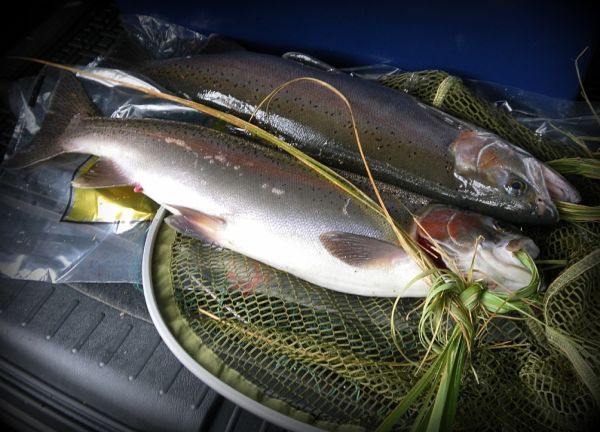
Many Tongariro fly fishermen enjoy nymphing, its the most popular method used on the river. But the anglers that consistently catch fish using the indicator and nymph all have one thing in common ... they've learned it pays to fish their flies deep ... particularly during the spawning runs.
In the warmer months when there's plenty of insect activity above and below the surface, fish can be found throughout the water column. Of course it depends on what's hatching or falling into the river at the time but even then most of their day is spent near the bottom where the water is cooler and the flows are less.
As winter takes hold nearly all of their food will be on or close to the bed of the river and consist mainly of caddis larvae, nymphs and fish eggs found under or amongst the rocks and gravel.
But food isn't the only reason they're down deep. Trout entering the river to spawn instinctively know how to conserve energy for the task ahead. As they travel upstream they stay close to the bottom where friction slows the water as it passes over the riverbed. During the bigger runs you will occasionally see some of the fish " porpoising " as they pass by. But no one seems to know why they do this and I just call them happy trout.
I'm sure you can tell where we're going with this. And already understand how important it is to get those flies down and keep them there as long as possible ... especially in winter ... because that's where the fish will be.
If you're a beginner or a visitor and the anglers around you are catching and you're not, your lack of success is probably due to the fact that your flies are not sinking fast enough or staying deep enough to reach the fish.
When your nymphing with an indicator the obvious way to achieve this is with a combination of good line control { mending } and weight, either in the form of a heavy tungsten bead fly { the bomb } with your natural or globug attached to a dropper off the bend. Or by dispensing with the bomb altogether and pinching a couple of split shot onto the line above your flies.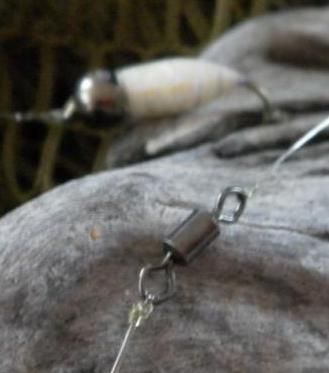
You could also try using bombs or nymphs coated in epoxy which will cut through the water and sink more quickly than heavily dressed patterns. Give some thought to your leader as well because every little helps. If you've never been on the river before then you will probably have been reading up before you ventured out. So you'll know that all good fly fishing leaders are tapered ... that is until you have to fish deep in a fairly fast flowing river with a heavy weight on the end of it.
The two most common types you'll come across are commercially manufactured knotless tapered leaders. Or compound tapered leaders which are made by joining together successively thinner level lengths of mono. You can either buy compound leaders or make them yourself.
This is where it gets complicated if you're just starting out but don't panic because as you'll see you don't need a traditional leader when fishing heavy flies on the Tongariro.
A " normal " fly fishing leader has to perform some very important tasks which help the fly fisherman.
As we cast it aids the transfer of energy from the fly-line to " turn over " the flies so that they land quietly onto the surface. This is the first bit that goes out the window when you fish weight.
The leader should allow a less visible link between the thick easily seen fly-line and the fly and put distance between the two so that fish are less likely to spook. Yep ... we still need that bit.
The leader should enable the fly or flies to drift unhindered without dragging as they travel downstream. This isn't only important when you're fishing the dry fly ... its just as important when your nymphing ... but we can rethink it a little bit.
Whether you hand tie your own or choose one of the many types available online or in tackle shops a tapered leader is basically made up of three sections, each one with a very different role.
The "Butt" is the thickest part and is connected to the end of the fly-line to ensure a smooth transfer of the energy built up during the cast.
The " Mid " or "Transitional " section helps continue that process to achieve the desired presentation of the fly.
Then lastly the " Tippet " which is the thinnest part and where we attach the flies or adjust the length of the leader.
Most tapered leaders are made using a formula of approximately 60% butt 20% mid-section 20% tippet and each section of a compound leader might be made up of a number of lengths of line knotted together. There are all kinds of formulas to create these tapers ... this site has some handy charts www.finefishing.com click on flyfishing and then lines and leaders.
Leader material is measured by thickness rather than breaking strain and this is where a traditional tapered leader is more of a hindrance than a help for nymphing on the Tongariro.
Normal practice is to make the first part of the butt section approximately sixty percent the thickness of the end of the fly line. This equates to about .021 of an inch or a breaking strain of around thirty pounds depending on the brand.
A lot of anglers still attach the indicator to the end of the fly line so even if you gradually stepped down the leader material diameter until you reached the tippet there would still be a significant amount of fairly thick line below the surface.
This not only slows the nymphs descent but also causes more drag during the drift. 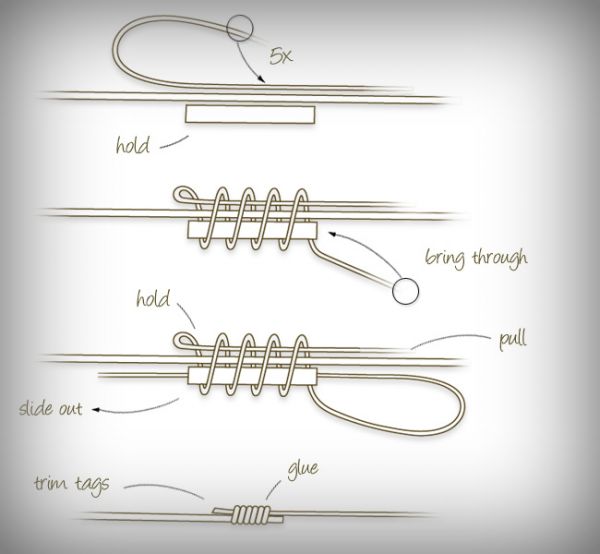
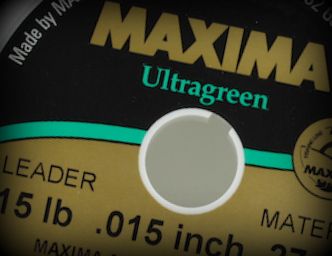
A better solution is to construct a leader that is a bit of a compromise and I find this one works well. The butt is 5ft of 15 lb - 20 lb bs Maxima with a loop tied on one end. Attach this to the fly line with a loop to loop connection. If your fly line doesn't have a welded loop use a nail knot or some other method.{ scroll over diagram }
Tie a small swivel on the other end, this provides a convenient connection point for the rest of the leader and also helps the leader to begin sinking. This thicker section also carries the sliding indicator ... plenty of info on the site about these. www.tongarirofishingguide.co.nz To the other end of the swivel attach approximately 8 ft of 8lb bs Maxima, tie on your flies and that's it.
The reason I don't make the entire leader out of eight pound is because without the thicker butt you get a hinging effect which causes problems and 15 lb was about as light as
I could go without everything landing in a heap. Diagram courtesy of www.loclouds.com
Throughout the day as you move from from spot to spot you'll be fine tuning the depth. For much of the time it will be set around 8ft - 10ft so there will be very little thicker line below the surface, unless you're fishing deep pools. This combined with some of the other measures we've talked about will help your flies sink faster, get them down deep and make it easier to keep them there longer ... which means you should be covering more fish.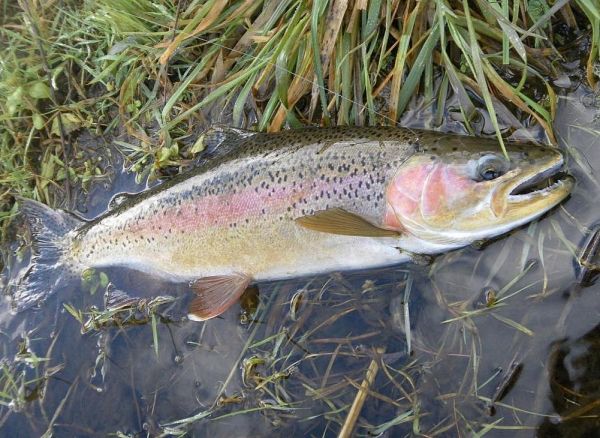
Tight lines guys
Mike |
|
|
| Back to Top |
|
|
|
|
| |
| COMMENTS |
|
| Hey you mention split shot earlier are you definately allowed to use split shot or lead on the line or is this not legal? |
|
|
|
| Redfish | Thu 12th February, 2015 | View 1 Replies |
|
|
|
| |
|
|
|