| |
|
|
| |
It just gets better and better.
Mon 27th April, 2015
|
|
|
|
 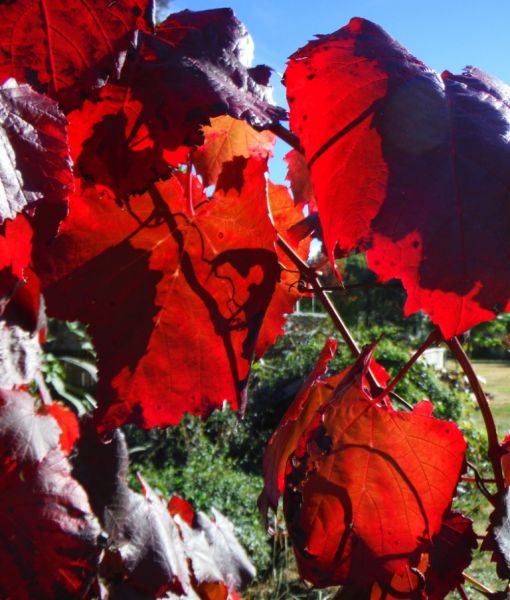
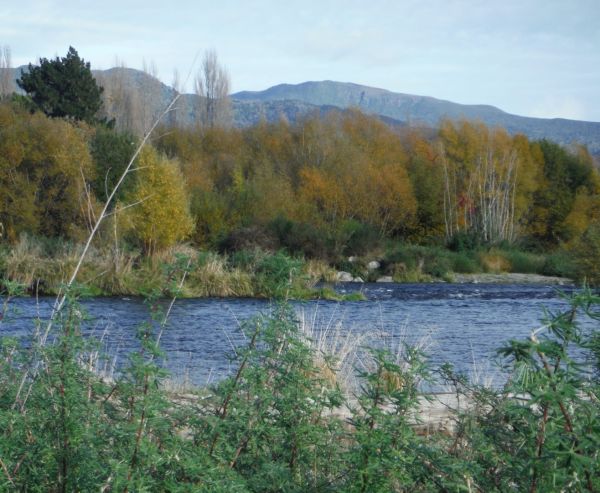
As temperatures begin to cool and the days get shorter, Turangi and the banks of the Tongariro are a mishmash of stunning Autumn colors.
When the trees start to shut down for winter this annual display is a reminder there's even better fishing just around the corner and is one of my favorite times of year.
Already anglers are fishing traditional "winter spots" and some of them are beginning chuck out a few fish.
I suppose the most obvious example is the Bridge Pool which from now on will be occupied by an increasing band of regulars from dawn til dusk.
During the Autumn/Winter rainbow trout migration from lake Taupo, fish numbers slowly begin to build until they peak later in the year, usually around October. Fisho's that know the Tongariro will target these hot-spots.
Throughout the summer months when the frequency of the runs slow and the fish population is less some of these stretches are not usually worth the effort and you'll hardly see anyone fishing them for months.
But come the winter runs its a different story and you'll have to set the alarm if you want to get through any of these places first.
And they're not necessarily just the feeding lies along the seams where fast water meets slow or indeed the popular well known pools. Canny anglers look for area's along the river that the fish HAVE to pass through which concentrate the pods on their way upriver.
In shallower parts of the river this might be the channel usually found along one or other of the banks. Although migrating trout would be reluctant to move through the shallows in daylight they would happily use the deeper run.
Before and after most pools there are stretches of shallow water where the flows are particularly strong. Migrating fish tend to pass through these area's quickly. Look for the first available "softer" deeper water above these places {no matter how small} where trout will take a breather on their upstream journey.
If the tail of a pool flows at a comfortable walking pace and the river bed is strewn with rocks and boulders this is great holding water. The back of the old "Honeypot" was a perfect example.
The Tongariro is a big river with strong flows but these are slowed to almost nothing near the bottom and edges by friction acting on the water molecules. Fish use this phenomenon to conserve energy and as they travel upstream you'll often see fish filing past close to the bottom and where the water is deep enough, close to the bank.
The big runs haven't really started yet but the fishing on the Tongariro just gets better and better.
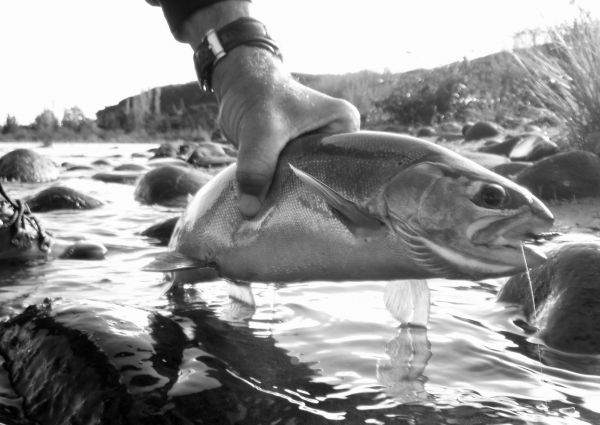
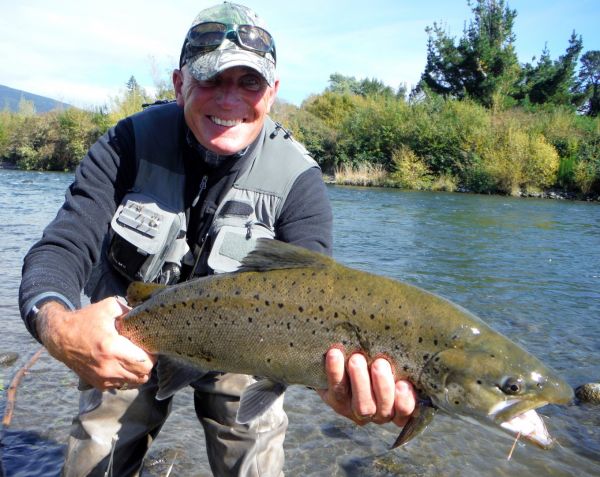
I fished with Sean Seamer again yesterday and he landed several nice fish including a four pound rainbow and an eight pound brown.
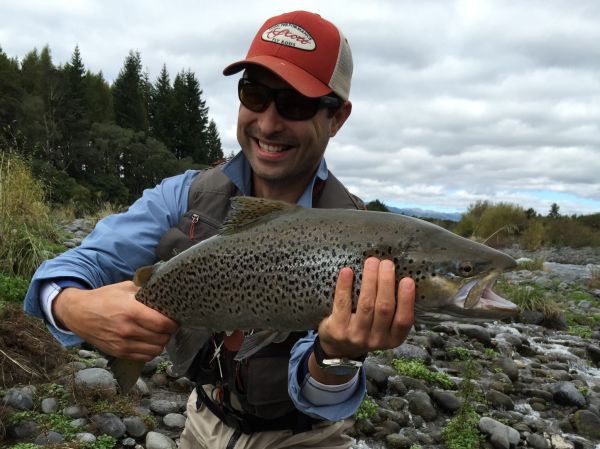 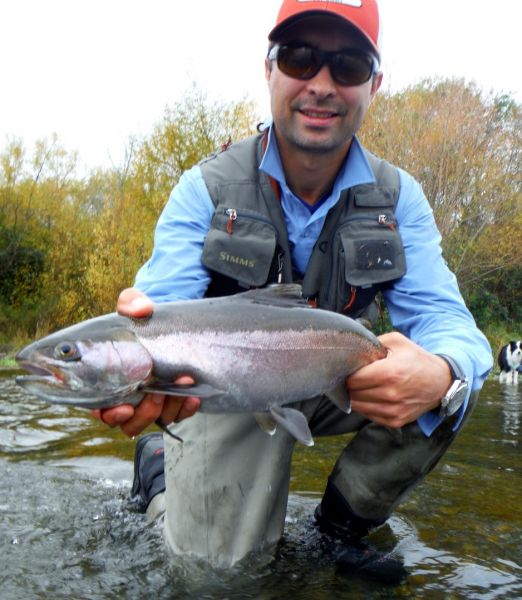 The browns just keep coming and it almost seems as if every angler you talk to has a brown trout story to tell. The browns just keep coming and it almost seems as if every angler you talk to has a brown trout story to tell.
Inevitably a lot of them are all about the one that got away.
Losing fish after hooking up is all part of fly fishing and something we learn to accept.
Thankfully as your experience grows this tends to happen less often and sometimes after losing a good fish you won't even bother to utter the magic words...but isn't it funny how the ones that get away are always "good fish."
For the novice angler this journey of learning to cast, mend and strike is only half the battle ... what happens when it all comes together and you eventually hook up?
For most of us when we first start out fly fishing the answer to that one is simple ... PANIC!
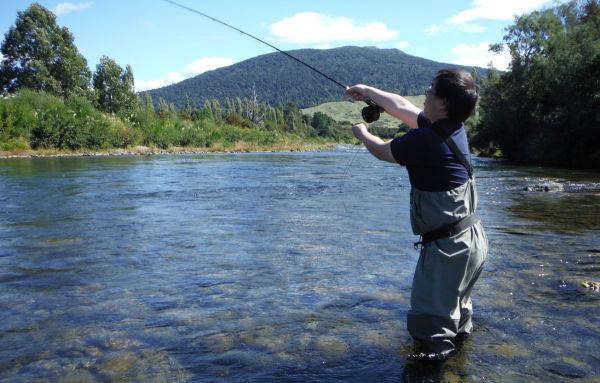
Its very easy to forget how uncoordinated and clumsy we looked the first time we ever picked up a fly rod and from memory it actually got worse not better when we eventually hooked a trout.
But nobody was born a fly fisher and we've all been through the rookie period ... and probably made exactly the same mistakes.
The first of these occurs just after the cast. The right hand hasn't the faintest idea what the left hand should be doing and vice versa. In fact it might as well be somebody else's hand. By the time our brain sorts it out there is a huge downstream bow in the fly line and the indicator is traveling downriver so fast the trout would have to be strapped to an outboard motor to have any hope of catching the flies. These by the way are now five feet above his head and the fish is a tad suspicious. Its an easy one to rectify. Immediately after you've cast place the line under your index finger and trap it against the rod butt. This will enable you to mend effectively, give you better control of the line and you'll be all set to strike when the indicator disappears. Once the flies are level with you its usually easier to release it from under your finger and hold it with your "line hand" until the drift is over.
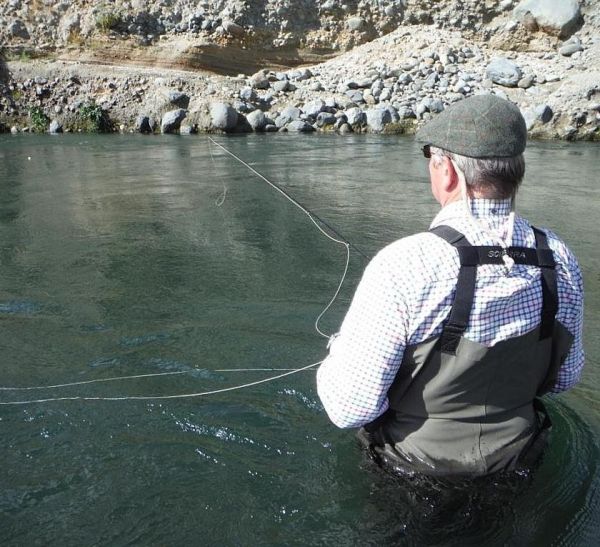
During the drift follow the indicator downriver with the rod and after each mend return the rod tip to a position just in front and downstream of it.
When the time comes to set the hook strike low and parallel with the river in the direction of any curve in the line.
And although you don't have to rip out a trouts gums to set the hook always strike with conviction.
Its a slightly different technique when nymphing with the long dry and dropper, then its better to employ a firm lift into the fish.
Once you find yourself attached to a trout its important to apply the right amount of tension.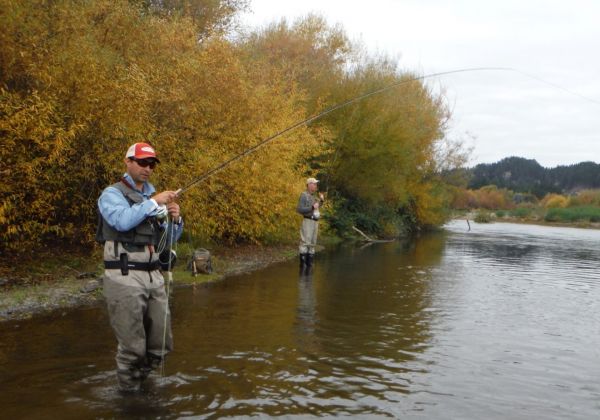
You need enough to stay connected to the fish but not so much that your leader and tippet are at risk of snapping. I prefer to keep the rod low at first using the weight of the trout and the water pressure on the curve in the fly line to ensure the hook stays put. Personally I'm not to bothered about getting any loose coils at my feet back on the reel. My priority early in the fight is to gain control of the fish.
If your attention is focused on reeling like crazy to take up this line it can distract you at a critical time in the fight ahead.
Watch an anglers rod tip as he tries to get slack line back on the reel while playing a fish. It bounces all over the place and each time this happens it introduces a moment of uneven tension on the hook hold which could cause it to work free.
I much prefer to play the fish "on the line" by releasing or stripping back line that's held under appropriate pressure by the forefinger of my rod hand pressing it against the butt.
I know others will tell me this is a recipe for disaster and those excess coils of line outside the reel will catch on rocks or bank side vegetation causing the loss of a fish or two. But I don't remember this happening that often over the years.
I do recall several occasions where I've lost fish while playing them on the reel because the fish has suddenly gone off on one and I've been too slow letting go of the handle. In any case a running fish will often take up that line and more, so why worry about it.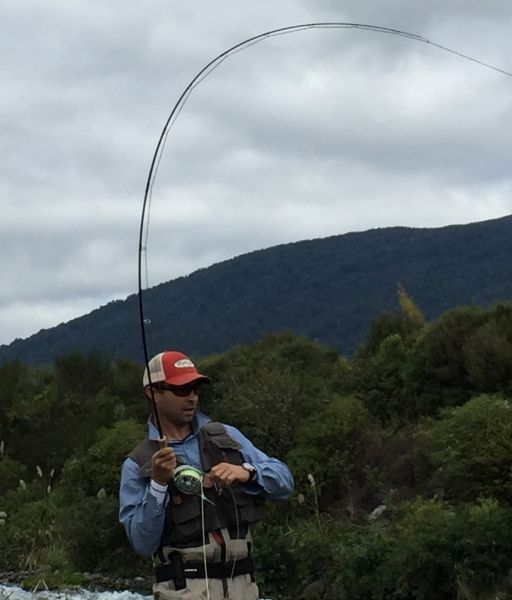
As I mentioned last time, browns are very unpredictable. One of their classic tricks is a sudden change of direction when you're playing them. One second the fish is off on a deep powerful run upstream and the next its heading straight back at you at a rate of knots.
This maneuver immediately introduces a huge amount of slack and gives them an opportunity to dislodge the fly.
In this situation playing them on the line is an advantage because you'll be able to regain far more line by stripping quickly than you will by turning the handle on a standard fly reel.
Its always much easier to control a fish when its directly opposite your position. But if a fish takes off either upstream or downstream and you can't stop it you'll have no choice but to chase after it.
If you're unable to follow it I've read somewhere that by lowering the rod tip below the surface you can sometimes ease the fish back to you. I don't quite understand how this works and I haven't tried it but you never know.
Lastly remember not to rush it.
Maintain your concentration right up until the fish is on the bank or in the net. A moments lapse or lack of patience even at this late stage could end in a broken tippet or worse still a busted rod ... now where have I heard that story before?
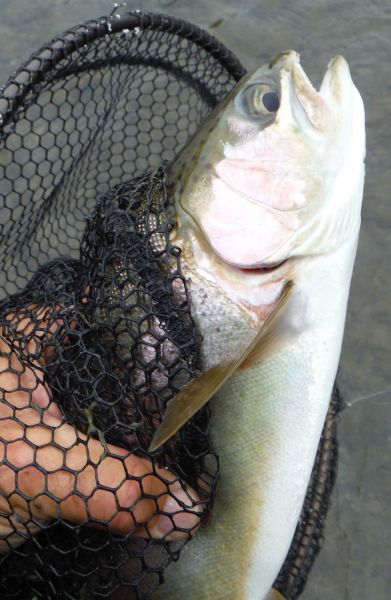
Another great few weeks on the Tongariro although things slowed slightly mid-week.
Over the last day or two the town pools have again produced some nice rainbows and I've weighed a few over four and a half pounds.
With mid morning and late afternoon hatches taking place, most days "naturals" continue to be the best bet. I've found mayfly patterns are working better than caddis. Nothing special ... Pheasant Tails, buggy tied Hare and Coppers and the Little Brown Bug are all taking fish.
Not as many anglers as I'd anticipated over the weekend but there were a few on the Upper river and reports from them were fair.
Heavy rain and gusty winds forecast to move across the country today with significant falls in places. A showery outlook until midweek then everything settles down and warms up again by Friday,
This will set things up for the weekend and I have a feeling it could be good.
UPDATE TUESDAY 28th APRIL
The Tongariro peaked at over 420 cumecs and is currently flowing at 90 cumecs. This is the first good fresh for sometime and will get some fish moving and clean up the river a bit. The stronger flows will have dislodged a lot of the nymphs and larvae from their habitat on the river bed and these will provide easy pickings for the fish over the coming days. I expect there'll be a few little changes out there as well.
I'll sign off with more pics.
 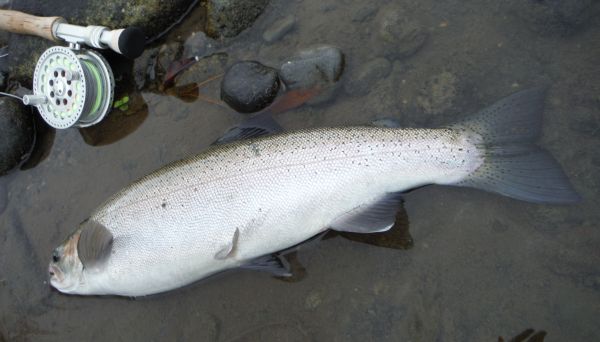 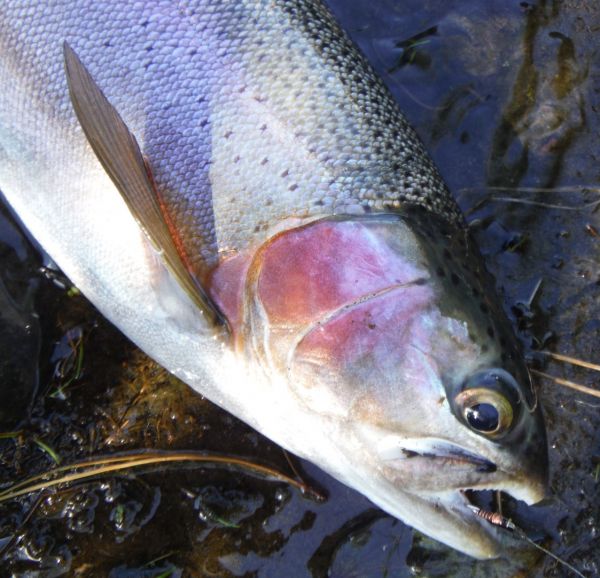 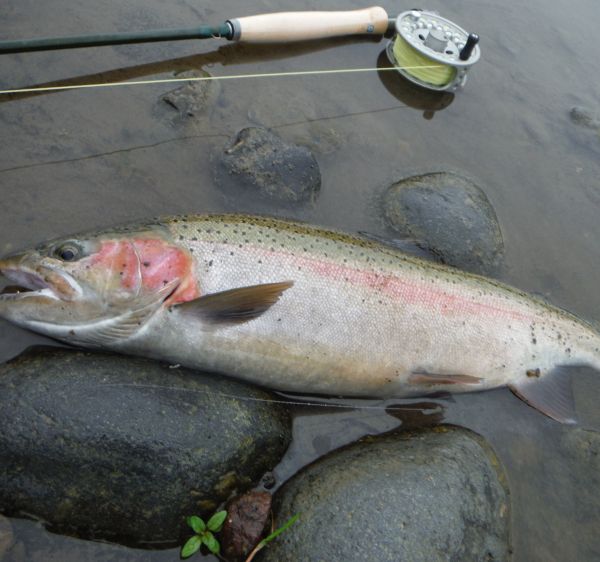 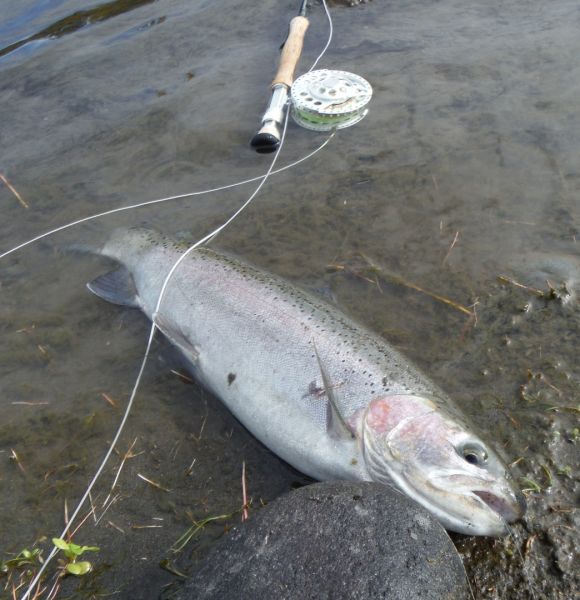
Tight lines guys
Mike |
|
|
| Back to Top |
|
|
|
|
|
|
|