| |
|
|
| |
First report of 2016
Sat 23rd January, 2016
|
|
|
|
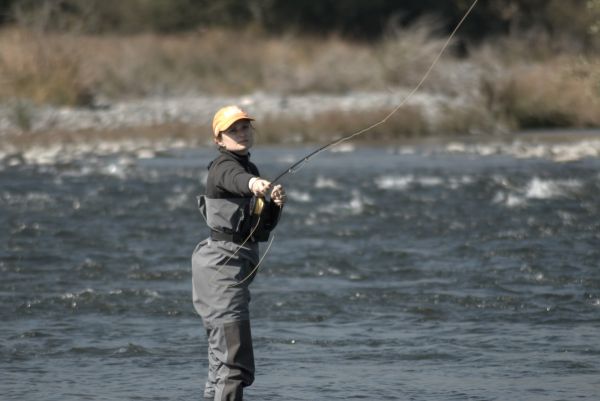
I think everyone in Turangi will tell you its been another very busy few weeks in town. During the Christmas madness the area seems to attract more visitors year on year and I'm told at one time there wasn't any vacant accommodation anywhere in town.
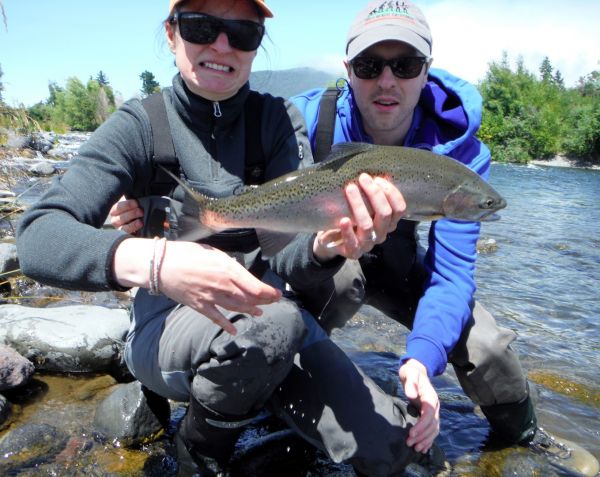 If you're on the river you'll bump into all sorts of nationalities keen to try their luck on the Tongariro and this influx of overseas visitors will continue for the next couple of months. If you're on the river you'll bump into all sorts of nationalities keen to try their luck on the Tongariro and this influx of overseas visitors will continue for the next couple of months.
The fishing was a little tough somedays however now that things are quietening down again it has already improved. And of course we had the fresh earlier in the week.
But this one had us all guessing for a while.
It peaked at over 100 cumecs and the river turned a sort of orange brown. But as the levels fell back it became obvious there was more to it.
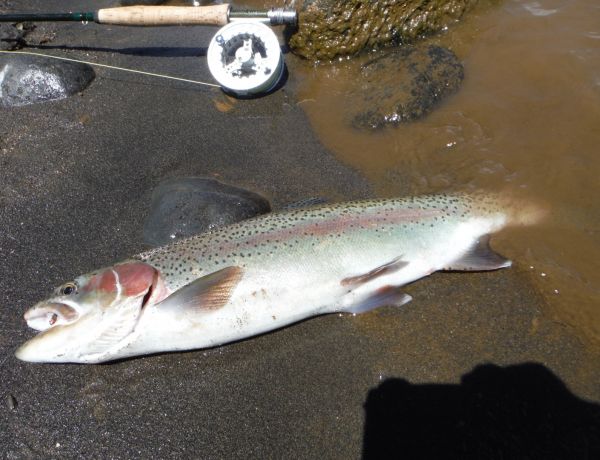 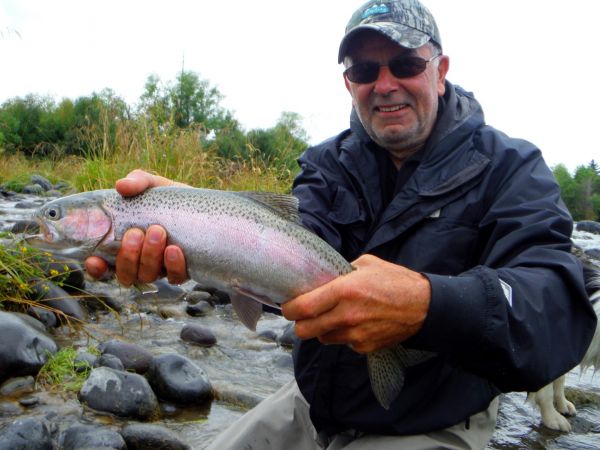
Instead of clearing, the river retained its strange new color for a couple of days. We now know it was caused by a big slip further south. It must have been quite a significant event because as the flows eased back and the sediment dropped out it settled in many parts of the river. You can feel it underfoot when you're wading and see it along the waters edge. It definitely put a lot of anglers off at the time but as long as you fished away from the main flow there were still fish to be caught. I was fishing the margins with Nick Rainey and he'd already hooked a couple of rainbows when a brown "head and tailed" right under his rod tip.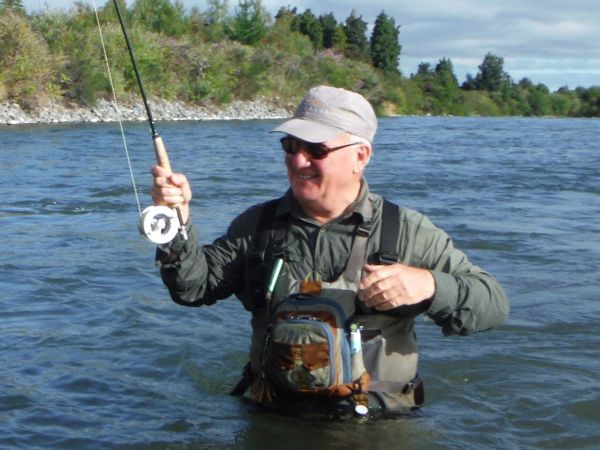 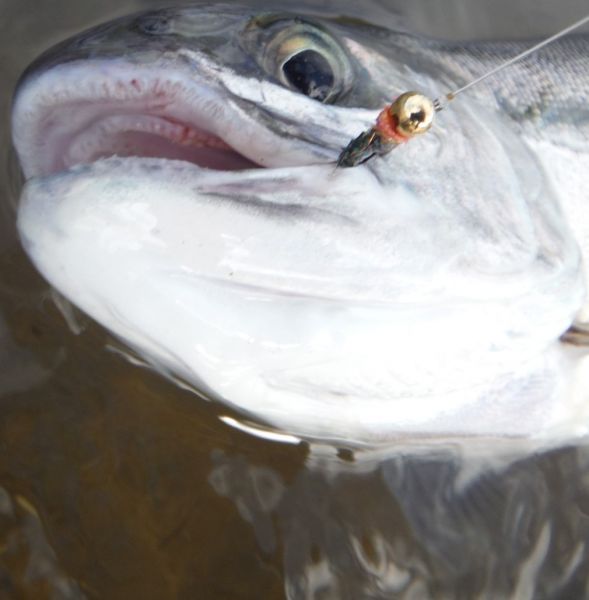
On Thursday as the river eventually began to clear I fished for a few hours with Mike Fransham.
Mike is a good friend and one of a handful of people in Turangi who speak Welsh. I have to say his pronunciation is spot on especially when you take into account he's a Kiwi.
He loves the water and quite often as he fishes away you'll see him suddenly do a backward flip and dive into the river for no apparent reason.
He doesn't usually stay under for long and when he resurfaces always shouts out a Welsh greeting to let you know he's back. If you look closely at the photograph above you can see he's still a bit damp but he's playing his first trout caught using the czech nymph and doesn't care.
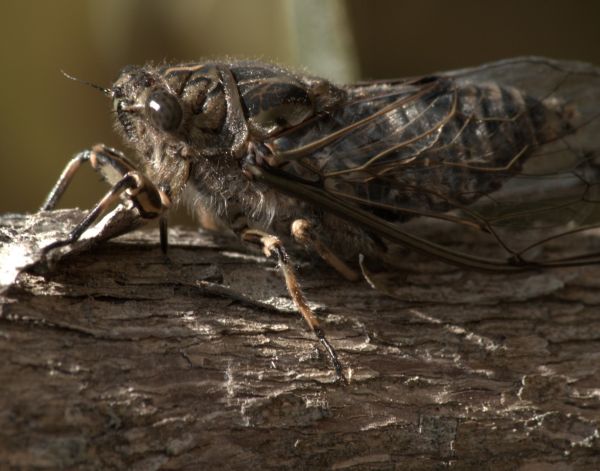
January is the time most anglers start thinking about the prospects of some Cicada action on the river. They've been chirping away for weeks in most of the surrounding country side but things had been pretty quiet along the banks of the Tongariro. This all changed a couple of days ago.
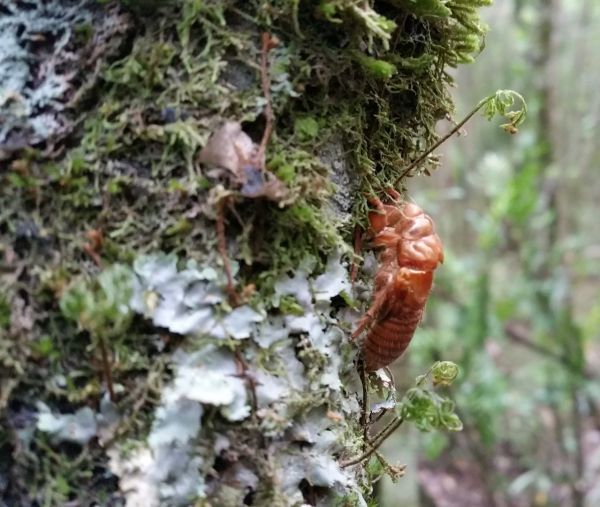 Up until then I'd only come across single husks discarded on the trees and branches but almost overnight we've had one of the best cicada emergence's for years. Up until then I'd only come across single husks discarded on the trees and branches but almost overnight we've had one of the best cicada emergence's for years.
Now from the lower river right up to the Fence Pool you'll notice empty cicada shells everywhere and noise levels have increased dramatically.
On some of the larger trunks you'll see dozens of husks one above the other snaking their lifeless way up the side of the tree. These were left behind after the nymphs vacated their underground chambers and made their way to higher ground for the final moult.
The last couple of years have been a bit of a disappointment and the much anticipated mass emergence fizzled out before it had really begun. But this year it might turn out differently. The unsettled weather with its mix of showers and sunshine is just what the cicadas need during this part of their life cycle.
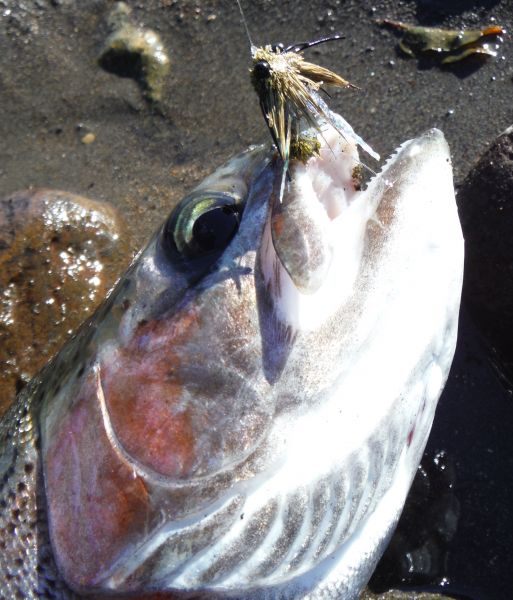
The recent warm spell has probably ensured the ground temperature has reached the magic figure that triggers them to migrate upwards. Most studies seems to agree this is around seventeen degrees centigrade.
And the rain and showers have also kept the soil moisture content high making it much easier for the nymphs to burrow up from their homes in amongst the tree roots.
The forecast is for more of the same so we should see really large numbers of these big insects all along the Tongariro.
Cicadas may have wings but they are useless aviators. Its only a matter of time before more and more of them start falling into the river and that could trigger some of the best top water action for a few years.
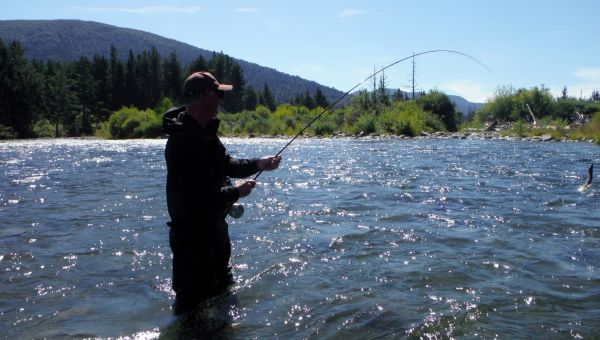
If I'm not targeting browns I like to spend my time fishing runs and riffles in summer. Riffles are a great place to find a few fish when the going gets tough. In these shallower stretches rocks and stones moved from further up often collect on the river bed and as the water passes over them the resulting turbulence helps promote the gas exchange that we call oxygenation. Trout use their gills to extract this dissolved oxygen {dO2} from the water but the amount of dO2 available to them is partly influenced by the water temperature. In summer as temperatures climb the water in the slower parts of the river heats up and dO2 levels can fall. This can affect their behavior and especially their feeding habits. On hot sunny days trout will actively seek out cooler oxygen rich water and are often found holding in riffles. Many of the invertebrates they regularly feed on spend most of the aquatic stage of their life cycle in this environment. Caddis in particular love these faster, shallower stretches of river, something to bear in mind because anglers sometimes fish the larvae imitations in water that’s too slow. So riffles are good places to find trout and the insects they eat … but what else do they have to offer?
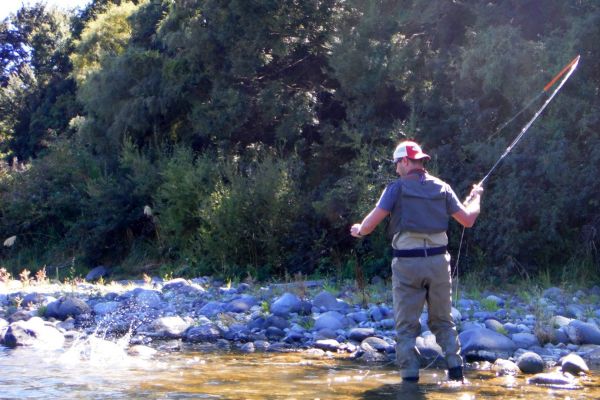
Riffles are generally much more user friendly than pools especially if you have never fly fished before. There is no need for long leaders and heavy bombs so learning to cast with a lighter more manageable set-up is much easier. Unlike a pool, riffles flow at a fairly uniform speed therefore mending and controlling the flies during a drift is less complex. And because the water is shallow you don’t waste time waiting for the nymphs to sink to the river-bed. This means you’re flies are fishing effectively for longer.
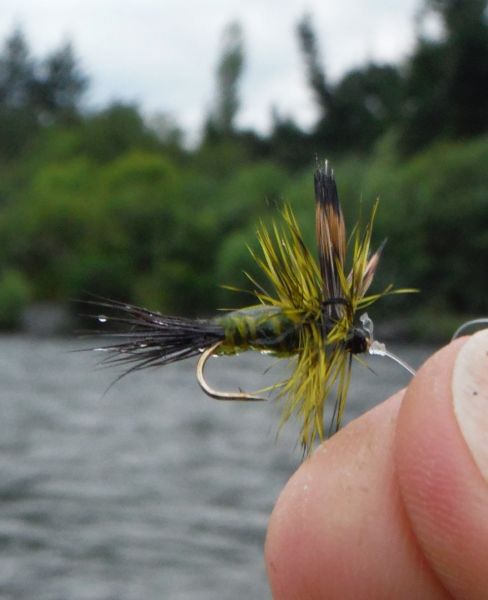
Trout are less likely to be spooked by the fly line because its silhouette is broken up by the choppy water. So riffles are a great place to experiment with the dry fly for the first time.
Big buoyant dries work well in this kind of water and for the next few weeks my first choice would be a cicada.
But try patterns like Royal Wulf, Humpies, Green Drake or Blowfly imitations with or without a dropper.
I fished with a couple of very good Irish anglers a few years ago and one of them had a lot of success fishing shallow riffles with an Alder pattern. He'd cast out and deliberately let the fly "drown" as it traveled downstream so don't fret too much if this happens. Just carry on with the drift ... trout often encounter insects in trouble in the rough and tumble water of riffles.
However big fluffy indicators don't go down well here so if you're nymphing lose the yarn and lighten everything up. Instead of watching the indicator watch the end of the line where it enters the water and strike at any upstream movement or hesitation as the flies drift downstream.
Trout are also easier to sneak up on in riffles.
The books written by anglers like Vince Marinaro or Brian Clarke and John Goddard have demonstrated how trout view the outside world through a circular "window" surrounded by what they call the "mirror". The radius of this window gets smaller the nearer the surface the trout is lying and conversely increases the deeper the fish swims. For instance if the fish is lying at a depth of six inches its view of the outside world is confined to an area at the surface about the size of a saucer. But if its six feet down in a deep pool this increases to a radius of over five feet. This helps explain why, with a careful approach, its possible to get up close to fish holding in shallower water without spooking them. Which in turn makes life a lot easier as far as casting and presentation is concerned.
We all have favorite places along the river, banker spots where we nearly always hook up. Thinking about it only one of mine is a pool, the others are all riffles or runs.
Next time don't walk past ... have a chuck.
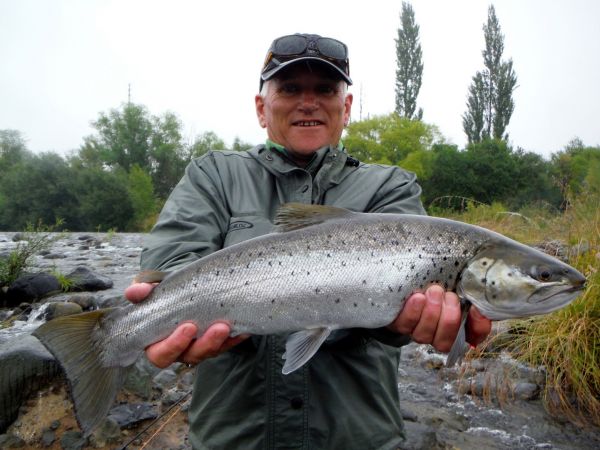
There have been fresh fish showing up most weeks since the last report. A lot of the rainbows are around two pounds with a smattering of better fish amongst them. Last year some excellent fish showed up during the last couple of weeks of January and with plenty of browns also in the river it should be good.
I haven't caught any monsters yet but they've been nicely marked fish between five and six pounds.
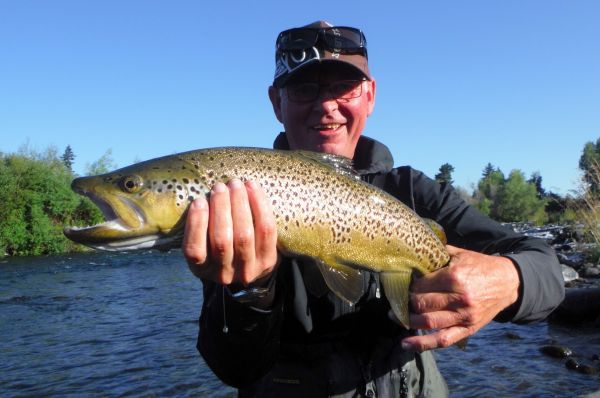
I've got a long way to go but the more I practice, the luckier I seem to get with the Czech nymph. As you can probably tell its a technique I'm pretty keen on because it opens up more of the Tongariro.
When you're fishing in the deeper runs ... say up to waist high it can be deadly. Any of you who watched Roman fishing the method on the river last summer will know what I'm talking about. Its a technique I really enjoy and its saved the day on many occasions.
I started to pick up the odd brown on it last year and it scored again in the murky water mid-week. Expect some much bigger fish to turn up in the reports from now on. And with noise levels deafening along some of the tracks keep those cicada patterns handy.
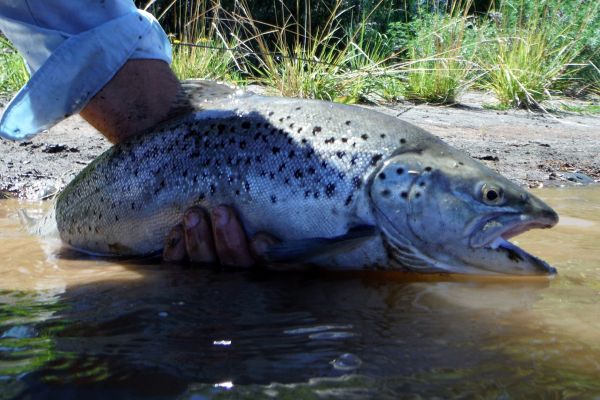
A big thank you to my son Andy for some of this weeks images.
Tight lines guys
Mike |
|
|
| Back to Top |
|
|
|
|
| |
| COMMENTS |
|
Hi Mike,
Good to see the reports again and just in time for my next visit. I'm coming over from 14-27 Feb so may see you on the river or at Creel Cafe or TRM. I really appreciated to comments about fishing riffles as that is what I was going to concentrate on with this trip as well as a hunt for Browns. It should make a nice change from bombs and nymphs in the deep pools. I might even have a stab at a simple form of Czech nymphing, without all the special gear that one reads about,
Cheers and see you on the river somewhere (maybe)
Murray |
|
|
|
| Muzza | Sat 23rd January, 2016 | |
|
|
|
| |
|
|
|


