| |
|
|
| |
Its been that time of year again.
Thu 31st March, 2016
|
|
|
|
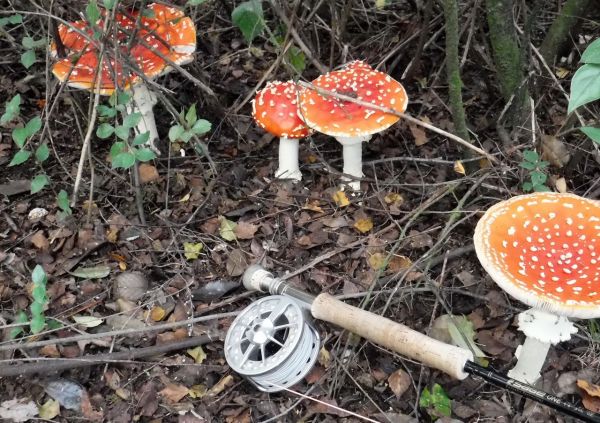
Its that time of year again ... the "in between" period when most of the rainbows are back in the lake and the fishing becomes a lot harder. The big winter runs are still a little way off but the appearance of fly agaric mushrooms along the access tracks is a reminder that we're well into Autumn and better fishing isn't far away.
The last couple of years we had some unexpected early/late runs depending how you look at it particularly the first couple of months of last year. The influx of fresh run rainbows we had back then, boosted the fishing and provided some great sport at a historically quiet time in the fishing calendar.
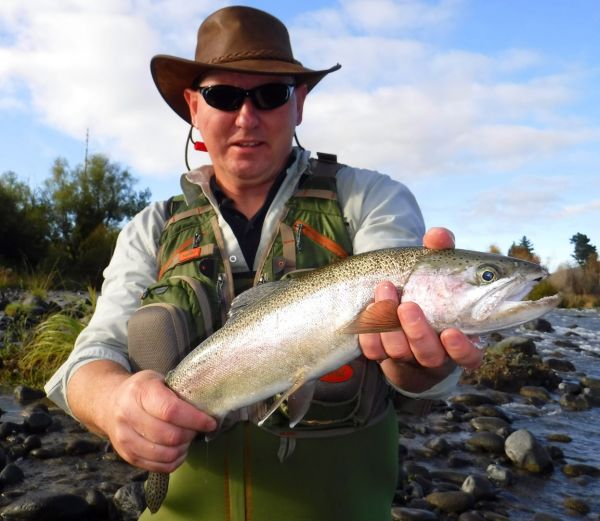
So far although fish have continued to "drip feed" through we've had nowhere near the numbers or size of some of those early 2015 fish. I know a lot of really good Tongariro regulars and its been the same story from all of them. An occasional better than average day but generally a lot of effort for very little reward.
Personally I prefer to fish mainly for the browns in the river when its like this and concentrate on them until around May targeting the town and middle river during February, March and April.
Places like the Stag, Hydro and Judges are all well known for browns.
But anywhere that has that mix of soft water to the side of the main current especially if the river bed is strewn with large rocks and boulders is worth a shot. Of course you'll also catch rainbows but rarely will you catch browns in the faster stuff that rainbows happily tolerate.
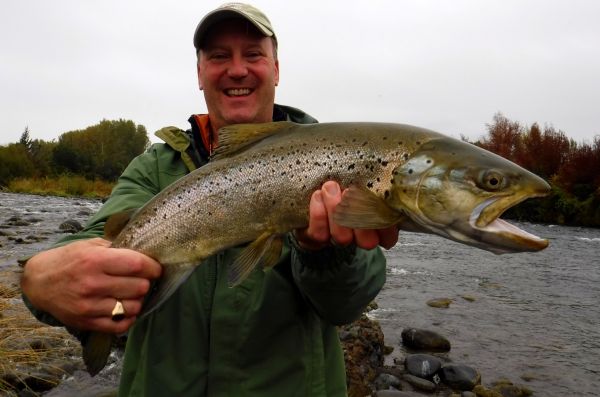
In fact the brown trout fishing hasn't been too bad ... more on that later.
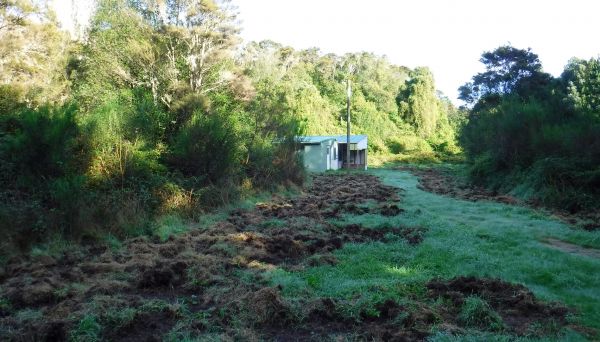 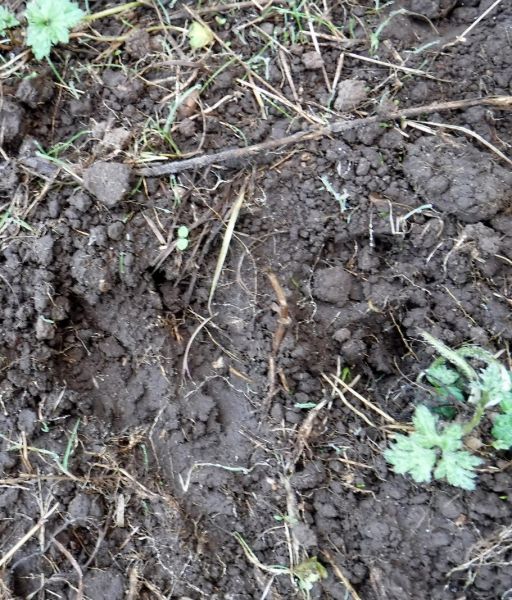
I fished the middle river with Sean and Luke on Sunday and came upon this scene of feral pig damage on the TLB below Duchess. I've seen this before much further upriver on the TRB and also along some of the less often used forestry tracks. I'm not a pig hunter ... but Luke is and despite the whole area looking as if it had been crudely ploughed he pointed out that this destruction was likely caused by just a few animals.He showed me some of the hoof prints and said they were made by quite a large pig.
Pigs are omnivores so they'll consume both plants and animals. In the wild, pigs will forage for plant roots, fruit, grasses and even flowers. They'll also eat anything else that turns up as they use their snouts to dig into the ground, for instance earthworms and other insects. Their snouts are incredibly strong but sensitive and are reinforced with a special bone and a disc of cartilage near the tip.
The history of pigs in New Zealand makes interesting reading. They were brought here in the late 1700's, first of all by the French explorer and navigator Jean Francois de Suville and a little later by Captain Cook who gave some of them to local Maori. Pigs are able to breed as young as five months old and a feral sow is capable of producing two litters a year with up to a dozen piglets in each litter. Some of these inevitably escaped and in the ideal New Zealand climate and with no predators they quickly became a problem. These " Captain Cookers " as they were often called were a mixture of old English breeds which later cross bred with other domesticated pigs introduced to New Zealand like the Kunekune. This has produced the huge color variation and distinctive shape we see in the New Zealand feral pigs we have today.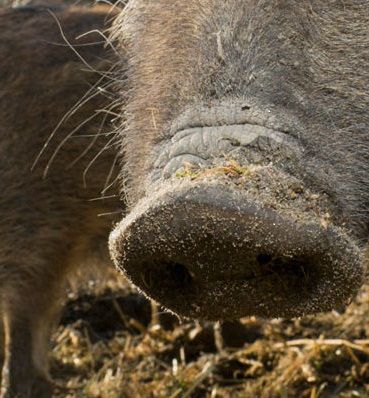
As the wild pig population grew they began to cause massive damage to crops, farm land and young stock, particularly lambs. Maori began to hunt them as a food source but European settlers organized pig hunts in an attempt to control their numbers. Although I bet some of them ended up in the pot.
By the 1930's the New Zealand government had implemented a scheme whereby they would pay a bounty of three rounds of ammunition or a shilling for every snout and tail handed in.
Feral pig numbers peaked in the late 1940's when it was estimated there were over 120 pigs per square kilometer of bush.
Today pig hunting is a popular sport and in 2007 New Zealand Pig Hunter magazine stated its readership was over 25,000.
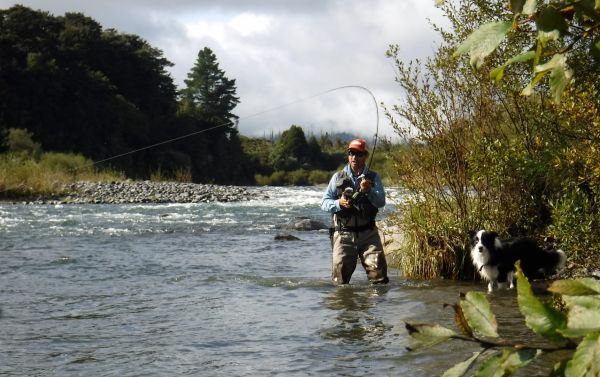 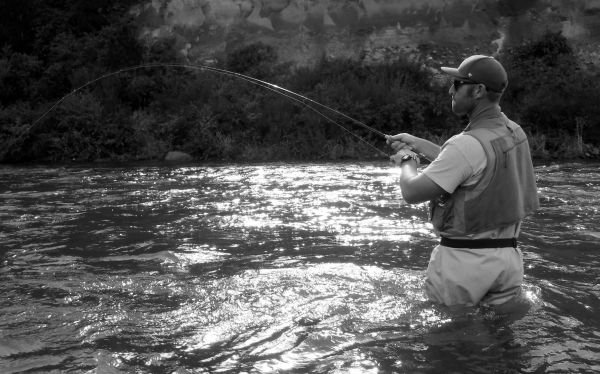
As I mentioned earlier we'd decided to try the middle river.
Easter weekend is always a busy time on the Tongariro and most spots with easy access get hammered. This combination of lots of anglers chasing few fish was going to prove difficult and that's exactly how it panned out.
Despite chopping and changing methods, flies and locations I think we ended up with four between us for the day! My one and only fish pictured below.
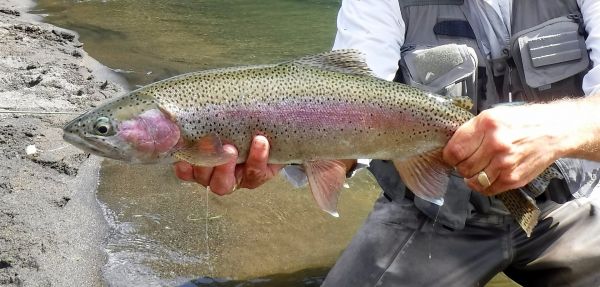 
With the holiday weekend over I thought it might be a good idea to let things settle down a bit before I fished again and didn't venture out until midweek when most people were back in work.
What a difference ... I got on the river early and as the sun rose and began to chase away the autumn chill I hit fish straight away ... landing six rainbows in the first hour and a half.
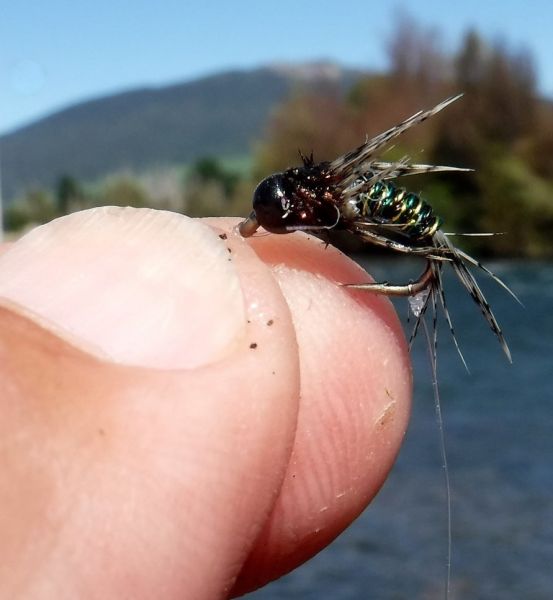
All of them took the caddis or pupa below the big dry. I always use a weighted caddis pupa and find a black bead head works best.The bottom nymph can be whatever you think will work on the day. On this occasion I was using a light brown caddis, there's often plenty of them underneath the rocks above this spot. But I've caught a lot of fish on Mercers Little Brown Bug and that's the one I use most often on this rig.
Usually when you get a take with this method the indicator fly just disappears and you simply raise into the fish with a slightly delayed strike. But this time it was sailing under and almost before I had time to react the fish had straightened the fly line and more or less hooked themselves.
It isn't often they hit the flies with such gusto.
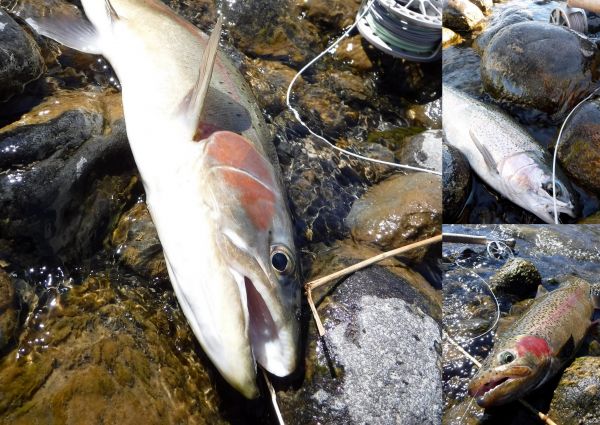
This spot is well known for holding browns as they make their way upriver. And has all the elements I listed earlier. I've had several from here this year some of them real "little fatties". I've fished this place hundreds of times over the last ten years but only occasionally caught browns here before 11.00 am.
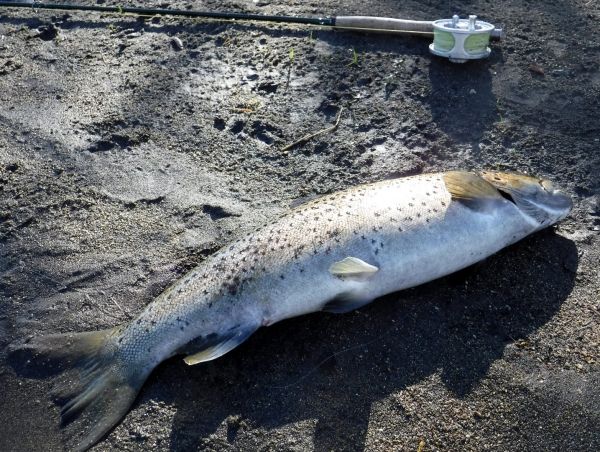
If there's no one else in the pool when I arrive I'll have a flick here first just to see whats around. Then if I think its worth staying put I'll nymph the rest of the pool until mid morning.
The biggest mistake anglers make here and in other similar places along the river is to wade out.
It doesn't matter if I'm chasing browns or rainbows if I'm fishing this kind of water the first thing I do before I cast out ... nothing! Spend a few minutes just standing at the rivers edge and polaroid the water because fish can be a lot closer in than you'd think.
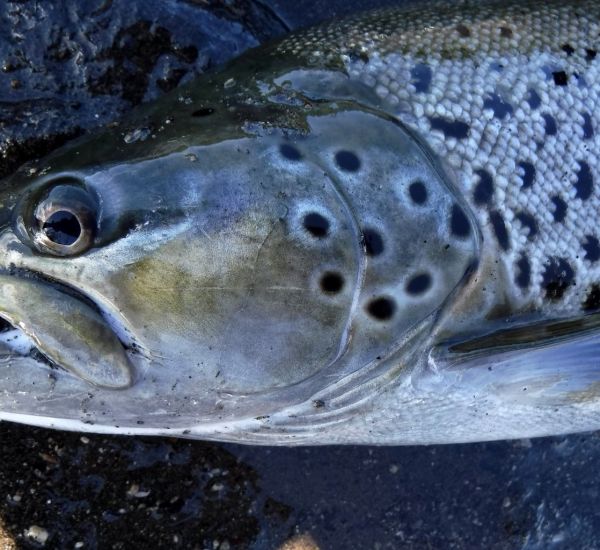
Even if you don't spot anything "fish your feet first". Browns especially have excellent camouflage and you won't see every one of them.
This is exactly what happened to me on Wednesday.
I had the place to myself and was following my normal routine so around 11.30am I returned to the head of the pool.
It was fairly quiet at first with no sign of the rainbows that had been there earlier. Then I spotted the unmistakable shape of a brown lying on the edge of the seam a couple of rod lengths out upstream.
It was easy enough to reach this brown but the drift was short and the mend awkward. The first couple of casts were ignored and I realized I'd have to tweak the rig a little to get the flies down faster so changed to a heavier version of the same pattern. Next drift the fish moved slightly, the big dry slowed and it was " fish on". A couple of pics later it was returned none the worse for our meeting.
The camera info tells me it was 12.04 pm.
Trout have a double row of quite sharp, strong teeth in the roof of their mouths and although the take was fairly subtle this fish had again sucked in the fly as if it was going to be its last meal. It had also been keen to show me some of the snags in this stretch so with my setup looking the worse for wear I decided to re-rig and at the same time let Blue share his sausage roll with me.
Around fifteen minutes later I returned to the bottom of the same run and began fishing again.
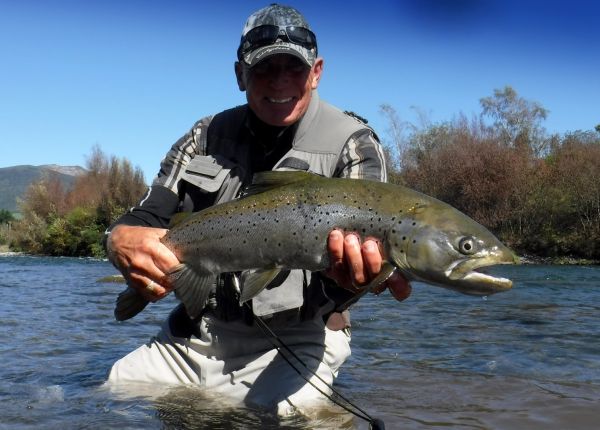
Its fairly shallow here, may be four feet at its deepest but the river bed is dotted with large rocks. As I tracked the indicator fly on its downstream drift a brown suddenly rose up from the shadow of one of them and grabbed some unseen insect below the surface. Every fish so far, except one, had taken the caddis pupa and with no sign of any mayfly it was a fair bet this brown was after the same thing. Next cast I again put the flies upstream but a little further out in line with the rock. And as they reached the target the dry shot under and I was in again.
The time 12.23 pm.
The thing is, that fish had probably been lying in the shadow of that rock for some time and even though I'd made several passes up and down I hadn't seen it ... and I was looking hard for them!
The past few weeks on the river have been difficult and I doubt many would disagree with that. By the looks of things there's some wet weather on the way which should help. Things will improve and may be they already have ... we'll see what happens tomorrow.
Our UK visitors have now returned to the sun kissed beaches and tropical heat of the South Wales valleys which should enable me to spend more time stuck in front of this computer.
See you out there guys.
Tight lines
Mike |
|
|
| Back to Top |
|
|
|
|
|
|
|