| |
|
|
| |
A little bit of an improvement.
Sun 1st May, 2016
|
|
|
|
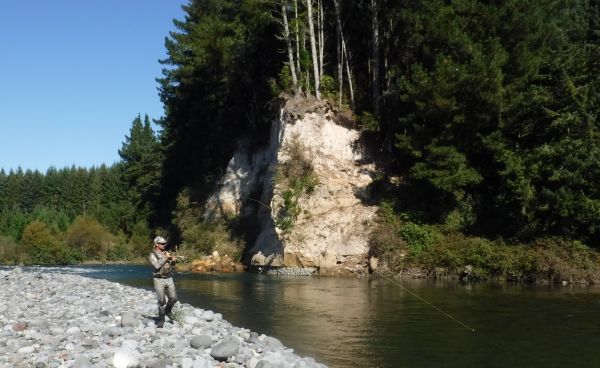 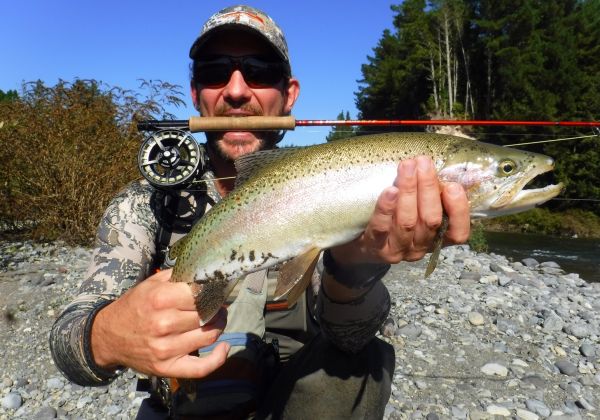 There's been a little bit of an improvement in the fishing this week and a few fresh fish have been showing up. Its by no means bombs and globugs time and they're not big ... but its a start. There's been a little bit of an improvement in the fishing this week and a few fresh fish have been showing up. Its by no means bombs and globugs time and they're not big ... but its a start.
Its still not easy and you have to keep on the move but every so often something a little better will show up, though no browns for me this week.
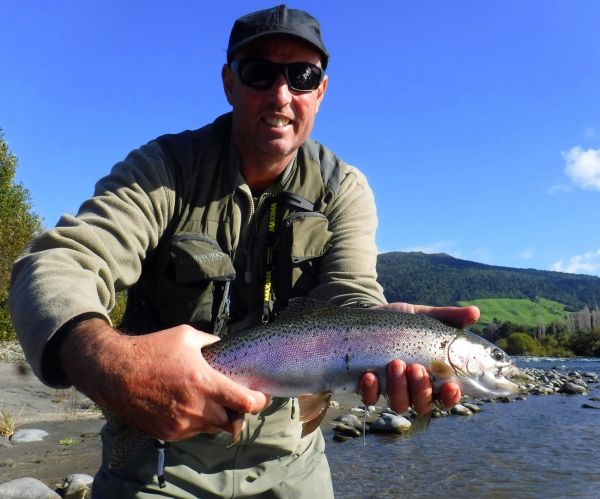
The upper river always looks fantastic in the sunshine and I spent a morning there with Ben. The takes were few and far between but he scored this one nymphing the Cliff pool.
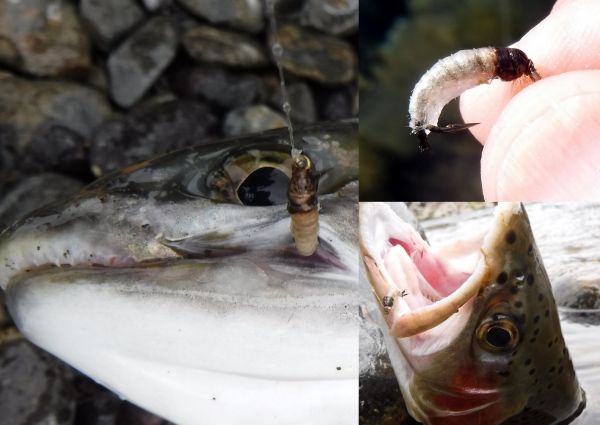
As a general rule of thumb nymphs tend to be smaller and darker in Autumn and Winter and larger and lighter in Spring and Summer. But at the moment the river is full of various sizes of "white caddis".
I may be wrong but I'm guessing the prolonged spell of warm settled weather probably has something to do with this. Usually by now I do better with green or olive and this continues through the winter.
I tend to plump for a size 14 when I'm fishing caddis but nowadays my line has more memory than me and I'd forgotten to top up my fly box. After quickly losing the only size 14 white caddis in the box I had no choice but to tie on a 12 ... and actually did better!
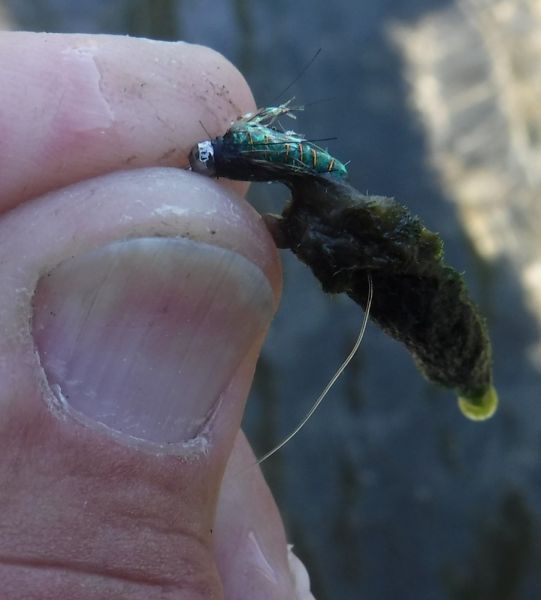
One of the other consequences of months of settled weather is the slime and weed still covering the river bed. Its a long time since we had a good "fresh" to turn over the rocks and stones and flush out some of this algae growth.
Algae is an important factor in the health of any river or stream. It produces oxygen as a side effect of photosynthesis, helps cleanse the river by soaking up harmful nutrients and provides food and habitat for the nymphs and larvae that thrive in the Tongariro.
But its a bloody nuisance when you're fishing and at the moment there are parts of the river that are impossible to fish with a conventional nymph rig or sinking line.
This is where the Czech nymph or dry and dropper come in handy.
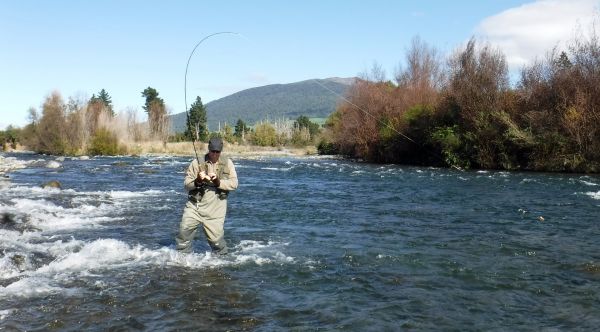 
Despite the fact that your flies are on the bottom, Czech nymphing works best in the faster runs where the algae growth is often less.
With a few more freshies in the river hugging the riverbed on their way upstream, most of the rainbows I've caught recently have been on the Czech nymph in fast water.
The long dry and dropper works well in slower water next to a seam, at the moment weed can also be a problem here. However because you're nymphs are not "hard down" you pick up less.
If neither of these interest you then you'll spend a lot of your fishing time picking green gunk off your flies ... I know what I'd rather do.
Ever since European techniques like Czech nymphing first appeared in the eighties they've always attracted controversy in the fly fishing world. But so has every other new method in the history of fly fishing. Personally I see nothing wrong with it and is just another string to the bow in our quest to catch a fish or two.
 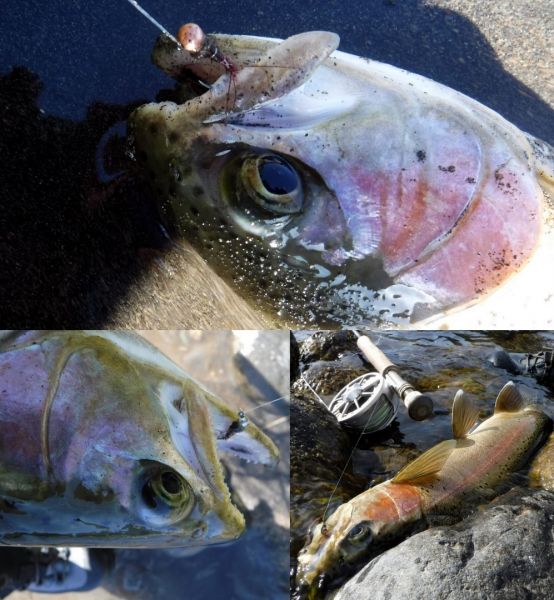 Its still in its infancy in New Zealand and will definitely not work everywhere ... indeed experts in the method will be the first to point this out to you. But there are stretches and situations on the Tongariro where it can be spectacularly effective. Its still in its infancy in New Zealand and will definitely not work everywhere ... indeed experts in the method will be the first to point this out to you. But there are stretches and situations on the Tongariro where it can be spectacularly effective.
New Zealand isn't exactly over-flowing yet with good Czech nymphing gear, although this is slowly beginning to change.
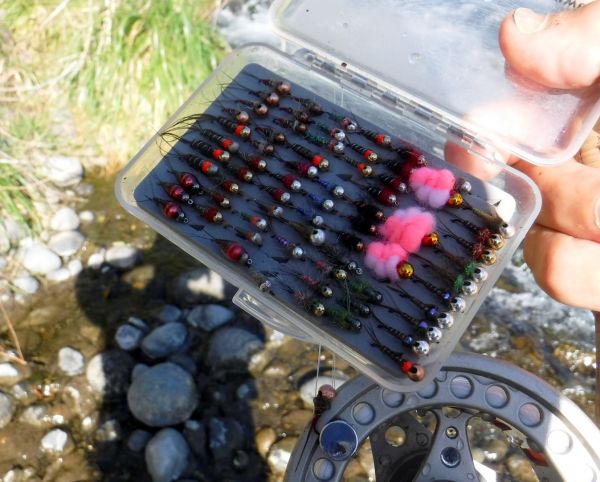
The nymphs themselves can be hard to source and although they're not difficult patterns to tie if you're like me and your arms are not long enough for your eyes anymore you'll be glad you found AK Custom flies.
This small Wellington based company produce a great little range of Czech nymphs which I've been using for the past year ... and they work.
They'll also custom tie your own creations.
Contact Kris or Amy at : akcustoms@outlook.co.nz
Tight lines guys
Mike |
|
|
| Back to Top |
|
|
|
|
|
|
|


