| |
|
|
| |
A busy Queens Birthday.
Thu 9th June, 2016
|
|
|
|
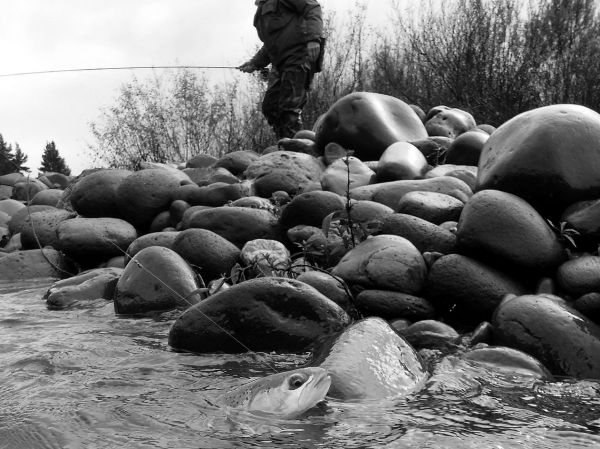
Last weekend was probably one of the busiest bank holiday periods I've seen in Turangi for quite sometime. The combination of fine weather and Queen's Birthday weekend saw visitors and particularly anglers and their families provide a welcome boost for the local economy and some of the cafe's for instance, reported record takings. As you can imagine there were literally hundreds of fly fishermen on the Tongariro and the car parks were often chokka first thing.
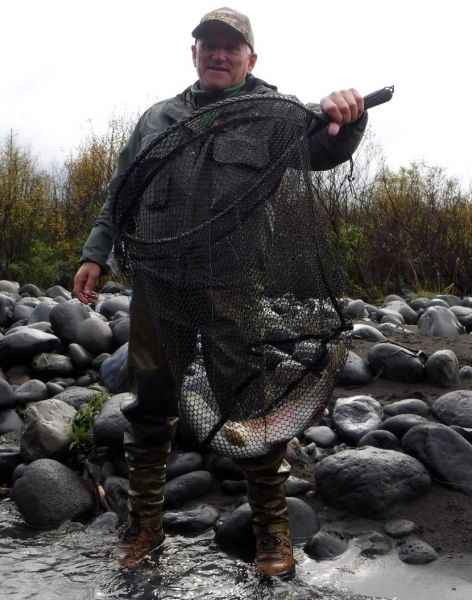 Despite this there were a few fish caught, although it wasn't easy and you had to move around a bit to find them. Despite this there were a few fish caught, although it wasn't easy and you had to move around a bit to find them.
I'd intended fishing downriver on Sunday but when I arrived at the Bain car park there were ten vehicles parked up, so I headed back to town.
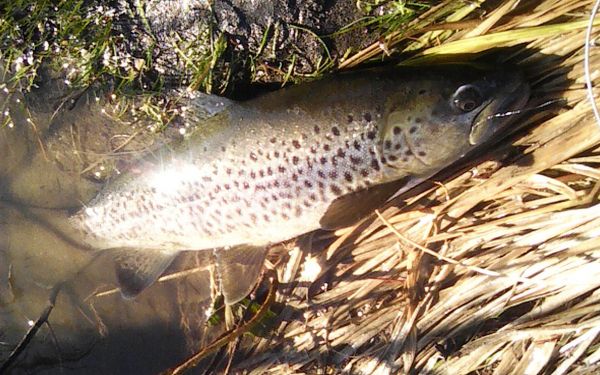
When it's this busy I usually stay away from the pools and try the less often fished water in between...and it sometimes pays off. By the time I got to one of the popular town pools there were already eight anglers lined up ... but the short stretch a little further up hadn't been touched. Its fairly shallow and isn't really "indicator water". Add to this, restricted back casting and overhanging trees along the lie on the opposite bank and it's easy to see why most keep well away from it. You never catch heaps of fish here but when the river's busy, trying little places like this can mean the difference between success and failure. I only had two takes both smallish browns. The first I lost in a snag but landed the second despite the "assistance" of my crazy Border collie.
When you're a "frequent fisher" you notice little trends and over the last year, more and more anglers are trying czech nymphing. Often, when there's someone fishing the method you'll see other anglers stop and watch them for a while, obviously interested in what they're up to.
I spotted several using it over the weekend and they all caught fish. When there's a lot of angling pressure it enables you to fish places others can't and is definitely worth learning. I'll repeat it won't work everywhere and it does take a while to get the hang of it. But if you try it ... give it time ...many don't!
I think a lot of the problem, is that for the uninitiated, czech nymphing is surrounded with a sort of mystique. Anglers go into it expecting instant results with the "magic" method that's going to transform their catch rate overnight. Unfortunately that ain't gonna happen. It takes a lot of practice and time on the water before you begin to consistently reap the rewards. The hardest part, is learning to differentiate between a "take" and the nymphs bouncing along the riverbed. This difference can be quite subtle and its not until you've been using it for a month or two that you begin to realize just how many fish you missed during the preceding months.
There is heaps of information readily available online to help you with the setup, rigs, nymphs etc. And although its totally different to what most anglers are used to on the Tongariro ... like everything else the more you practice the "luckier" you'll get. It's also a great excuse to buy another rod!
 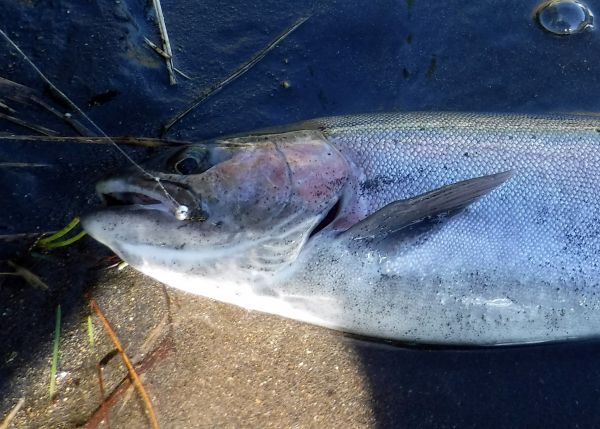
I often get asked why I attach my bombs or bottom czech nymph with a loop instead of a knot.
Its something I frequently do with heavy flies and first started in the UK when I used to fish for sea bass as a teenager. Mainly with lures and plugs like Rapala's and later ... Rebel's.
These were not the huge bass you find in the Southern hemisphere.
Most of the bass caught around the British coastline are between one and five pounds and are a totally different looking fish. More streamlined and silver in color. We used to call the smaller ones "schoolies" because of their shoaling habit. A ten pounder was considered a specimen and once they reached that sort of size they became solitary hunters feeding almost exclusively on other fish.
They're fantastic sport fish, highly prized by UK anglers and I think the current record is 9 kgs, caught {predictably} on a live-bait.
Anyway because we were attempting to imitate a live fish when "plugging" for bass, the advice given back then by the experts was to attach the lure with a loop knot. This allowed the lure to move more freely and "naturally" in the water.
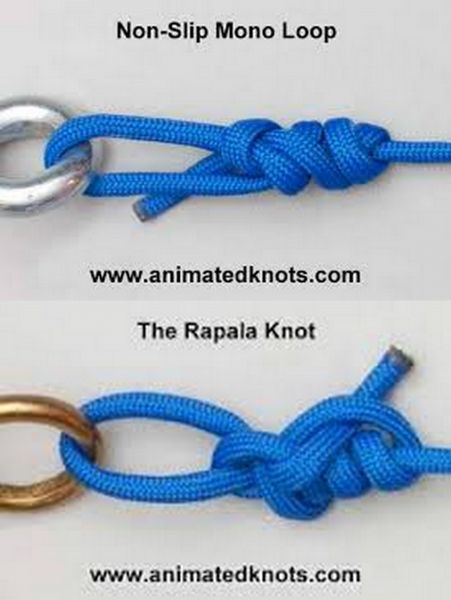 When you add weight to a fly it kills any movement the fly may have so whenever I've used heavy nymphs I tend to use a loop knot. I don't know for definite that it makes any difference but it doesn't seem to do any harm. When you add weight to a fly it kills any movement the fly may have so whenever I've used heavy nymphs I tend to use a loop knot. I don't know for definite that it makes any difference but it doesn't seem to do any harm.
The other advantage is better knot strength and tests claim 100% with some of the loop knots.
I remember reading somewhere that attaching tungsten bead head flies {or indeed any fly with significant weight near the eye } with a loop, instead of the more traditional knot, helped them sink faster. The thinking behind this was, because the loop allowed the fly to move freely it could easily up end and nose dive to the riverbed. I'm not sure this would make much difference on a river like the Tongariro but... hey! ... every little helps.
Some "nymphers" think loop knots put fish off. But wet liners have been attaching streamers this way for donkeys years, so its nothing new. I'd have thought the great big metal thingy sticking out of the flies bum would have been more of a turn off.
If you're not sure how to tie them here's a link to a great web-site Animated Knots
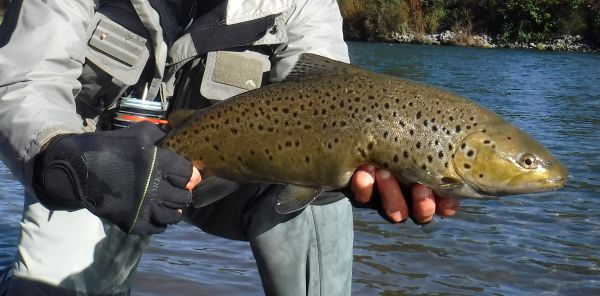 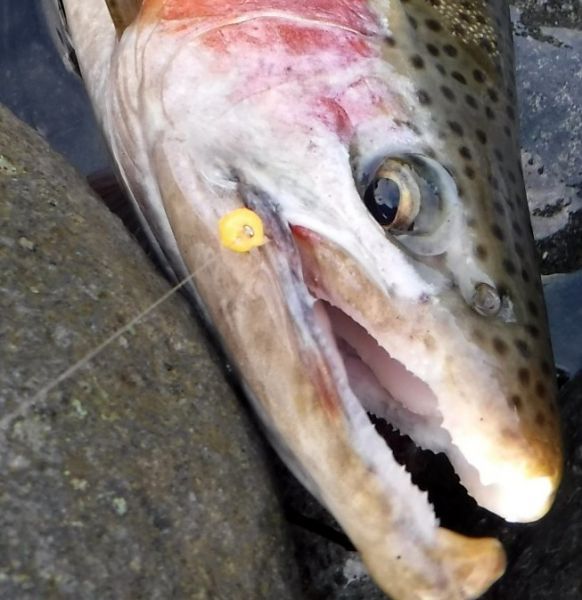
Over the last couple of days things are a lot quieter on the river now that most people are back in work.
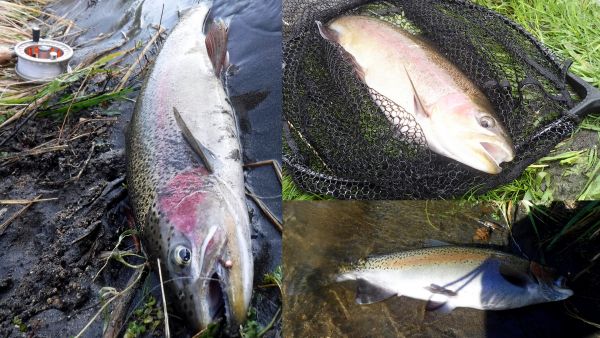
Its still not easy out there but I've had a few browns albeit nothing over six pound.
The fishing in general is very patchy and all this week I've been doing better staying on the river until late in the afternoon ... packing up around 5.00 pm. In fact some days most of my action has come in that final couple of hours.
I've had a fish or two on globugs but the majority are still taking nymphs whichever way you decide to plonk them in front of their noses.
Noticeably warmer temperatures today but an unsettled outlook with rain or showers forecast for the next ten days. A weather warning is in place for Tongariro National Park tomorrow.
See you out there.
Tight lines
Mike |
|
|
| Back to Top |
|
|
|
|
| |
| COMMENTS |
|
Found it tough going on the weekend! Couldn't complain about the weather though.
At least my golden lab enjoyed running around with Blue while I tried my luck at Judges. |
|
|
|
| cooley.mmc@gmail.com | Fri 10th June, 2016 | |
|
|
|
| |
|
|
|


