| |
|
|
| |
A lot of fun on the Tongariro.
Sat 24th September, 2016
|
|
|
|
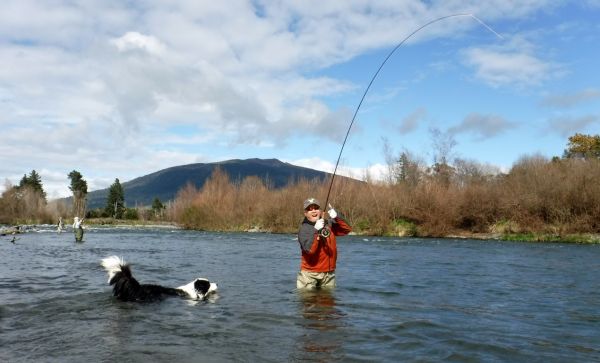  The last couple of weeks its been a lot of fun fishing the Tongariro and again this week its been difficult not to catch fish. The last couple of weeks its been a lot of fun fishing the Tongariro and again this week its been difficult not to catch fish.
Last weekends release and the frequent showers we've had since then, have kept flows above thirty cumecs, providing perfect nymphing conditions.It also kept the fish coming and there have been small runs all week.
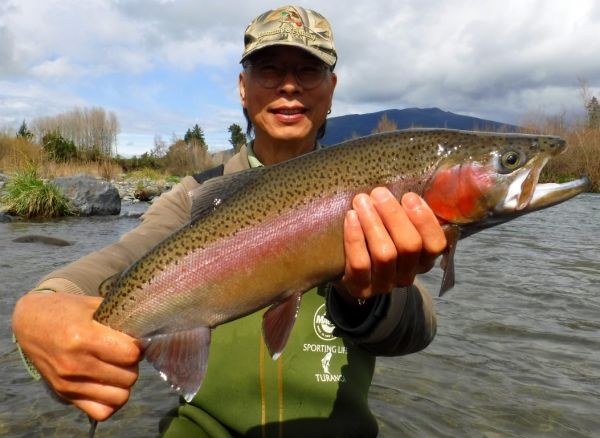
Ewen and Albert on vacation from Taiwan had never fished the Tongariro before but had a great day landing around fifteen between them plus a few early releases.
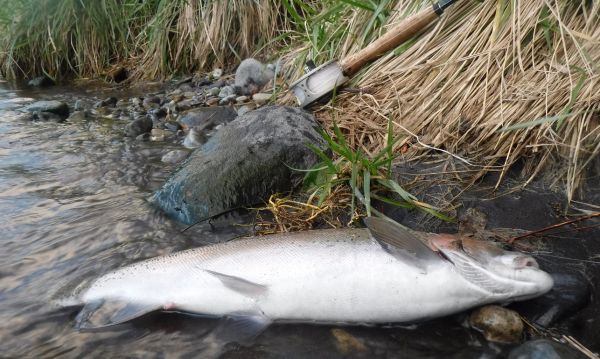 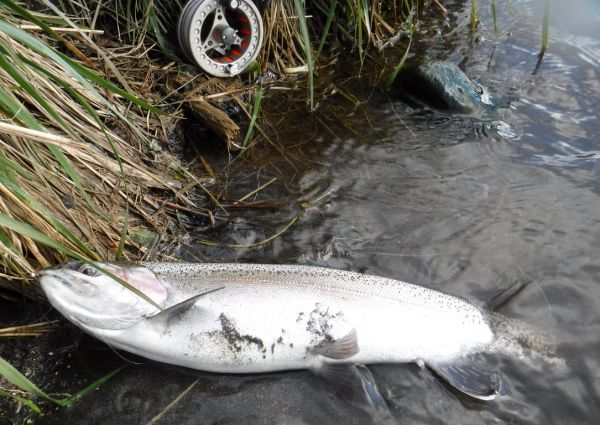 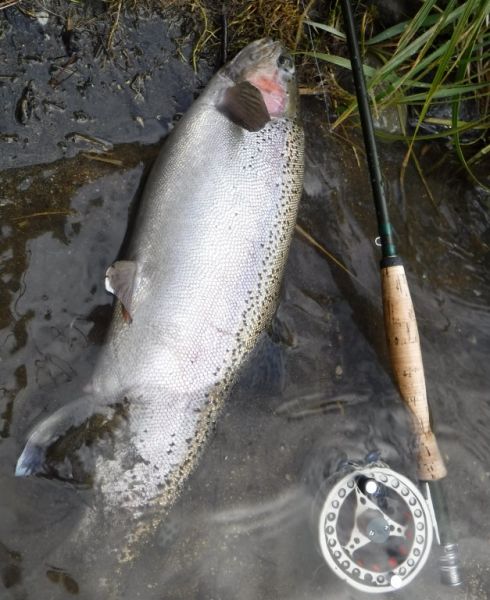
The last few days a lot of the fresh run rainbows seem to be those two pound plus hens that have been so numerous this year. But thankfully there are some bigger fish amongst them.
I've had better fish staying on the river late particularly if I've been czech nymphing. But in fairness all methods are taking fish.
From mid-morning on, the unsettled, often overcast Spring weather has seen plenty of mayfly hatching. And as things begin to warm up, insect activity will increase across the board.
There have been fish rising to mayfly duns most days and on two occasions I had fish frighten the life out of me when out of the blue they slashed at the indicator dry. Needless to say I did a fantastic job of missing both of them.
Numbers wise I've probably scored more fish fishing the indicator and look what some of them have sticking out of their mouths.
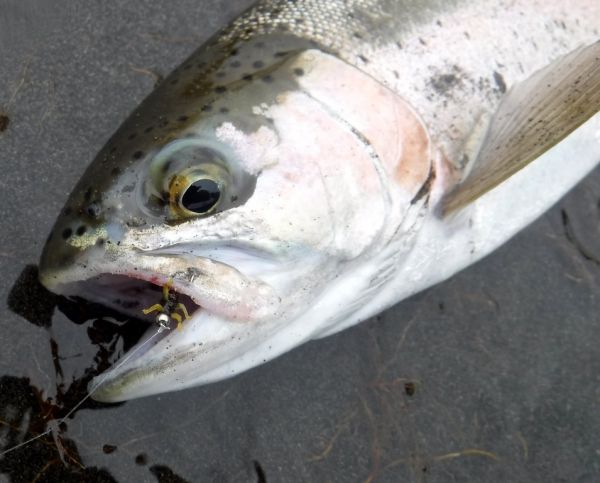 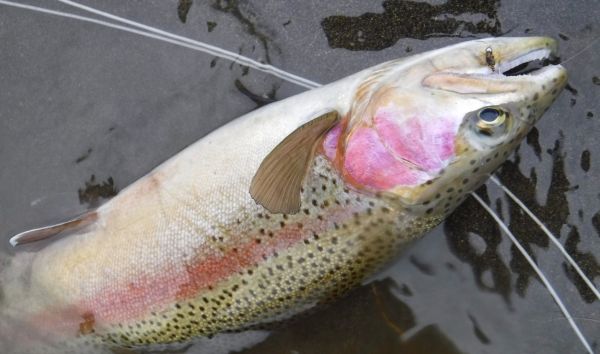 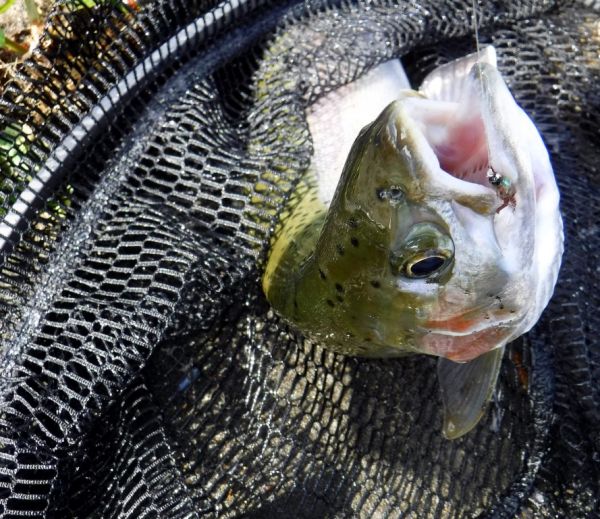 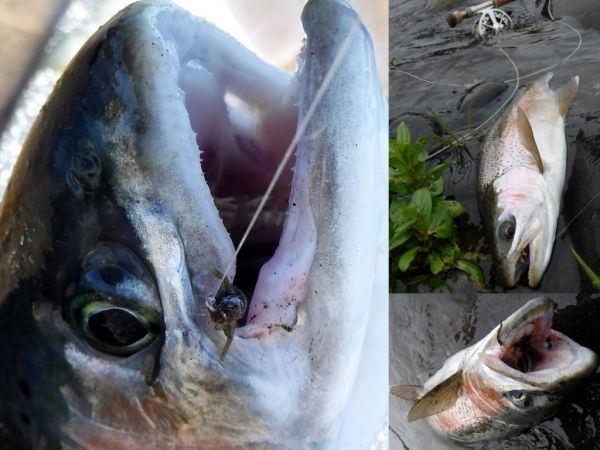 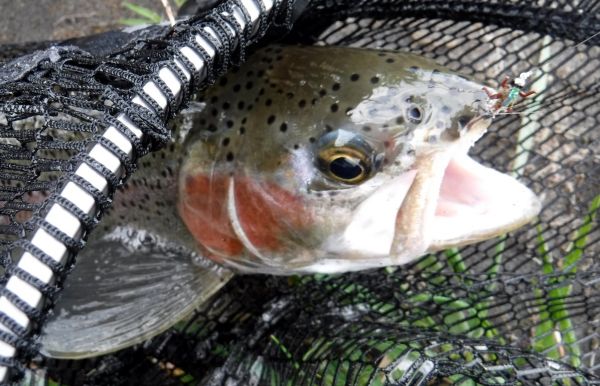 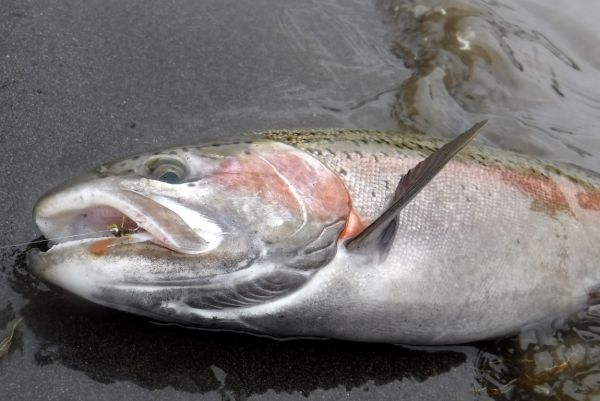
I mentioned these silicon rubber leg blanks last report. And since then I tied up a few nymphs incorporating "lively legs" to try on the Tongariro.
Well ... its very early doors and at the moment there's a lot of fish in the river ... but those semi-realistic legs really do seem to make a difference.
I haven't included every photograph I've taken of fish caught on them. For instance nearly all the fish Ewen and Albert landed were caught using "lively leg nymphs".
And the reason I didn't include them is because one very nice problem you get when the river's fishing well, is you simply have too many pics to insert into one report.
But to give you some idea they've probably accounted for a couple of dozen fish since I last posted.
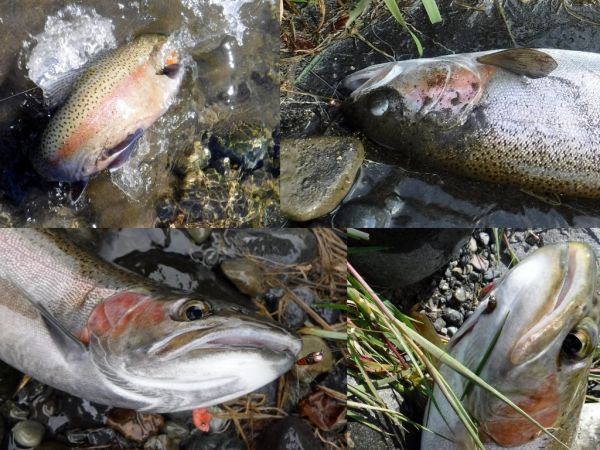 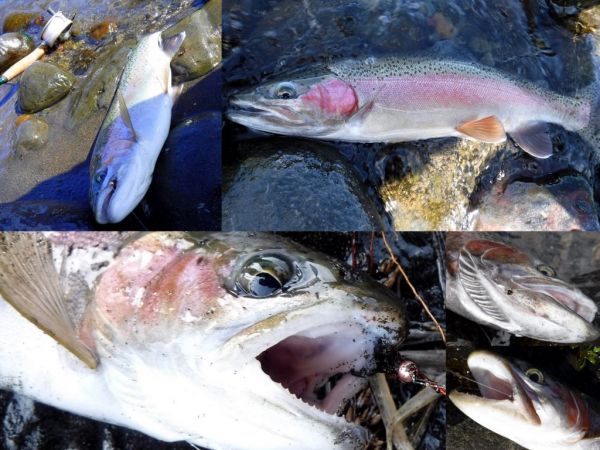 So although all methods are working I've done best this week fishing "naturals" under the indicator. So although all methods are working I've done best this week fishing "naturals" under the indicator.
There's a lot "going on" when you're nymphing Tongariro style and one of the many obstacles novices come up against is how to tell if they're getting a good drift.
Well assuming your mending, leader length and weight are all as they should be, its fairly easy.
We're all aware that friction acting on the water molecules causes slower flows near the riverbed.
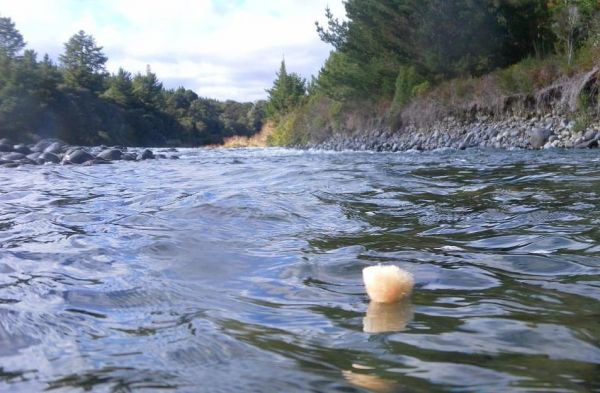
Therefore once your flies have sunk to the bottom they're actually trundling downstream in much slower water than the indicator drifting downriver at the surface.
There are all kinds of formulas out there but its normally accepted that the water at the midway depth is flowing about half as fast as the current at the surface.
At the bottom of the river the flows will have slowed even more. And here the surface currents will be flowing approximately one and a half times faster than those at the river bottom.
Armed with this knowledge, we can, by fine tuning leader length and weight, control the speed our flies are carried downstream.
If your indicator is traveling at the same speed as the surface current then your flies will be towed unnaturally fast along the riverbed. So you'll need to slow things down a bit by adding weight. Usually by squeezing on some shot, lengthening the leader or both. As you move around the river, in some places you may need to remove weight because the indicator is traveling too slowly.
To help you gauge just how much you need to slow things down, or speed things up, look for bubbles or bits of debris floating downstream and aim to get your indicator drifting along roughly half as fast as those markers.
Getting this right will definitely increase your chances of a successful day on the river.
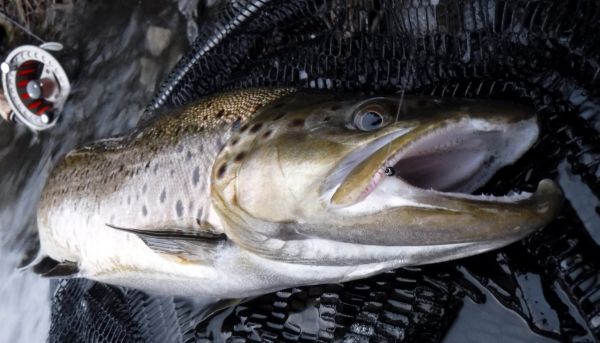
Right ... that'll do for this week. Another pretty unsettled spell of weather coming up with rain and showers forecast for most of next week. This will keep things ticking along nicely {as long as the river doesn't flood}. The reason I mentioned "the flood word" is because JD is over from Oz next week and every time he sets foot in New Zealand, levels on the Tongariro shoot up. If they don't, I'll look forward to more great fishing.
Next time ... some flies you won't want to be without if you enjoy czech nymphing.
Tight lines guys
Mike |
|
|
| Back to Top |
|
|
|
|
| |
| COMMENTS |
|
I'm interested in your comments about lively legs and also options for slowing drift of an indicator in say 3 metre water where I would be using about a rod and a half of leader.
Firstly lively legs : Are they stocked in New Zealand ? They sound very effective.
Secondly : You say by adding weight one can slow the surface drift to better match the stream bed flow. As a general rule where do you apply the weight. I presume that it must be away from the "bomb" but is this right?
Thanks for response. |
|
|
|
| Tue 27th September, 2016 | |
|
|
|
| |
|
|
|