| |
|
|
| |
The Perdigón.
Fri 7th October, 2016
|
|
|
|
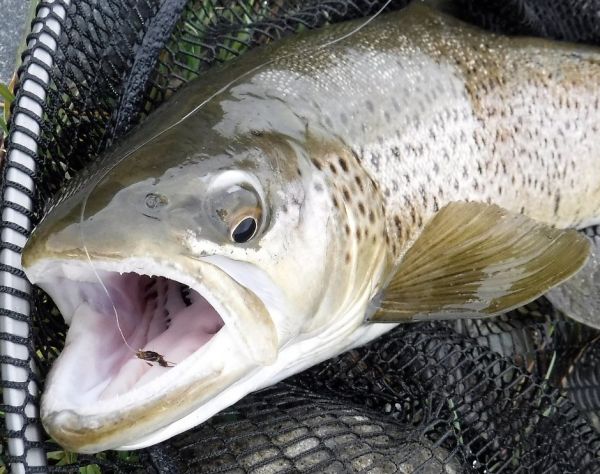 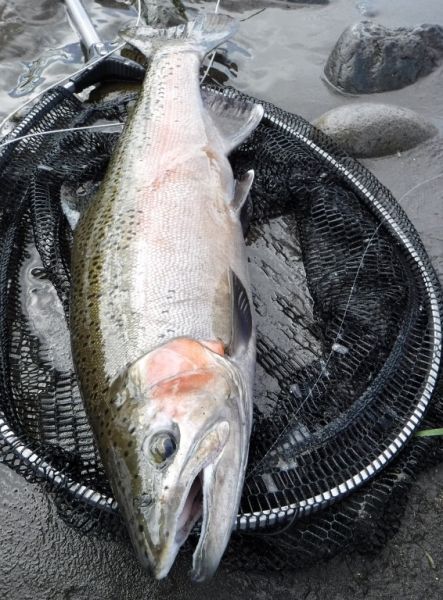
Another pretty good week on the Tongariro and not that many anglers around considering its the school holidays. But I suspect the tricky wind and heavy rain over the last few days has something to do with that.
There's been fresh fish showing up all week but not in big numbers. And once again a lot of them seem to be those smaller hens. I notice most of these have been ripe with eggs and even if you're careful when returning them, often times they'll begin to drop their precious cargo before they swim off. This probably explains why they're not hanging about. And I don't think I've fished anywhere this week thats fished well on consecutive days... the fish just vanish!
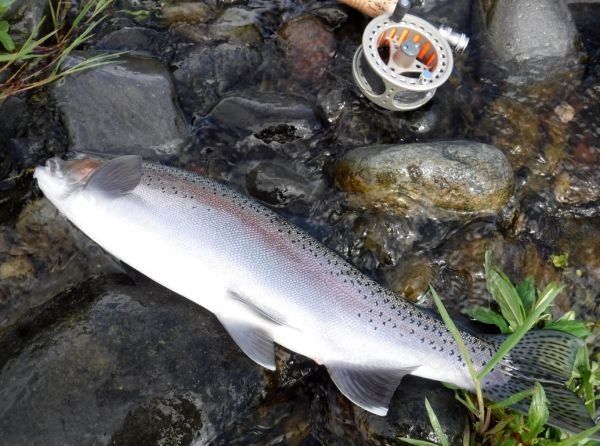
But every now and again I've been lucky enough to drop on a "good un" and I've had a couple of nice rainbows by moving around and trying different things.
Plenty of mayfly hatching too and its surprising how often you'll see fish rising to them now because its still early in the dry fly calendar.
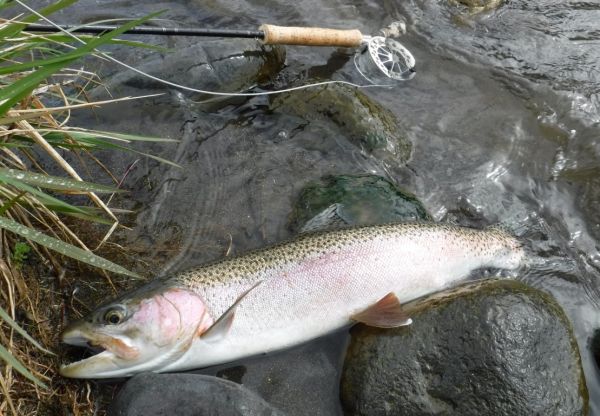
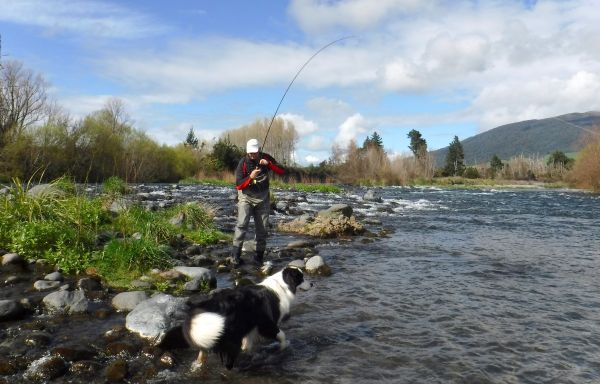
What isn't surprising is how effective the dry and dropper can be from now on. With lots of kelts in the river, and fish already looking up for their grub, its a great way to fish the seams and slower runs in water that's less than four feet deep. Because I'm always harping on about it you'll know by now that I fish it all year round but if you haven't tried it, now would be a pretty good time to start. And after months of chucking out heavy bombs I think you'll find it a pleasant change.
I was only thinking the other day how differently I fish the river now, compared to when I first set foot on the Tongariro. I used to do OK catching fish in the UK and naively assumed that would be the case once I'd emigrated to New Zealand ...boy! was I in for a shock.
My first couple of outings brought me down to earth with a great big bump.
It was the middle of the spawning runs, something we don't experience with rainbows in the UK and although anglers around me were hooking up regularly, I was only getting the odd touch.
There's a great deal of truth in the old angling cliché that ten percent of anglers catch ninety percent of the fish. I love all kinds of fishing but what I've never enjoyed is being a member of the ninety per cent club. Its frustrating and quite frankly sucks! I was clearly doing something wrong. So my next few outings were spent talking with anglers who obviously knew what they were doing and also watching them fish. It became clear to me fairly early on that I was fishing far too big ... but far too light.
One angler in particular stood out. I nicknamed him "The Magician" because this guy could pull fish out of a hat! And its him I have to thank for pointing me in the right direction.
I've never had a problem seeking guidance from others ... I mean why would you want to stay in the ninety percent club! Over the years I've fished with some excellent anglers both in New Zealand and the UK and I've learnt something from every single one of them.
So if you're a beginner or its your first time on the river don't be afraid to ask another angler for advice.
After all, we were all in the same boat when we started and most fishermen worth their salt will be only to pleased to help out. If you've been fishing "your way" for the last six months with poor results, continuing to do the same thing for another six months isn't going to change a thing ... you'll just get better at not catching anything. If you're prepared to ask questions, try different methods and observe and think about whats going on around you I guarantee you'll eventually get out of that bloody awful ninety per cent club and become a fully paid up "ten percenter".
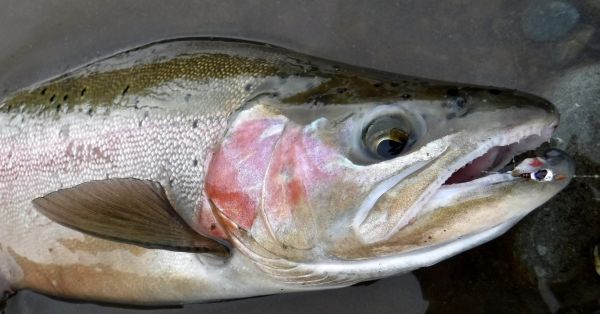 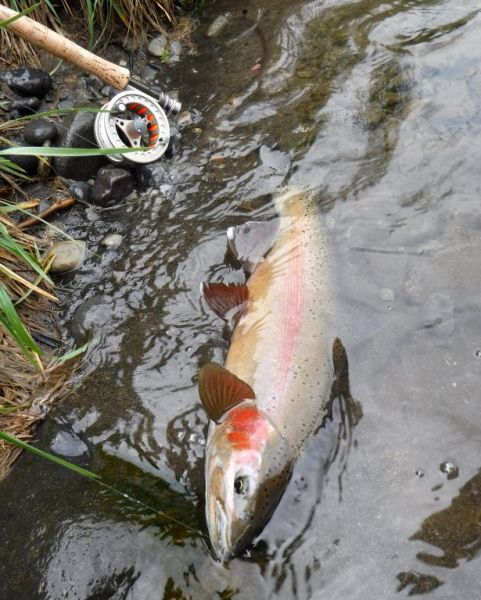 One of the "new" methods that's gaining in popularity on the river is Czech nymphing. One of the "new" methods that's gaining in popularity on the river is Czech nymphing.
If you're already a convert I'm sure you've had anglers asking you what you think of it and is it worth trying. Well first off it isn't some magic method that's going to transform you into a fish catching machine overnight. It takes a lot of perseverance and practice ... but is it worth it ... as Simon Cowell would say ... "a big fat yes".
It doesn't work everywhere on the Tongariro and is virtually useless in slow water. That's unless you're dunking a team of globugs into a "hole" in colored water {something I don't enjoy} but it does open up a lot of water that you would usually walk past.
Its origins are competition based and all started in a tournament that was held in Poland in 1984.
The Polish team didn't have conventional fly lines so they used nylon which was actually fixed to the rod tip.
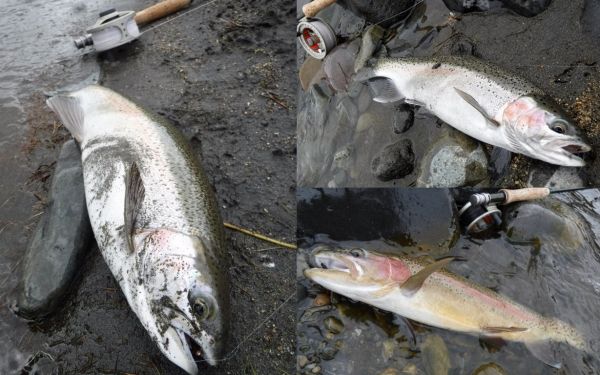 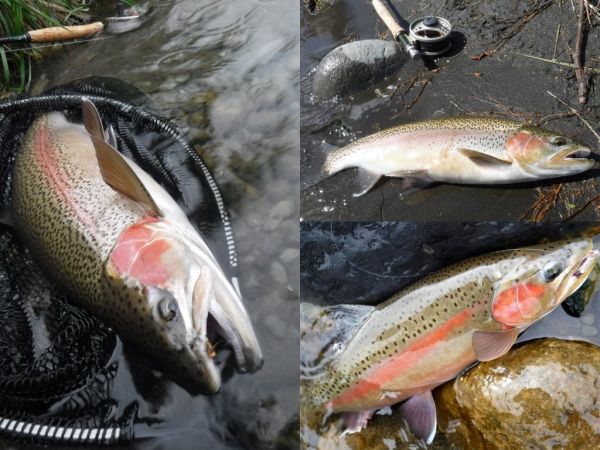
The nymphs they used were simple affairs and they successfully fished just two basic caddis larvae patterns. The Czech team were quick to spot the methods potential and over the years they refined the technique into whats now universally called Czech nymphing.
The early "czech nymphs" were tied quite fat and buggy looking and couldn't look more different when compared to some of the competition patterns in common use today.
As news of this deadly new method spread, more and more fly fishing teams across Europe learned the technique and "tweaked" it. Nowadays you have French nymphing, Polish nymphing, Spanish nymphing and so on.
Over the years as new fly tying materials came on the market the nymphs themselves underwent a complete transformation. Modern czech nymphs are tied slim and sometimes much smaller. And to aid sink speed there's often very little dubbing or hackle used in their construction.
One of the most effective range was popularized by Spanish anglers although its thought it was the French who first used them ... the Perdigón.
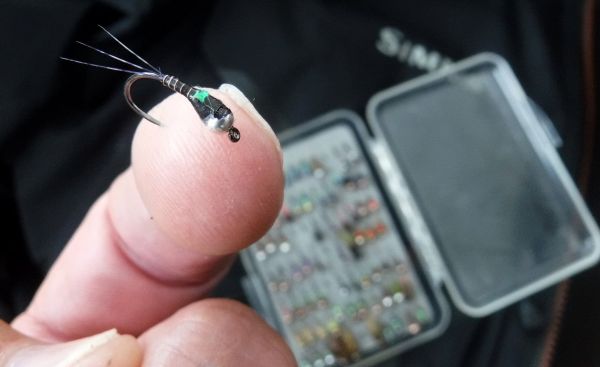
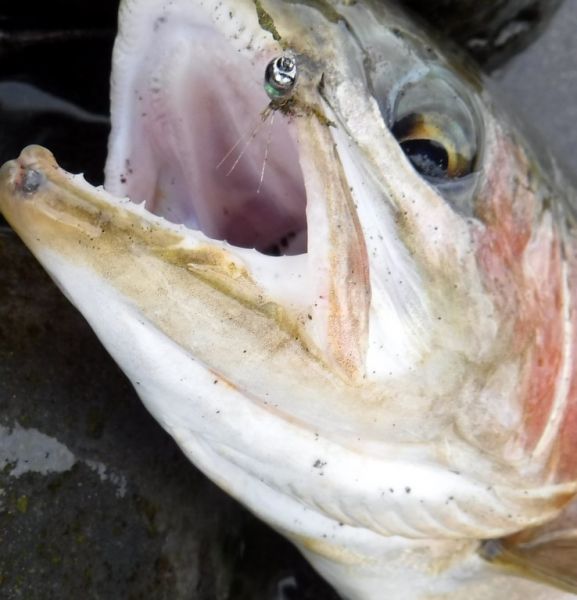
Perdigón translates as pellet ... like shotgun pellet. And is probably a reference to the shape and the way these things sink. They may be small but because they're usually covered with UV resin, this combination of resin and a tungsten bead maximizes their sink rate and allows you to czech nymph with really small flies.
Everything about them is designed to keep tying simple and the profile slim. For instance the wing case is often represented by nothing more than a dab of black nail varnish. And in some patterns thin tinsels are used for ribbing or as a body material to help keep them "skinny".
Although the Spanish may have been responsible for demonstrating the effectiveness of these small nymphs, particularly on hard fished rivers and streams across Europe. I prefer some of the Italian "tyings" and the Internet is a great source of inspiration www.tyingitaliano.com . You can knock them out fairly quickly and the design of the fly is limited only by your imagination.
Don't worry too much that some of these flies bear little resemblance to any natural your likely to find in the river. Because you'll be fishing them in fast runs and pocket water the fish have a split second to make up their mind. So have a play around with different colors and materials or copy some of competition patterns available on the net. Remember competition anglers are not interested in a nice day out on the river. For them its all about catching fish ... so these things tend to work.
One final tip. In fast water on the Tongariro, small flies don't necessarily mean you have to use small hooks. By not tying all the way back to the bend of the hook you can tie a Size 16-14 fly on a Size 12 hook. I still haven't worked out why, but fish seem oblivious to the bent spike sticking out of a nymphs arse ... even in slow water with conventional flies. And yet, on other days if some of the tail filaments drop off they won't look at it ... that's fly fishing!
  You may remember I mentioned JD's visit last report and true to form almost as soon as he bought his license the heavens opened. You may remember I mentioned JD's visit last report and true to form almost as soon as he bought his license the heavens opened.
Its been wind and heavy rain for most of the week and after last nights deluge I'm surprised the flow chart only climbed to 74 cumecs.
Thinking about it its quite a while since it dropped below thirty and I'm sure last nights mini-fresh will once again have a positive effect on the fishing.
October is usually a pretty good month on the Tongariro, often throwing up some good size rainbows and I've had a couple of nice fish this week.
Looks like two or three days of slightly better weather and then its back to rain and showers next week ... see you out there.
Tight lines
Mike |
|
|
| Back to Top |
|
|
|
|
|
|
|


