| |
|
|
| |
Surprisingly few anglers around.
Fri 4th November, 2016
|
|
|
|
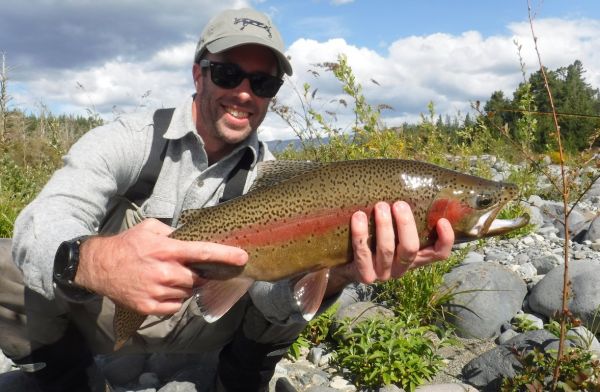 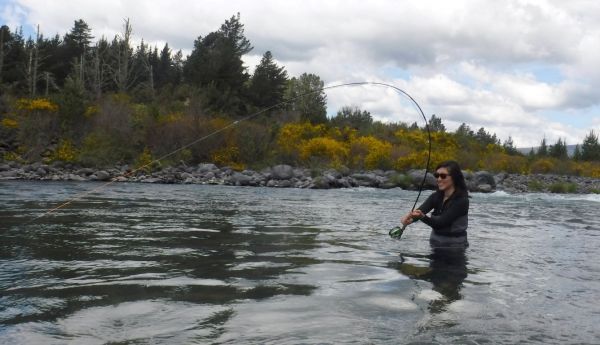 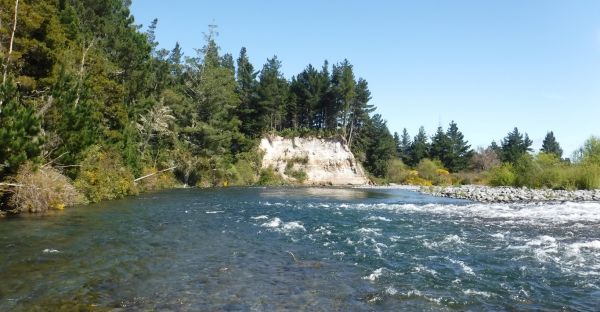 There was a little bit of a slow down in the fishing immediately after the holiday weekend but since then things have picked up again. There was a little bit of a slow down in the fishing immediately after the holiday weekend but since then things have picked up again.
Surprisingly few anglers around and Matt and Vicki on honeymoon from the USA had parts of the upper river all to themselves.
There's still a good spread of fish throughout the Tongariro and with more small runs continuing to move up it doesn't really matter where you fish.
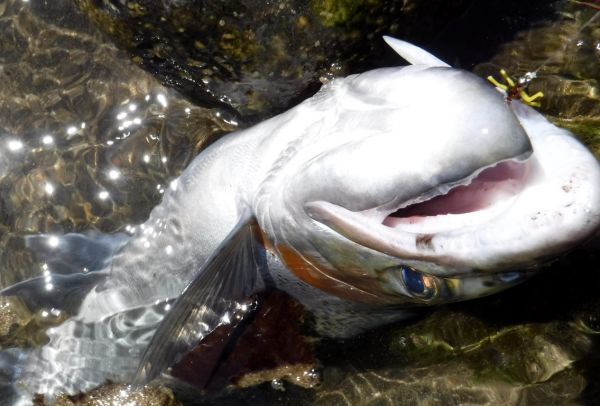 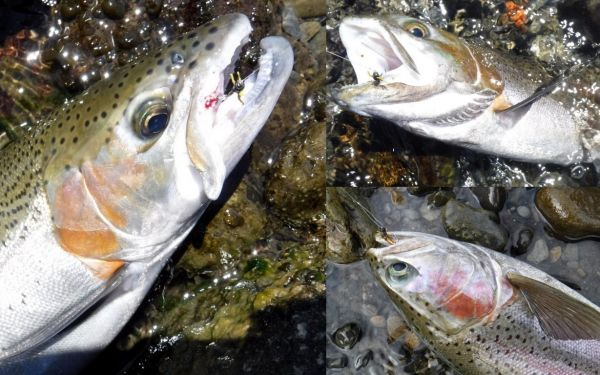
With all nymphing methods working I carried out a little experiment with those "lively legs" nymphs I've been using the last few months.
The more I use these, the more convinced I become of how effective they can be. Its crazy ... but its getting to the stage that I feel I'm missing out if I'm not using them!
Anyway, I tied them up Czech style, and in 16's and 14's for the dry and dropper and indicator ... they all caught fish.
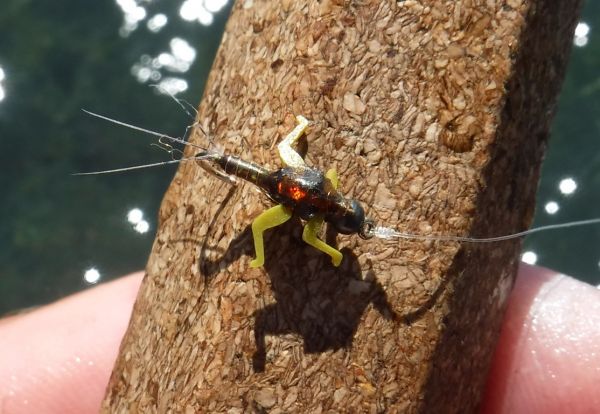 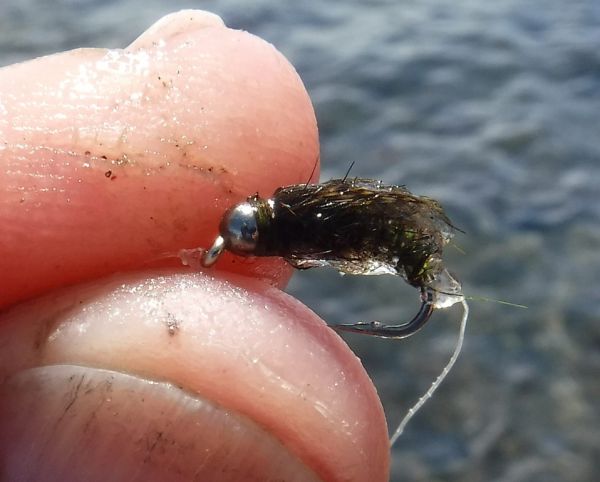
A size 16 teamed with a small caddis pupa under the dry is a killer combination fished through seams or riffles less than four feet deep.
If you tie your own try Davie McPhail's catgut caddis Davie McPhail Catgut Caddis Pupa
Its a great little caddis pupa pattern { with or without the horns} that's really effective on the Tongariro.
Catgut can be difficult to source but Rod and Reel stock it. You'll find it under the name "Catgut Biothread".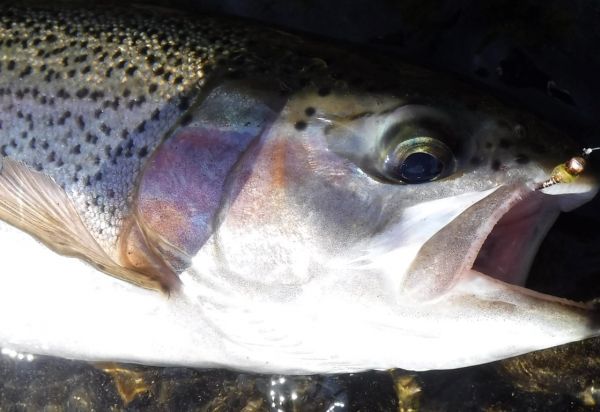
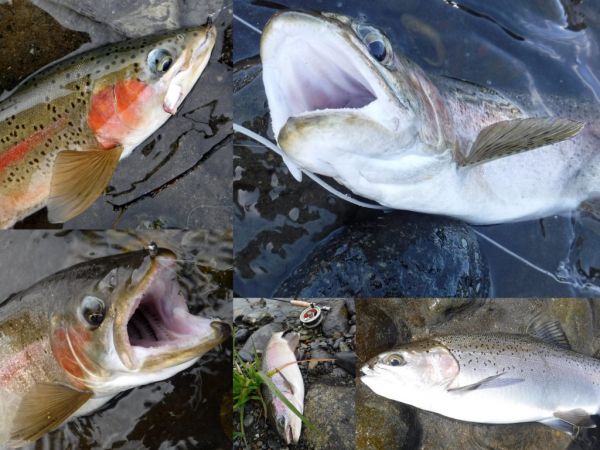 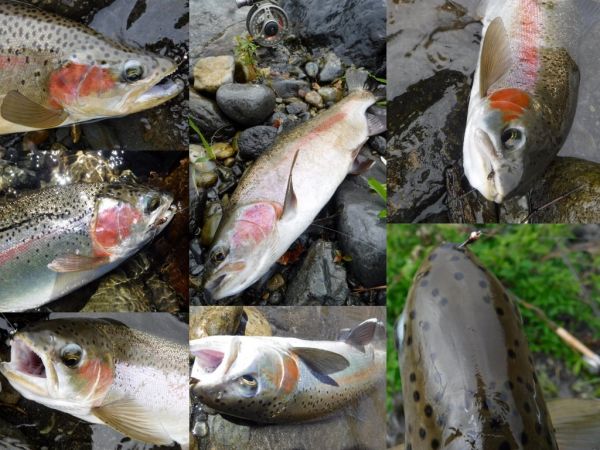 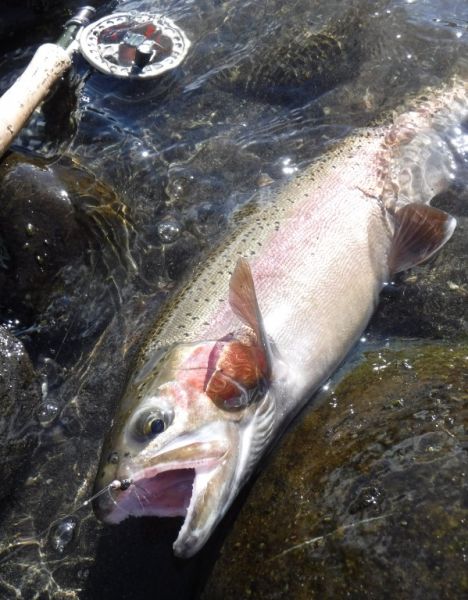
Plenty of rainbows coming to the czech nymph too and most of the faster runs contain fish.
Warm summer days are still a little way off. But as the temperatures creep up fish will spend more time in this cooler, oxygenated water. This is why its worth trying other things because "the indicator" isn't always the best choice in these places.
Looking at some of the shots I've uploaded reminded me of a little tip I meant to pass on. If you tie your own nymphs and want a really durable tail, particularly for mayfly patterns. Instead of using feather fibers which often break {drives me nuts} use a synthetic alternative. You can buy these "tails" in packs. But for what they are they're quite expensive. So nip down to your local hardware store and pick up a paint brush made of white synthetic bristles. I bought mine years ago and there are still years more "tails" left on it. Once you've tied them in place and have them splayed, dab them a few times with a permanent marker in whatever color you need. This will give the speckled effect of a natural feather ... but be careful not to overdo it.
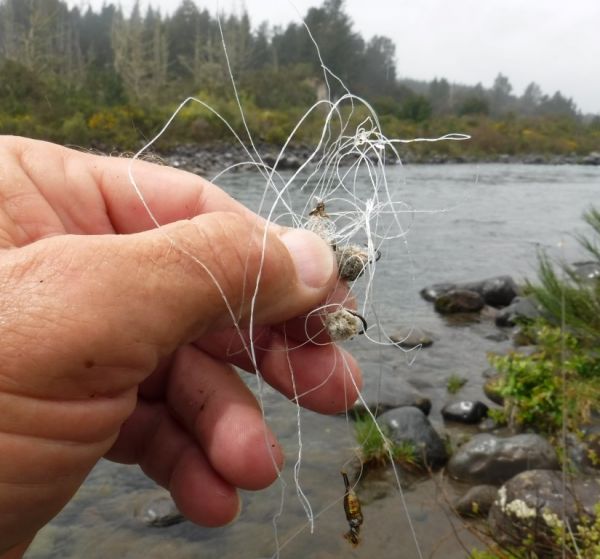
I don't often have a moan ... but I'm going to have one now. The amount of discarded nylon left lying around {all along the river} is a bloody disgrace. I was in Big Bend last week and spent twenty minutes or so picking it up and when I was up that way again yesterday there was line all over the place again.
The majority of anglers are fairly sensible about this. But as usual because of a couldn't care less minority we all get tarred with the same brush. Everywhere you go on the Tongariro you'll notice the same problem and there is absolutely no need for it. OK we'll all lose gear to a snag in the river now and again or get caught up in the trees and bushes behind us. Occasionally some of these will be out of reach and impossible to retrieve. But I found line complete with flies hanging in bushes just a few feet off the ground.
A bird or other creature tangled up in fishing line is not a pretty sight ... but it makes a great photograph for the front cover of an anti-fishing publication.
Petroleum based mono filaments don't bio degrade and stay in the environment for hundreds of years. In some countries its becoming such a problem they're developing new Bio-lines which will eventually break down and disappear. But even these take five years to completely deteriorate.
So when you dump your unwanted line on the ground it isn't going to magically go away. Its going to be there for your lifetime, your kids lifetime and very likely their kids lifetime and beyond.
Its not ideal but if you can't be bothered to take it home to dispose of properly, wrap it around a couple of fingers and snip it into inch long lengths. At least that way its a lot safer for the wild-life and is much less noticable to others enjoying the river. Alternatively have a look at the Monomaster link below that Murray sent me ... great idea.
The Tongariro is a beautiful river ... lets keep it that way for everyone.
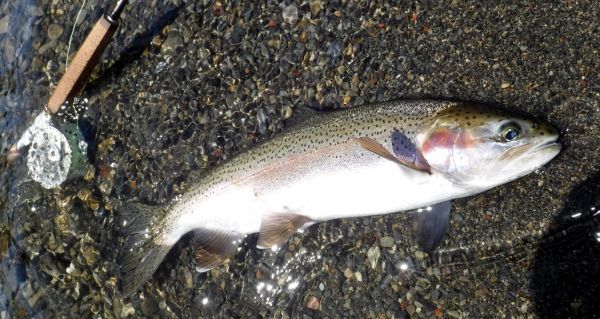
So another week of great fishing on the Tongario and lots of stories of anglers getting "smoked" by good fish. Fresh runs still trickling through and plenty of well mended kelts as well.
When conditions allow there are a few anglers fishing the dry into dark, with mixed success. But I'll wait a bit longer before I dust off the head-lamp.
Its November already and it'll be brown trout time again before we know it. I usually start looking for them seriously towards the end of this month.
Weather-wise much of the rain they forecast this week never materialized but the long range outlook is for more rain and showers with heavy rain later next week. This will no doubt keep things ticking along nicely and I don't expect much to change.
Tight lines
Mike |
|
|
| Back to Top |
|
|
|
|
| |
| COMMENTS |
|
| Completely agree about all the nylon left lying around. Good on you for bringing it up. Wayne Smith from Smith Creek has a great little waste nylon holder for sale on his SmithCreek.co website - I now carry one all the time. |
|
|
|
| Duncan@River | Tue 22nd November, 2016 | |
|
Hi Mike,
I agree with you about scrap line left around. I bought a Monomaster from Troutflies in Australia and take that with me. It clips onto anything, is easy to use and easy to dispose of line when emptied. The video shows it in operation. Monomaster
It looks like I won't get back to the Tongariro until October next year but maybe a quick trip in February if I can convince my partner I need it for my/her sanity!
Cheers,
Murray |
|
|
|
| Muzza | Sat 5th November, 2016 | |
|
|
|
| |
|
|
|


