| |
|
|
| |
Reading water.
Wed 15th September, 2010
|
|
|
|
When you arrive at the water's edge full of anticipation and begin stripping line off ready for your first cast of the day where in the river you finally decide to plonk those flies is probably one of the most important skills you will learn when you start fly fishing. When I first became interested in trout fishing as a lad the old Welsh angler that took me under his wing often remarked "if there are no fish there.. then you ain't gonna catch em." It seems pretty obvious but it took me a while before I fully understood what that meant.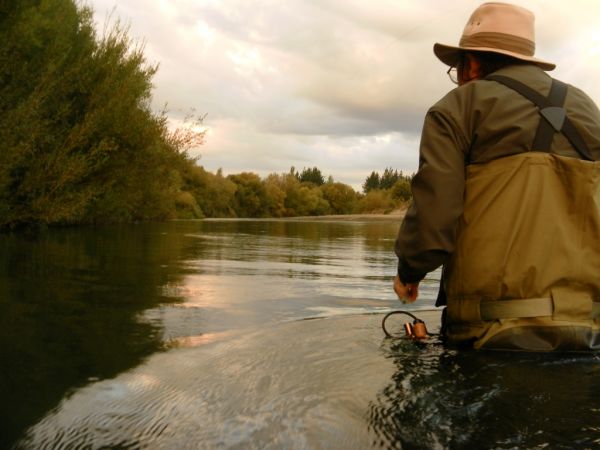
Not all parts of a river will consistently hold fish. Understanding a little bit about the trout, its preferred habitat and observing some of the physical characteristics of the river is called reading the water. Using this information you will eventually become better at recognising the more productive areas and therefore be able to cover more fish.Works every time...well some of the time.
I think anglers sometimes credit fish with far more intelligence than they actually have. Trout have small brains and have very simple needs. Like all living things they require only a few basics in order to survive, shelter/cover, a good food supply and oxygen. If you consistently seek out areas where most of these boxes are ticked you will be giving yourself more chances to hook a fish or two.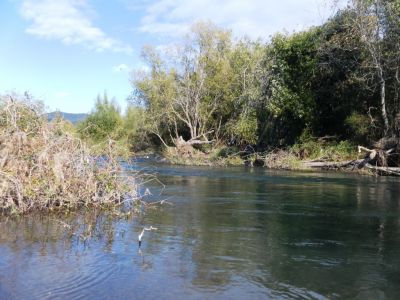
It's generally accepted that trout in normal conditions prefer water with a depth of three feet or more. You will of course often see fish in shallower water but in these situations they will be more easily spooked. Where ever you are on the river the best lies will always have some form of shelter from danger near at hand...this could be deeper water...under-water debris...overhanging trees...anything that offers them a sanctuary if they feel threatened.
I remember a fish down-river which had taken up a feeding station in slower fairly shallow water on the inside of a bend . The bottom there consisted mainly of smaller stones with a single larger rock about the size of a half submerged foot-ball close to the main current.
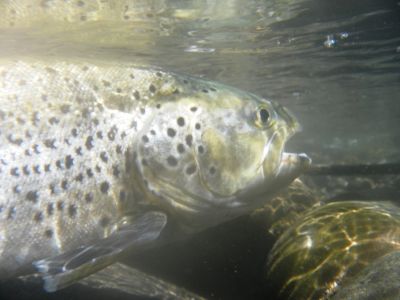
This brown had decided that this particular rock belonged to him providing even more shelter from the current. Tucked in behind it he could use minimum energy to maintain his position near the main flow and constant food supply. He also had plenty of time to inspect any of my offerings and although I tried on a number of occasions they were always refused . As soon as he became aware of my presence he would slide away into the safety of the deeper water near by only to return when he was convinced all hint of danger had gone. Once trout are spooked they won't begin feeding again until that fear subsides. Even if you can see still see them in their hiding place you will be better off moving elsewhere to allow them time to settle back into their feeding routine.
So the most obvious water to explore will be locations that offer safety and some protection from the main current...behind logs...rocks...depressions in the river bed or off to the side of the main flow near deeper water. Anywhere it is easier for them to intercept the food supply as it is washed downstream. Trout are generally lazy feeders and masters at conserving energy. They will rarely move far from their selected feeding station to chase down food items unless the extra energy expenditure is well worth it...a large juicy Cicada being a perfect exception. If they also have to negotiate a particularly long shallow or fast flowing stretch of river have a look upstream and try and locate the first available area of quieter deeper water above.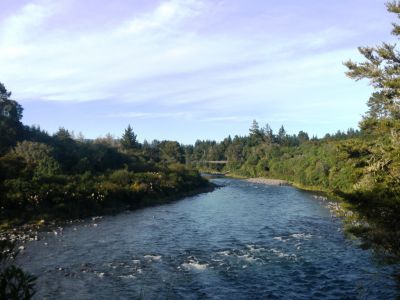 Slower moving water immediately downstream of rapids and riffles are also favorite places and will be rich in dissolved oxygen. This will also benefit the aquatic insects that trout prey on and if all of these places also have easily accessed cover from danger then you should be on a winner. Slower moving water immediately downstream of rapids and riffles are also favorite places and will be rich in dissolved oxygen. This will also benefit the aquatic insects that trout prey on and if all of these places also have easily accessed cover from danger then you should be on a winner.
Most good trout rivers will basically consist of a series of rapids, riffles, glides or pools this pattern repeating itself in some from along its entire length. When you decide to fish a particular stretch think about what's in front of you. Study the area and try and break it down into the most likely fish holding spots. In faster water such as rapids the bottom will consist mainly of large boulders because most of the smaller stuff will have been moved elsewhere this is referred to as " pocket water. " When a boulder sticks out and splits the water two main lies are created one in front and one some way behind it where the disturbed surface flow begins to zip back together. 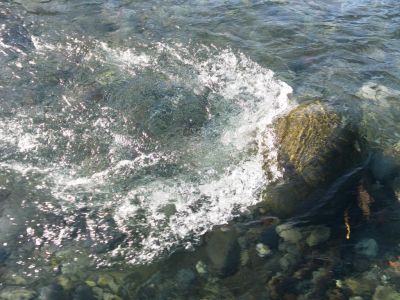 The downstream lie is just above that point and don't neglect the sides either. The same hot-spots occur below the surface but when the obstruction is completely under-water the downstream lie will be much closer to the obstructing rock or boulder. These are harder to spot but will sometimes betray their presence by creating a bulge on the surface with maybe some glassier, flatter looking water downstream of the submerged object. The downstream lie is just above that point and don't neglect the sides either. The same hot-spots occur below the surface but when the obstruction is completely under-water the downstream lie will be much closer to the obstructing rock or boulder. These are harder to spot but will sometimes betray their presence by creating a bulge on the surface with maybe some glassier, flatter looking water downstream of the submerged object.
Below the faster water of the rapid or riffle you will eventually encounter a pool or a glide where the water will begin to slow, deepen and be oxygen rich and as previously mentioned attractive to both trout and their prey food. The pool itself can be broken down into separate zones...the head...the eye...it may also have an area called the shelf and of course the tail. In the head the obvious place to cast will be along the " bubble line " this is where most of the food being washed down will be found and because of the deeper safer water close by is an ideal place to find trout. You will also find that the bottom here is probably scattered with smaller rocks etc washed down from the faster waters upstream again providing shelter and cover for prey and hunter so a perfect place to feed or rest.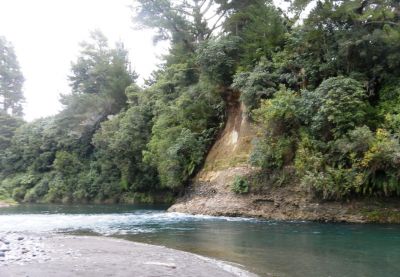
Near the head especially if the pool occurs on a bend you may find that the current swirls forming a back eddy. This is the eye and is normally on the inside of the bend opposite the side of the river with the fastest flow. The place to try here would be along the current on the furthest side of the eddy. There may also be a build up of deposit material causing the river to shallow on one bank we call this the shelf. Again there will be obvious changes in the flow speeds known as seams and another prime area well worth trying.
As the pool gradually begins to speed up before becoming the next set of rapids or riffles is the area known as the tail. I prefer to fish these early in the day or just before dusk and into darkness. They tend to be much shallower than the rest of the pool making the trout a little less keen to use them during day-light hours but fished at the right times especially during a hatch can provide fantastic sport.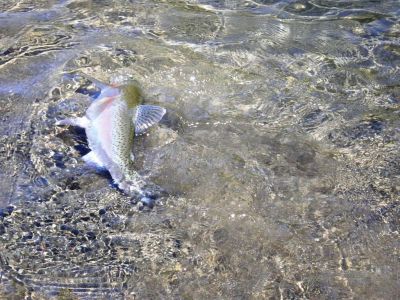
When your fishing it will be an advantage if you can learn to spot your trout but you need to have the right weather , clear water and a good pair of Polaroid sunglasses. Windy conditions are generally a waste of time because there is just too much surface ripple and it also helps if the sun is out. Because rainbows tend to be more active than browns they can be easier to spot however most people when they first start picking out these almost ghost-like shadowy shapes are not convinced they are in fact looking at a fish until it moves. You have to train your eyes to ignore the disturbed surface water and look through it into the depths of the river. With practice even in faster flowing water clear slots will appear enabling you to see much more of the objects of interest below. One trick I learned a few years ago is to look for the shape and movement of the tail because this is a distinctive outline and stands out against the river bed. Again if your undecided that what your staring at is a fish and may be just another log or rock. Just remember it is unlikely that a fish would always be hard on the bottom as would a similar shaped log or rock so it will sometimes cast a shadow.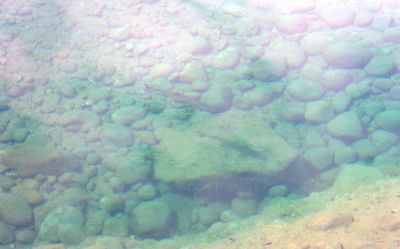 Keep an eye open for the sudden flashes reflected off the flanks of a moving trout or the opening and closing of it's mouth when feeding. With practice you will be amazed at how easy all this becomes. Keep an eye open for the sudden flashes reflected off the flanks of a moving trout or the opening and closing of it's mouth when feeding. With practice you will be amazed at how easy all this becomes.
These are just some basic pointers there have been whole books written on the subject. The best and most enjoyable way to learn is to get out there as often as possible and fish. The saying made famous by Gary Player "the more I practice..the luckier I get" also applies to fishing because all of us learn something new every time we wet a line.
Be Lucky Guys
Mike |
|
|
| Back to Top |
|
|
|
|
|
|
|