| |
|
|
| |
Which color line?
Mon 8th November, 2010
|
|
|
|
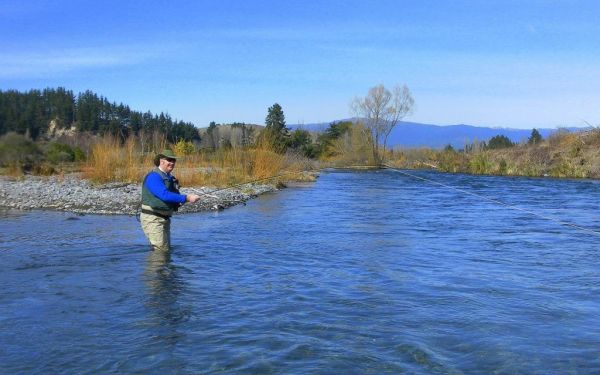
Once you have decided on Double Taper or Weight Forward and most anglers nowadays choose the latter, the next question that crops up is which line color to choose.
This is another topic where the answer very much depends on who you ask and their personal experiences. Before I finally left the UK for good several years ago I often fished catch and release venues where the trout were pretty spooky. Over time like many other anglers I used lines of various colors. Bright Orange...Fluo Green...White... you name it... and we all caught fish.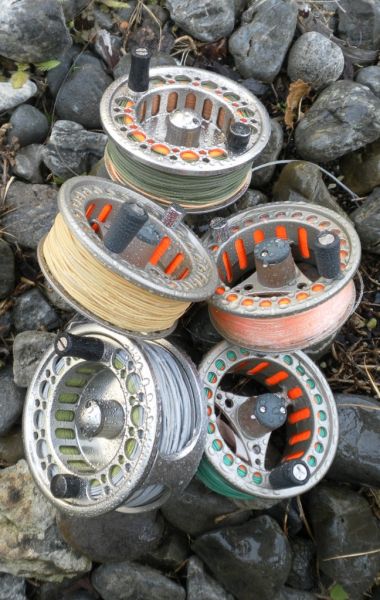
As far as the Tongariro is concerned I don't think it makes that much difference. You would like to believe that line manufacturers will obviously field test a product thoroughly before it's release to the fly-fishing community so why on earth would they deliberately produce something that didn't work. On saying that...and I'm going to shoot myself in the foot here... most "wet lines" are normally dark or muted colors like brown or green and yet some experiments with sinking lines have revealed that the two least visible colors below the surface are white or silver.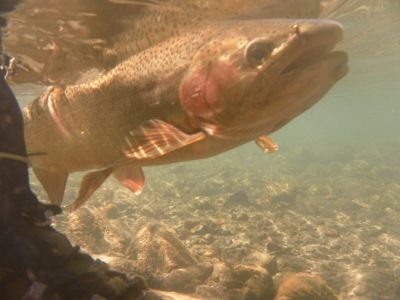
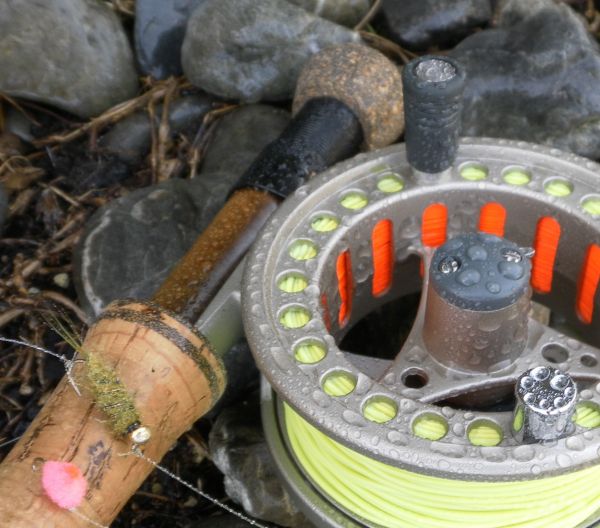
When talking floating lines years ago I read a book that was written by John Goddard and Brian Clarke entitled “The Trout and the Fly" and I remember that had an interesting section on line color accompanied by some underwater shots. Their verdict was that while the line is in the trout's window and viewed against the sky it would appear as a dark line no matter what the color was. They also mentioned an area they called the mirror which was outside of the trout’s window where because the light hits the water at an acute angle it was reflected back off it… instead of passing through it. Here they maintained that the fly line would be seen against a backdrop of the reflected river bed and a drab colored line would be the least visible to a trout. You can see this clearly demonstrated in the photograph above which I took recently.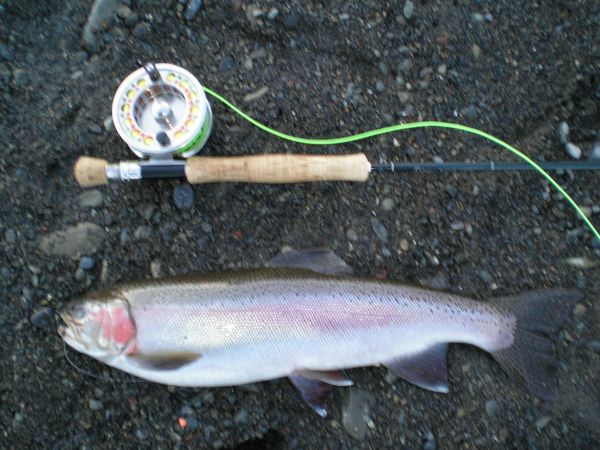
Ideally, especially when fishing the dry we all strive to keep the actual line well away from the target fish.
So again I don't personally think the color matters that much on a river like the Tongariro. This discussion has been on going for years and I’m sure that it will continue for as long as anglers fly-fish. When talking about lines for upstream nymphing a number of specialized lines are indeed olive or grey but have a bright orange end section to aid bite detection. On the Tongariro most anglers use a large fluorescent colored indicator so why should you worry about the line color. Even when fishing shallower riffles without an indicator from the trout's view-point I would imagine because of the rougher surface water it would have the effect of breaking up the lines silhouette.
Most of the colored lines that I originally brought out have long ago worn out. Like a lot of anglers I sometimes use a well known nymphing line which has a front taper specifically designed to “turn over” heavy flies. It also has a brightly colored tip section and the fish don’t seem to mind.
When taking beginners on the Tongariro for the first time I find it an advantage to use a line that they can easily see both for casting and fishing, so a brighter color line is ideal.
At the end of the day it all comes down to personal choice if you are enjoying a day on the river and catching a few fish then that's all that really matters.
Tight Lines
Mike |
|
|
| Back to Top |
|
|
|
|
|
|
|