| |
|
|
| |
It looks promising.
Thu 7th July, 2011
|
|
|
|
Earlier this week with rain promised but the cold clear conditions continuing I intended to get the vice out to top up the fly box. I thought it might be time to have a lie in and give the fishing a break until things improved. But I forgot to load up the log burner before I went to bed and woke up at 4.00 am shivering so much my fillings were rattling. It's a great little bach... typical kiwi 1970's... warm as toast...in summer...and like Stalin's tomb in winter. So a few hours later I found myself up and fishing next to Don Roths who several years ago relocated to Auckland from the States. Don is a Tongariro River Motel regular and despite my early awakening had beaten me to my current favorite spot. I can't say I blame him because this little run has been one of the most consistent on the river for weeks...but I suspect he'd also had a nod and a wink from a well known Turangi motel owner.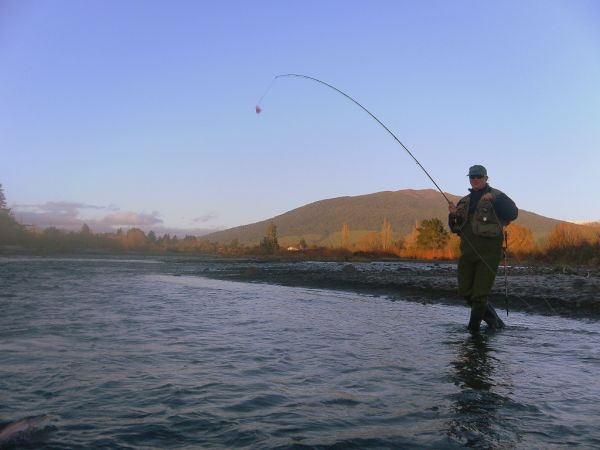
It wasn't long before he hooked into a fish that took an orange globug and a minute or two later I slipped the net under it for him. Many American trout anglers no longer use weight as a measure of how big a fish is. In fact Don had quickly put a tape over this fish and got it back in the water almost before I had time to take a photograph. This movement towards measuring fish rather than weighing them is not just confined to the United States. Currently there is a big world-wide drive to persuade anglers to ditch the "old weighs" and embrace the measuring tape... sorry guys I couldn't resist it.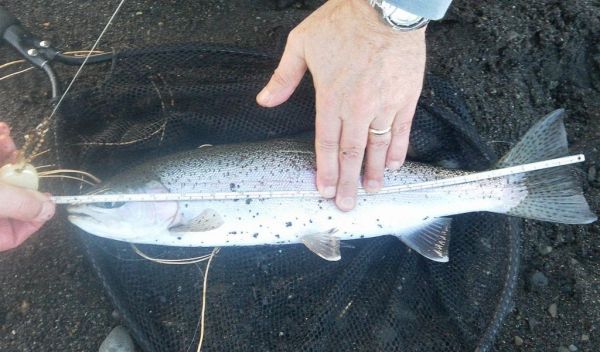
This has to be less stressful for the trout and an ideal alternative as far as catch and release is concerned.
Don continued with the globug but with a gin clear river and bright conditions I prefer small nymphs with flash, rubber legs or both, more of a summer approach if you like. Just before we'd met up a small flash-back under the dry had accounted for a fish from water less than two feet deep. 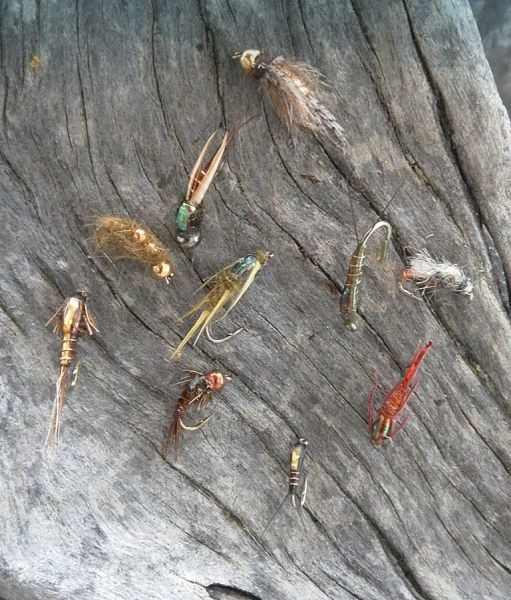 Flies tied with shiny beads or flash are an important part of any fly-box. Underwater observations of aquatic insects during a hatch have shown that when the nymphs leave their hiding places on the river bed the outer skin splits. As they begin to discard "the shuck" a gas bubble also forms which aids buoyancy and helps them reach the surface as they are carried downriver. The bubble catches and reflects the light like a tiny diamond this is probably one of the reasons gold head and flash back flies are such successful fish catchers. Both of us hooked but lost a couple of fish and we decided to head downriver towards the Bends. Flies tied with shiny beads or flash are an important part of any fly-box. Underwater observations of aquatic insects during a hatch have shown that when the nymphs leave their hiding places on the river bed the outer skin splits. As they begin to discard "the shuck" a gas bubble also forms which aids buoyancy and helps them reach the surface as they are carried downriver. The bubble catches and reflects the light like a tiny diamond this is probably one of the reasons gold head and flash back flies are such successful fish catchers. Both of us hooked but lost a couple of fish and we decided to head downriver towards the Bends.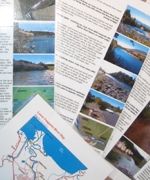 On the way Don showed me a clever twist using the TRM Pool Reports. These had been downloaded then miniaturized and each one printed on to 6 inch by 4 inch cards. They had then been individually laminated and were kept in a handy pocket sized wallet for instant reference. Unfortunately because of changes from subsequent floods several of these pools are now in need of serious updating...so come on Ross keep your customers happy! On the way Don showed me a clever twist using the TRM Pool Reports. These had been downloaded then miniaturized and each one printed on to 6 inch by 4 inch cards. They had then been individually laminated and were kept in a handy pocket sized wallet for instant reference. Unfortunately because of changes from subsequent floods several of these pools are now in need of serious updating...so come on Ross keep your customers happy! 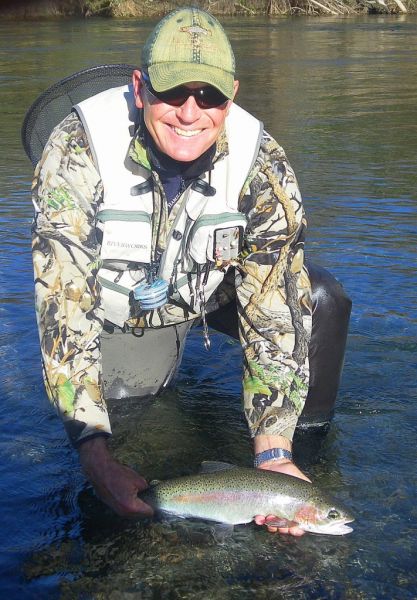
Although we only caught a couple of fish in Reed and later in Smallman's we did see some good browns. One big fella which we spotted just out in front of us would have been well into the magic double figures. The other thing we noticed was the increasing number of anglers using the TLB. Over the past months the tracks and access have been improved and I'm sure this side will become even more popular as the runs pick up. The remainder of this week has been no different to any of the other recent reports. But the barometer has dropped like a stone, the cold showers are putting some color into the water and the level is slowly beginning to creep up. The outlook is for a lot more wet, wild and windy weather, we'll have to see how much we get. It would be nice to have some sustained runs and better fish when things settle down. I've had a couple of emails this week asking my preference regarding landing nets. Both were from different Ozzie anglers who regularly cross the ditch to fish the Tongariro...regards to Paul and Jim. I've always enjoyed chasing the fantastic browns that are nowadays such a feature of the Tongariro fishing year.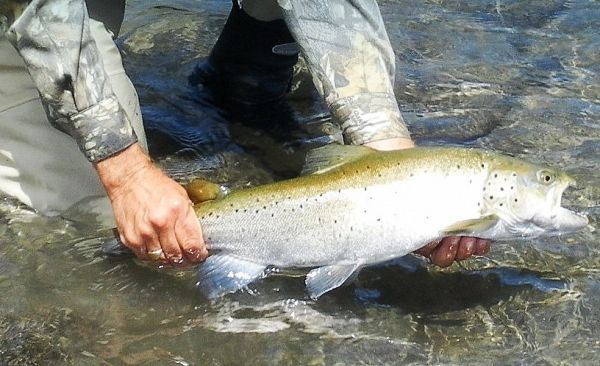 In a few of my favorite places the ability to net them quickly and effectively can mean the difference between success and failure, especially if you're fishing solo. The big problem with the traditional "scoop" net is you have to get up close and personal. Browns don't intentionally seek out human company and are even less sociable when you've just stuck them in the kisser with a H & C. Whether its rainbows or browns two situations where you'll likely need a net are if you have to wade out to reach your fish or when the casting position is above the water with no place to beach them. In a few of my favorite places the ability to net them quickly and effectively can mean the difference between success and failure, especially if you're fishing solo. The big problem with the traditional "scoop" net is you have to get up close and personal. Browns don't intentionally seek out human company and are even less sociable when you've just stuck them in the kisser with a H & C. Whether its rainbows or browns two situations where you'll likely need a net are if you have to wade out to reach your fish or when the casting position is above the water with no place to beach them.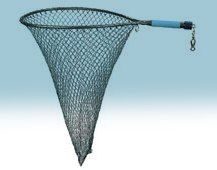
In both cases I personally find that a short handle net is a disadvantage. For instance if you're standing in the river any distance from the bank using a standard nymphing rig with an indicator positioned ten feet away from the bomb its a real mission. The only way to get the fish anywhere near the net is to raise the rod arm high behind you while pushing out the net arm as far as you can in front of you. In order to get this far you will also probably have had to play the fish to a stand-still. Throw into the mix that you are up to your bum in water having to contend with the current and its little wonder that things can go wrong. There are a couple of favorites, firstly the indicator can jam in the top eye or you accidentally tip load the rod while trying to control the fish. Either way it ends with the fish lost or your prized four piece suddenly gaining an extra section. This is why I tend to prefer a net with a longer handle because the increased reach enables you to slide the fish into the net almost before it realizes what's happening. Christchurch based kiwi company McLean Angling have a range of landing nets which include telescopic, fold out or fixed longer handle designs, as well as the traditional short versions. All their models come with a choice of knot-less or micro-mesh nets. They also have a built in weigh scale so that you can quickly record the weight of a fish with minimal handling, which again is an important consideration if you intend releasing it. If I'm with clients I usually go for the short net because it's easy and light to carry but my own choice when fishing alone is a longer version... it's just a lot less hassle.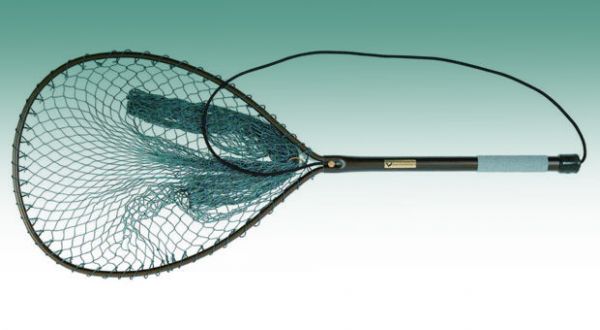
Tight lines guys
Mike |
|
|
| Back to Top |
|
|
|
|
|
|
|


