| |
|
|
| |
The Orange River
Tue 19th July, 2011
|
|
|
|
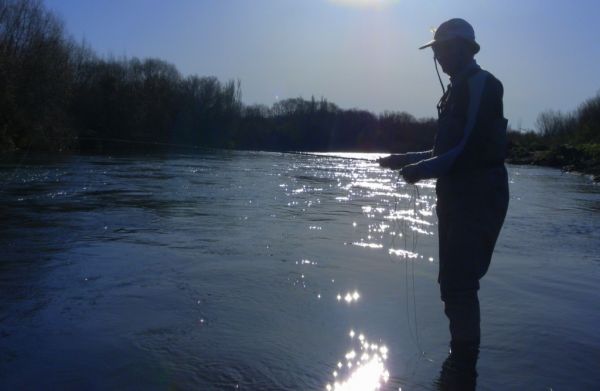
I've enjoyed this week on the Tongariro and I've been lucky enough to share some of it with a couple of great anglers who I fished with on different days. The first was Paddy Cole who you may have guessed is an Irishman. Paddy has lived and worked in South Africa for many years but at present is re-locating his company and young family to the United Kingdom. With "their home" in a container en route to Surrey for the next six weeks, they took this opportunity to visit his wife's family in New Zealand. "Pads" is a mad keen fly fisherman and it turned out we had both fished for rainbows in the trout dams of South Africa's rugged Drakensberg Mountains. My sister and brother also live in South Africa and on one of many holidays together we had spent a week in the mountains. Paddy was fishing the Tongariro for the first time so on a still crisp Turangi winter morning, stop one was a quick visit to the Braids to gently introduce him to the delights of heavy nymphs and mending a yarn budgie. I needn't have bothered because he was soon into it and on the way out nailed one in Spot X. 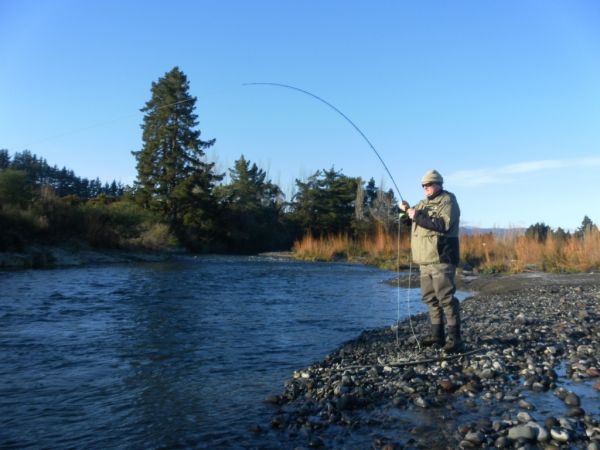 The rest of the day was spent exploring stretches of the upper river which we almost had to ourselves. By chopping and changing methods Paddy took several nice fish and was impressed how effective the dry and dropper was. One memorable rainbow cleared the water at least six times and gave us the run around in amongst some slippery rocks before we netted it. The rest of the day was spent exploring stretches of the upper river which we almost had to ourselves. By chopping and changing methods Paddy took several nice fish and was impressed how effective the dry and dropper was. One memorable rainbow cleared the water at least six times and gave us the run around in amongst some slippery rocks before we netted it.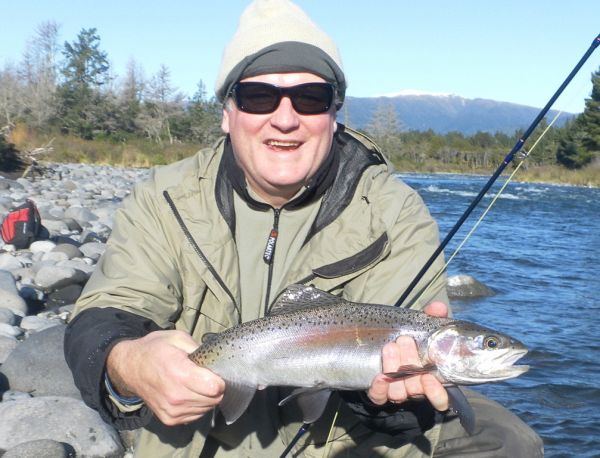 The second day the weather couldn't have been more different. When we met up at dawn in TRM it was obvious we were going to have to contend with a very nasty cold Southerly wind, which was going to test even the best of casters. The plan was to spend the day walking and fishing the TRB between the two swing bridges. First stop Kamahi, clients always comment on this very pretty pool but by now the wind was really picking up. After a few casts we were quickly convinced to keep walking. The next couple of hours were a guide's nightmare even though we fished some untouched water the grand total was the same as the temperature... zero. Despite this Paddy was a real trooper and the jokes and stories came thick and fast even though the fishing remained tough. One thing that I had never realized before was just how many words in the Irish language begin with an "f"..."c"..."b" or "s." Paddy is without a doubt the best "swearer" I have ever come across...with the exception of my darling wife and Billy Conolly! The second day the weather couldn't have been more different. When we met up at dawn in TRM it was obvious we were going to have to contend with a very nasty cold Southerly wind, which was going to test even the best of casters. The plan was to spend the day walking and fishing the TRB between the two swing bridges. First stop Kamahi, clients always comment on this very pretty pool but by now the wind was really picking up. After a few casts we were quickly convinced to keep walking. The next couple of hours were a guide's nightmare even though we fished some untouched water the grand total was the same as the temperature... zero. Despite this Paddy was a real trooper and the jokes and stories came thick and fast even though the fishing remained tough. One thing that I had never realized before was just how many words in the Irish language begin with an "f"..."c"..."b" or "s." Paddy is without a doubt the best "swearer" I have ever come across...with the exception of my darling wife and Billy Conolly! 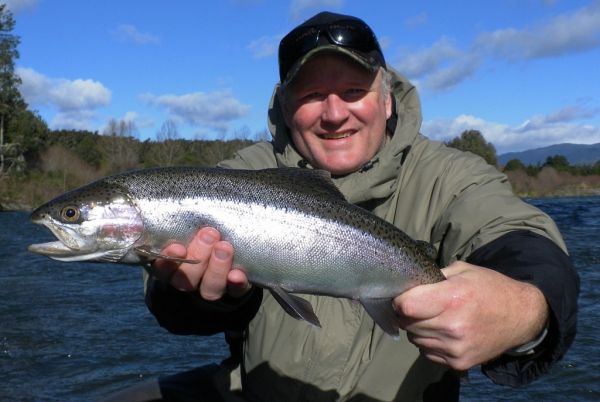
Around noon the indicator finally twitched and he was into a cracking silver rainbow which gave us a few hairy moments before he could hold it up for the camera. During the rest of the afternoon things picked up and before we headed back Paddy ended a difficult day with five landed plus the inevitable mid-water releases. Thanks for a great couple of days mate...come back soon.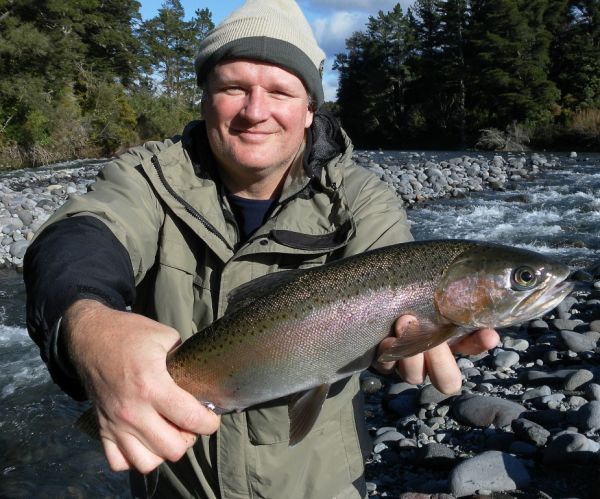
Over the course of our two days Paddy often commented on the "stunning" scenery and what a wonderful river the Tongariro was. This is a huge compliment because he has fished in some pretty extraordinary places on his travels.
Including a five day guided fishing / camping trip on the Orange River close to Namibia.
The "Orange" is South Africa's longest river.
It begins at the border between KwaZulu - Natal and Lesotho way up in the Drakensberg mountains where the ancient San people named it the Senqu. It runs in a westerly direction through South Africa and 2200 kms later spills into the Atlantic Ocean at Alexandra Bay. The Orange shares certain characteristics with the Tongariro a fact that Paddy touched on as we fished. Two large hydro schemes have been built to help support agriculture, industry and mining. In fact South Africa's first diamond known as the Eureka Diamond was discovered on the Orange River near Hopetown in 1867.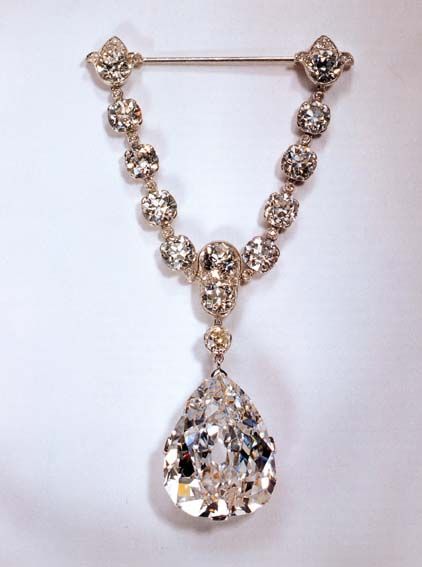
A much larger stone was found in the same area a couple of years later by a shepherd boy on the Zandfotein farm near the river. This stone named the Star of South Africa sparked a diamond rush to search for alluvial diamonds along the banks of the Orange River. This is the reason you see cash-struck guides walking around the Braids staring at their feet.
Later in 1871 hopefuls seeking their fortune descended on the town of Kimberly with their picks and shovels, after word got out that diamonds had been discovered there. The site was originally a flat topped hill when prospectors began digging into the kimberlite which is a volcanic rock named after the town. Years later in 1914 when mining finally ceased over 2722 kilograms of diamonds had been extracted from 22, 5 million tons of excavated material. This is the largest hand dug hole in the world and today is a number one tourist attraction for anyone visiting South Africa.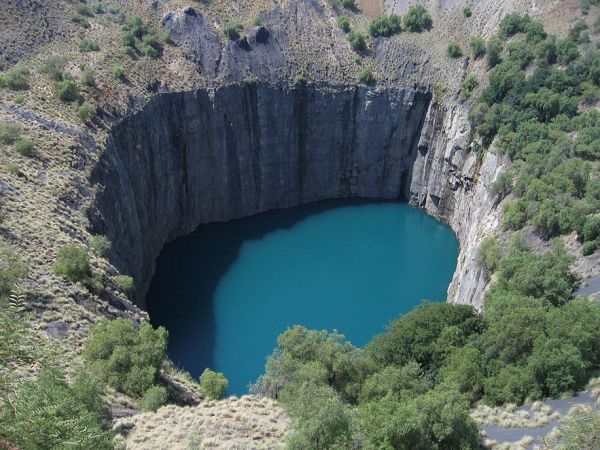 Present day there are still a number of commercial diamond mines in operation on the Orange but these are mainly around the lower stretches near its mouth. The river also helps irrigate agricultural projects along its length and vineyards and citrus farmers all benefit from the water the Orange provides. However in the summer wet season when ever the river floods it carries huge amounts of sediment which among other things can badly affect all of the engineering projects along the rivers banks. Fortunately because the winter water temperature is too cold for crocodiles this absence of one of Africa's dangerous animals makes it a top destination for rafters and canoeists. In March - April after good rain the hydro schemes operate with the sluice gates open and it's easily possible to travel 30 kms a day. Present day there are still a number of commercial diamond mines in operation on the Orange but these are mainly around the lower stretches near its mouth. The river also helps irrigate agricultural projects along its length and vineyards and citrus farmers all benefit from the water the Orange provides. However in the summer wet season when ever the river floods it carries huge amounts of sediment which among other things can badly affect all of the engineering projects along the rivers banks. Fortunately because the winter water temperature is too cold for crocodiles this absence of one of Africa's dangerous animals makes it a top destination for rafters and canoeists. In March - April after good rain the hydro schemes operate with the sluice gates open and it's easily possible to travel 30 kms a day.
Unlike the Tongariro it's the lower reaches of the Orange River that are the more popular mainly because of the spectacular scenery and a number of rafting companies offer guided trips similar to those operating in the upper reaches of the Big T. The main attraction for Paddy and the one that got my attention was the word "Yellowfish".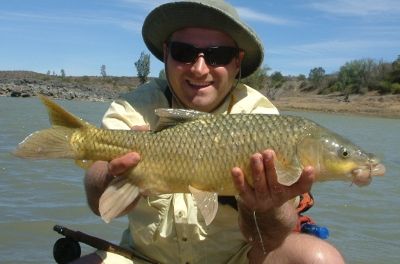
This fish has close relatives in Europe called barbel which I'm familiar with. In the UK they are classed as a "coarse fish" which are species other than salmon, trout or char and are normally targeted using float or ledgering methods. But the life of the famous "Yellows" of South Africa mirrors that of a trout and they are highly regarded as a sport fish putting them top of the list for fly fishermen. There are seven species in South Africa all of them sought after but just like bass in the U.S.A it's the largemouth and smallmouth that are the most prized, with the latter being the more common. Although they spawn in gravel beds they choose sites within their normal home range and don't migrate to upriver redds like some fish. Yellowfish spawn a number of times a year usually during periods of good water flows. This helps maximize egg survival and is important in a country such as South Africa that has unpredictable rainfall with a semi-arid climate...just like Turangi.
Like trout a large part of their diet consists of nymphs and larvae and they will also eagerly take surface insects. Listen to the list of a few of the most popular flies used for yellowfish ; caddis larvae, various nymphs including gold heads, hares ear and pheasant tails, Elk hair caddis, Goddard caddis, beetles, Klinkhamers, and woolly buggers...that's familiar. As they travel the river "yellows" are often in pods of up to thirty fish and if you locate a feeding group several fish can be taken from a relatively small area...I know...you could be talking a good session on the Tongariro.
An 8 lb specimen is regarded as a trophy fish, the better ones go 10lbs but the best bit is the South African record for both species is over 40lbs! I haven't seen my sister or brother for about seven years but I feel a trip coming on...while we're there it would be a shame not to pay a visit to the Orange River... I'm sure Gail would love it.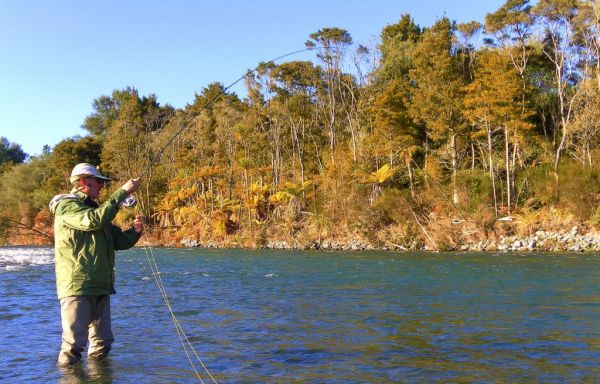
At dawn the next day I was back at the Tongariro River Motel to pick up David Woolner for his day on the river. David has recently retired from the pharmaceutical industry giving him more time to indulge his favorite past-time.
His usual stomping grounds are the Whirinaki or Mohaka but after living in New Zealand since the 1990's decided it was time he paid a visit to the Tongariro. It took him this long because his expectations of a day fly fishing on the Tongariro was standing in a line of a dozen or so other anglers patiently waiting for a chance to hurl a globug at a passing trout. I was hoping to lay this old wives tale to rest. Fortunately the wind of the previous day had died away and we were back to clear skies and a frosty start which has been a feature of the fishing this week. Although I knew we wouldn't be fishing in a picket line
I thought it might be difficult to find David the total solitude he prefers. Surprisingly when we arrived at our first spot above Red Hut, there wasn't another angler in sight and it remained like that for the whole of the time we fished there. David is an experienced fly fisherman which makes the day a lot easier, although he had never fished with a large yarn indicator and weight he was soon putting really nice drifts through. But it wasn't until we switched methods to fish the edge of some fast riffles that our first "success" of the day came. As the big dry went under David hooked into a strong fish which caught him off guard when it took off on a run into the middle of the river.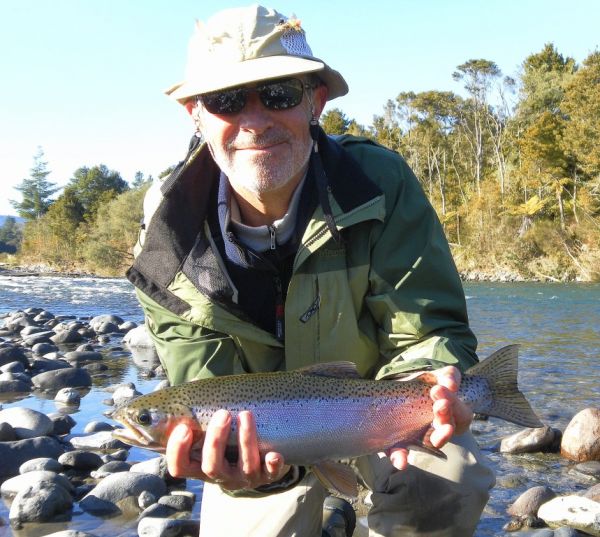
A few casts later the same thing happened again but on the third take he knew what to expect and it was all smiles for the camera. More fish followed as we moved around and by the time we walked back to the truck the morning tally was four landed. David had asked if he could be shown a couple of places which he could easily find on his own the next day.
So we decided the afternoon was going to be spent with a tiki - tour of the Braids followed by a walk downriver as another option. When we approached the river below "Spot X" I could see he was a little dismayed with the number of anglers already dotted around. This changed when on his very first drift through the riffles the indicator fly disappeared and he found himself playing a lively jack. As we moved a little further downstream we crossed and switched to the nymphing setup to fish a spot from the true left. Its one of those places where the lie is very well known but it helps to get the weight, leader length and most importantly timing the mend right. Once David had mastered the latter he immediately hooked up after initially missing a couple of hard to spot takes. Our trip downriver was disappointing but with an hour of daylight left we returned to the Braids. Finally ending the day with a battle royal in the Plank as David played a good fish in the fading light. Well done Dave and I hope it wasn't too busy for you.
Best flies for us this week small globugs with a thin flash tail, green caddis, rubber-legs and Marcel's Olive Bead Head under the big dry which has been continuously catching fish all year.
There seem to be more fish around and most anglers are catching something during their day.
I'm out tomorrow and Friday, with the level back down around the 36 cumecs mark and the river looking in great shape I'm looking forward to it. The forecast is for more rain Thursday evening into the weekend but unfortunately the wind is set to rise again, which may put people off. I would expect to see more trout running through and it should fish well...there's only one way to find out.
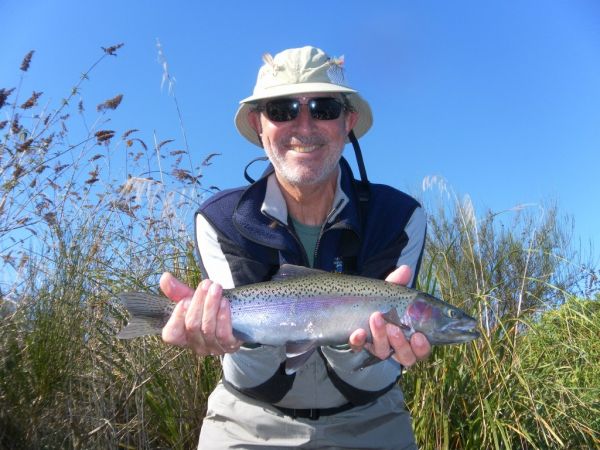
Have a great weekend guys
Mike |
|
|
| Back to Top |
|
|
|
|
|
|
|


