| |
|
|
| |
Windswept.
Sat 26th November, 2011
|
|
|
|
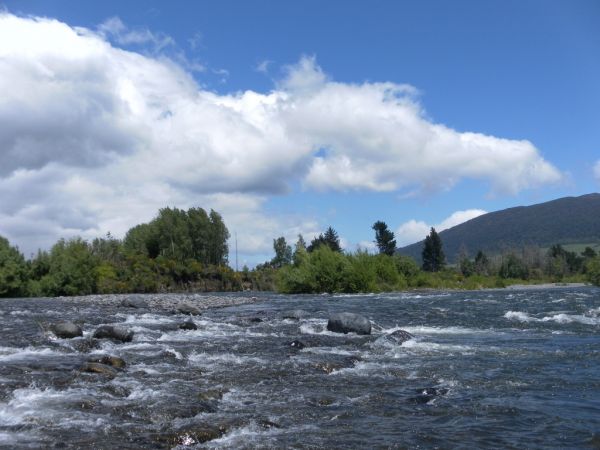
Bit of a short report because its almost a repeat performance of last week. We had several hours of steady rain that started early Thursday morning which saw the river peak around thirty six cumecs. That put some temporary color into the water but levels soon dropped back to what they were. Once the showers stopped in Turangi the sun broke through and it was all change again.
I think most anglers will have found conditions challenging lately. The unrelenting gusty wind has been with us now for almost two weeks. Fluctuating temperatures and the barometer rising and falling also hasn't helped matters. Day time hatches have been thin on the ground and I've seen very few fish rising. Any hatching insects that have made it to the surface have been whisked off by the wind before the trout have even noticed them.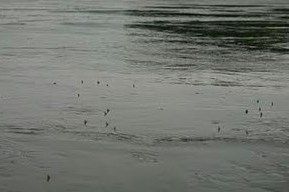 The evening rise has also been affected because the wind prevents the clouds of mating spinners from forming. Anglers who persevered and got on the river for their evening fix had mixed success fishing dry, emerger or even wee wets just below the surface. It all depended what was hatching and if they were lucky to be fishing during one of the rare calmer spells. The tips below are extracts from an article by Brant Oswald at www.midcurrent.com. Much of it is directed at anglers who fish the dry on smaller streams but there is also some very useful information with a broader application. The evening rise has also been affected because the wind prevents the clouds of mating spinners from forming. Anglers who persevered and got on the river for their evening fix had mixed success fishing dry, emerger or even wee wets just below the surface. It all depended what was hatching and if they were lucky to be fishing during one of the rare calmer spells. The tips below are extracts from an article by Brant Oswald at www.midcurrent.com. Much of it is directed at anglers who fish the dry on smaller streams but there is also some very useful information with a broader application.
I've pulled out the bits that could relate to circumstances found here on the Tongariro.
"The first problem with wind is that for most anglers even a light breeze destroys casting accuracy. This is a particular problem in spring creek and tail-water situations because placement of the fly in a narrow feeding lane is crucial to success. A further complication is the fact that drag may be caused not only by current acting on the leader and fly, but also by wind pushing the fly and tippet across these currents. A wind ruffle on the surface of the water also makes fish much harder to see, even with the aid of polarized sunglasses. Even experienced spring creek anglers may find that they spook more fish because they don’t see them until the fish are scurrying for the cover of a weed bed.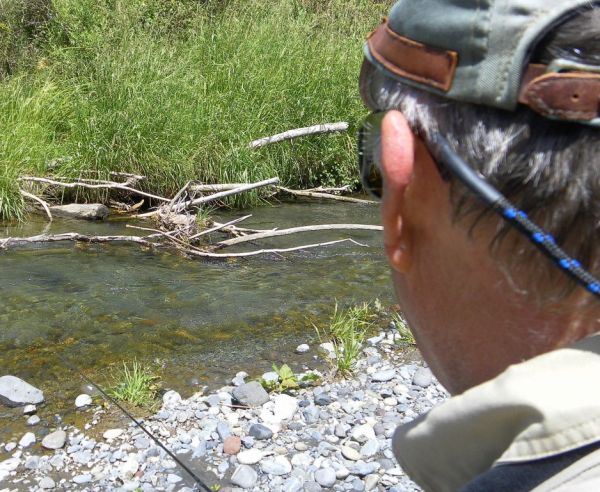 Wind can also indicate other weather changes that have adverse effects on fishing. Summer afternoon winds caused by temperature gradients can be annoying, but the fish are still willing to eat in these conditions if the angler can get the fly to the target. Winds caused by large scale barometric pressure changes as a storm front moves in can put a complete damper on the feeding activity of the fish. My experience is that wind also diminishes hatch activity, although it is not clear whether the insects are reacting to changes in air pressure or sudden changes in light intensity (from wind chop on the surface of the water). Wind can also indicate other weather changes that have adverse effects on fishing. Summer afternoon winds caused by temperature gradients can be annoying, but the fish are still willing to eat in these conditions if the angler can get the fly to the target. Winds caused by large scale barometric pressure changes as a storm front moves in can put a complete damper on the feeding activity of the fish. My experience is that wind also diminishes hatch activity, although it is not clear whether the insects are reacting to changes in air pressure or sudden changes in light intensity (from wind chop on the surface of the water).
It is not unusual to see the start of a good hatch and then watch the activity dissipate as the wind picks up. On the other hand, anglers should recognize that wind...in small doses...can be an ally. In extremely flat water, a breeze can produce a riffle where one didn’t exist before. The broken surface of the water in wind chop prevents the fish from getting a good a look at the fly or its drift, and although fish are harder to spot in these conditions, it is also harder for the fish to spot the angler. If there is decent hatch activity in the wind, the fish grow accustomed to the hatching insects skittering across the surface, movement that is mimicked by the drag of a less than perfect drift. The fish also recognize that hatching bugs in these conditions are often ripped away from them quickly, so they may become more aggressive in their feeding habits, slashing at the insects (and your artificial fly) before it can get away.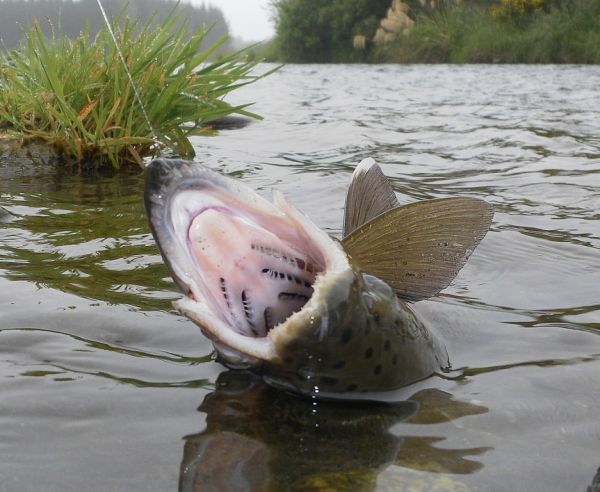 Some of the problems created by wind can be alleviated by proper tackle selection. One strategy is to pack a heavier rod and line as a backup for use in windy conditions. The delivery of the heavier line is not a problem in wind chop, and most casters will find the extra line mass will help carry the fly accurately to the target. Even though most anglers don’t carry a variety of floating lines for different conditions, some line designs are a handicap in the wind. Long front tapers often found on “spring creek” lines provide a more delicate presentation, but a line with a shorter front taper is a definite asset in transferring energy to the leader and getting the fly to the target when wind is a factor. These notions of how wind affects fishing point toward several basic fishing strategies of casting and presentation. The first is to leave the dictum to “fish fine and far off” for calmer days. Since accuracy is at a premium, get as close as possible and let the wind hide your approach. Some of the problems created by wind can be alleviated by proper tackle selection. One strategy is to pack a heavier rod and line as a backup for use in windy conditions. The delivery of the heavier line is not a problem in wind chop, and most casters will find the extra line mass will help carry the fly accurately to the target. Even though most anglers don’t carry a variety of floating lines for different conditions, some line designs are a handicap in the wind. Long front tapers often found on “spring creek” lines provide a more delicate presentation, but a line with a shorter front taper is a definite asset in transferring energy to the leader and getting the fly to the target when wind is a factor. These notions of how wind affects fishing point toward several basic fishing strategies of casting and presentation. The first is to leave the dictum to “fish fine and far off” for calmer days. Since accuracy is at a premium, get as close as possible and let the wind hide your approach.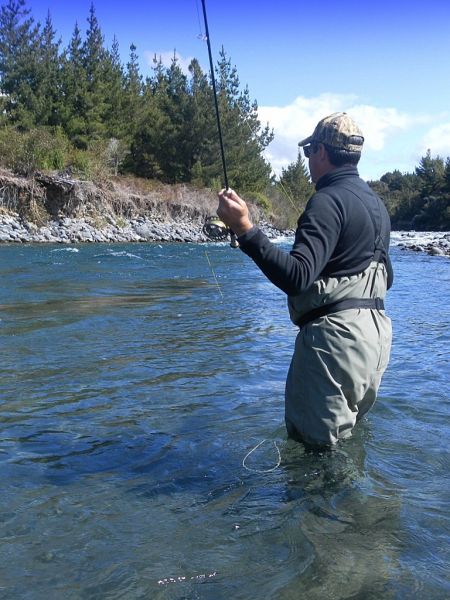 Wind velocity is always lowest right above the surface of the water, so try to drive the forward cast low and allow the loop to unroll just above the target. Driving the forward cast too high puts the loop into a zone with more wind which gives the wind more time to act on the cast before it can drop the fly to the target. Extremely windy conditions will frustrate even the best caster, and there are times it is important to recognize that discretion is the better part of valor. If the wind is gusting to hurricane force, it may be time to retire to the motel room to tie flies for the next day (or to a local tavern to commiserate with other disappointed anglers). But there are casting and fishing techniques that will allow an angler to minimize the effects of wind, and it’s worth trying to achieve a level of proficiency that will make a moderate breeze a nuisance, but not a total barrier to success." Wind velocity is always lowest right above the surface of the water, so try to drive the forward cast low and allow the loop to unroll just above the target. Driving the forward cast too high puts the loop into a zone with more wind which gives the wind more time to act on the cast before it can drop the fly to the target. Extremely windy conditions will frustrate even the best caster, and there are times it is important to recognize that discretion is the better part of valor. If the wind is gusting to hurricane force, it may be time to retire to the motel room to tie flies for the next day (or to a local tavern to commiserate with other disappointed anglers). But there are casting and fishing techniques that will allow an angler to minimize the effects of wind, and it’s worth trying to achieve a level of proficiency that will make a moderate breeze a nuisance, but not a total barrier to success."
Most of the anglers I know will definitely agree with the "local tavern" bit and a couple of times this week I've found myself sipping a cold beer much earlier than I normally do. Last Friday a previous client of mine arrived from Austria for his annual four week stay at Tongariro River Motel. Herbert { below } has been coming to New Zealand since the nineties mainly to fish the Tongariro. Nowadays he makes the trip to catch up with his favorite guide...no...not me...his best mate Jake. When we caught up on Tuesday Herb was busting to get a day on the river but it was still blowing pretty hard. We agreed on Friday because at that time it looked as if there would be a calmer slot after the rain. Friday morning got off to a bit of a dramatic start...the night before I had met him for a "quiet" drink in the Bridge Motel. He was already sitting by the bar when I arrived and was in full holiday mood. After a couple of hours he realised it would be unwise to drive even the short distance back to T.R.M. I'd only had a couple of beers so offered to take him home, he handed me his keys and we jumped into my wagon. As we drove out I could see Herbies' rental Mitsubishi saloon was the only vehicle left in the car-park at the rear of the motel and easily seen from my unit. Next morning just as I finished putting the last of the gear into the wagon I glanced over to Herbies' car...bloody hell...it wasn't there! I drove straight over to tell him the awful news that some toe-rag had not only pinched his rental wheels but I remembered he had left all his fishing tackle in the back. As we pulled up I could see him waiting for us outside his unit obviously looking forward to the day ahead. Subtle as ever I blurted out that his car had been stolen and we should immediately contact the police. The color drained from his face when he realised I wasn't joking but before getting the authorities' involved he asked me to take him to where he had parked up the previous night. We drove straight to the back of the Bridge Motel and I pulled up next to the now empty parking space which only hours before was occupied by Herbies' car. We sat there for a few seconds looking at one and other...I'm wondering why he isn't getting out to have a quick check around and he's thinking why has this stupid guide stopped here. Yeah... you've got it...it wasn't his car. The one that I had assumed was Herbies' was an identical model that belonged to a guest who had left in the early hours...his was still parked safe and sound out the front hidden from view by a lorry! 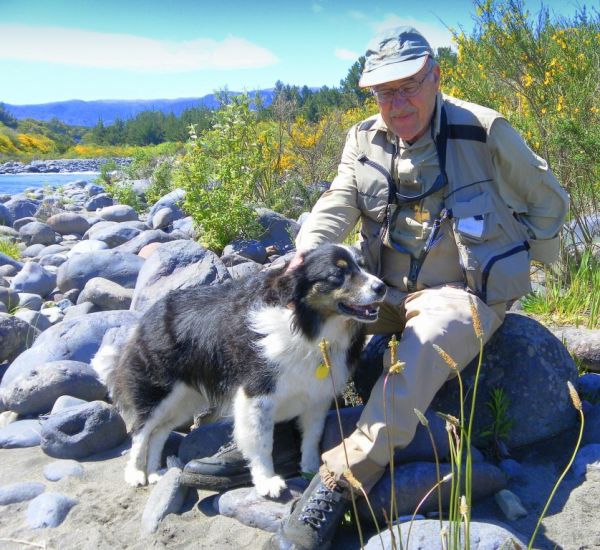
It was well into " gentleman's hours" by the time we had tried a few easy spots to start but already the wind was gradually beginning to pick up. When we got up to Big Bend around mid-day it was proving to be a real nuisance. There were a few rainbows in the tail but we couldn't get at them properly whatever we tried. We broke for lunch at the side of the pool and discussed some options for the afternoon.
A day on the Tongariro with Herbie is a nice relaxed, chilled affair { if you ignore the small glitch earlier } he just loves to be on the river.
If he catches a fish great...if he doesn't he isn't bothered but the guide is. Last year he'd had a good time in Judges and its a place he enjoys fishing. Providing we take our time he doesn't find the slippery crossing to the TRB to difficult. 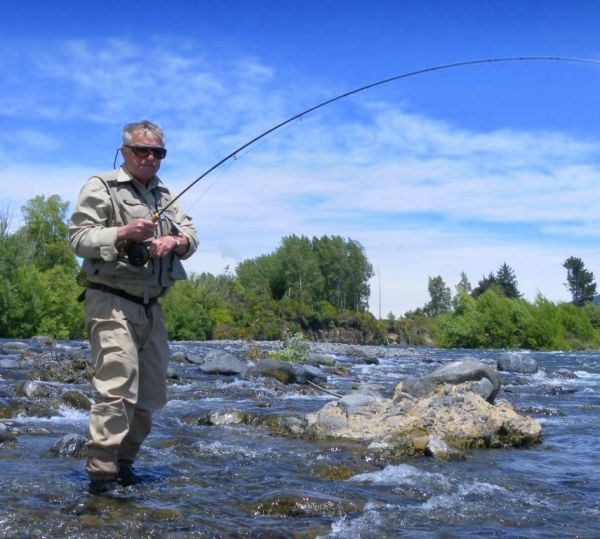 When we got there around 2.00pm both sides were deserted. Despite the sunshine the wind was gusting from all directions and it wasn't going to be easy. Herbert kept at it stopping when the wind became impossible. Every so often the indicator would dive under just to keep things interesting but those quick takes are easy to miss when the fishing is hard. Then we noticed that the calmer spells in between the gusts were getting longer and a couple of fish began rising at the top of the pool. We swopped rods and moved up, then just as Herbie was halfway through a drift the wind suddenly picked up taking his new hat. At the same time the dry went under and he was into a fish which we landed together with his hat. Over the next hour he had a few more, mainly kelts plus one nice silver fish which we let go in the middle of the river. The wind got up again and the takes stopped as suddenly as they had started. It had been a rough day but we all had a good time including Jake. He has a bit of a special bond with Herbie...I'll have to keep an eye on him just in case he gets dog-napped. When we got there around 2.00pm both sides were deserted. Despite the sunshine the wind was gusting from all directions and it wasn't going to be easy. Herbert kept at it stopping when the wind became impossible. Every so often the indicator would dive under just to keep things interesting but those quick takes are easy to miss when the fishing is hard. Then we noticed that the calmer spells in between the gusts were getting longer and a couple of fish began rising at the top of the pool. We swopped rods and moved up, then just as Herbie was halfway through a drift the wind suddenly picked up taking his new hat. At the same time the dry went under and he was into a fish which we landed together with his hat. Over the next hour he had a few more, mainly kelts plus one nice silver fish which we let go in the middle of the river. The wind got up again and the takes stopped as suddenly as they had started. It had been a rough day but we all had a good time including Jake. He has a bit of a special bond with Herbie...I'll have to keep an eye on him just in case he gets dog-napped.
Today is the Lake Taupo Cycle Challenge New Zealand's biggest cycling event that attracts over ten thousand riders annually. I don't envy the competitors because the gusts are worse than ever this morning. Next week they have forecast a return to much lighter winds with isolated rain or showers. This will provide more pleasant fly fishing conditions and encourage anglers back onto the river. We should see a lot more fish getting caught and get a better idea of whats happening out there. The caddis pupa below was photographed just above the Poutu at the beginning of the week. I've seen a lot of these recently, vibrant greens and probably around a size 12 hook.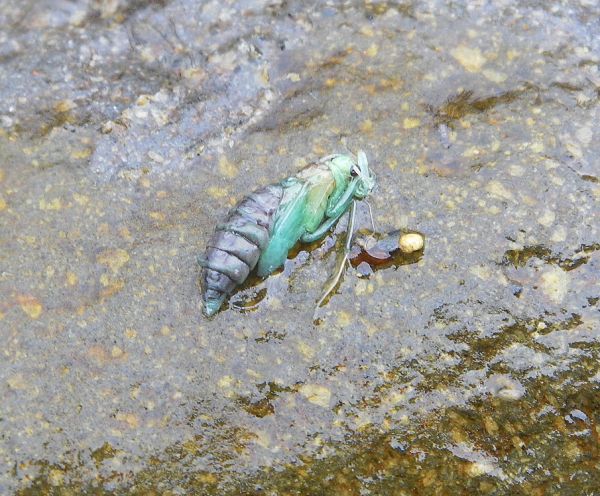
Tight lines guys
Mike. |
|
|
| Back to Top |
|
|
|
|
|
|
|


