| |
|
|
| |
Leader length.
Thu 1st March, 2012
|
|
|
|
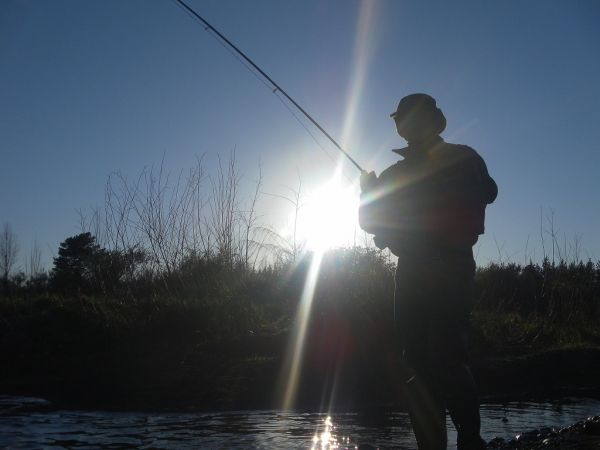
First of all a huge thank you to all of you who have emailed me inquiring how I am. Its been a tough couple of months for Gail and myself but I'm up and about and well on the mend. Unfortunately the "reports" will continue to be a little sporadic until I'm match fit and back on the river...you don't realize how much your going to miss something until its taken away from you. See you all soon. Mike
There are a number of factors to consider when deciding leader length for nymphing. Firstly the estimated depth of the water you intend to fish. As a general rule most anglers will set the indicator at around one and a half times the estimated depth. You will also have to take into account the speed of the current, flow changes and the weight of the flies that you are using. Ideally you want the flies to be somewhere near the bottom in the first third of your drift especially when your after trout on their spawning runs. By casting well upstream and "mending" the line you will be able to keep them in the zone as long as possible.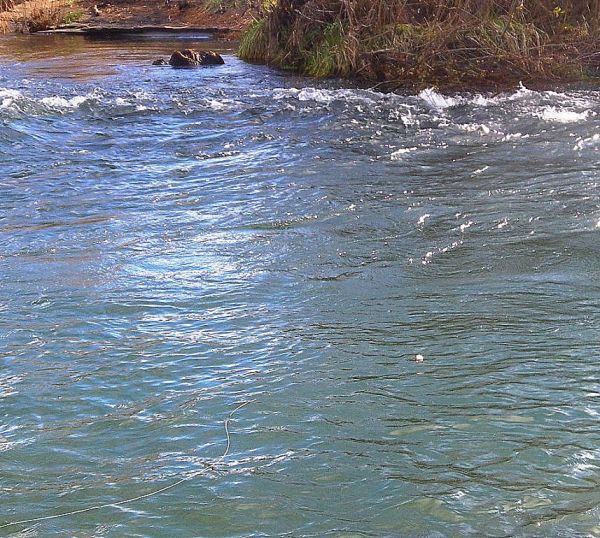
Its usually best to begin mending as soon as your drift begins especially in faster water.
This prevents a downstream bow forming in the line which would cause your indicator to accelerate towing your nymphs downriver before they have a chance to sink to the river-bed. As a rough guide if the indicator is at an angle pointing downstream this means the flies are traveling to quickly...correct this by throwing an upstream mend. If its at an angle pointing upstream it may be a little too slow so throw a downstream mend which will speed things up. Ideally you want the indicator to be sitting upright with minimal drag either way which gives a more natural presentation, although not everyone goes along with this theory. Don't always expect the take to register in the classic way with the indicator sliding under. Sometimes it may just pause or you will see a series of little dips as it travels downstream, strike at any unusual movement. Occasionally you will experience takes right at the very last moment just as you are about to lift off to recast. 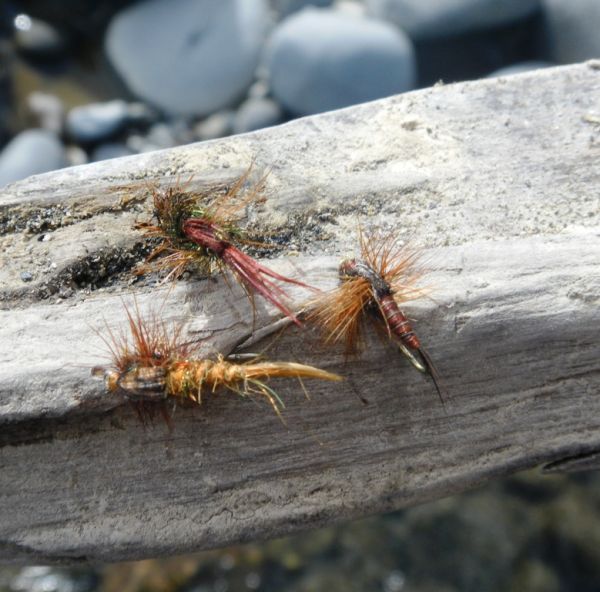 This combination of raising the rod and the resulting straightening of the line causes the flies to rise from the bottom mimicking an aquatic insect making its way to the surface. This combination of raising the rod and the resulting straightening of the line causes the flies to rise from the bottom mimicking an aquatic insect making its way to the surface.
If you keep getting takes like this it could be your imitations are not getting down fast enough meaning you will need to experiment with some of the above. There is a technique called the " Leisenring lift " invented in the 1940's used mainly when you can see the trout in front of you. This involves deliberately raising the rod tip as the flies near your intended target causing the nymphs to rise up in front of the fish...hopefully inducing a take. Anglers fishing buoyant patterns like globugs often experience takes right at the very end of a drift. This could be another indication they need to use more weight or alter their leader length because the globug isn't getting down to the fish fast enough and not reaching the bottom until they are about to recast. Taking all of this into account and the fact that it will be unlikely you'd be fishing in the same spot all day it makes sense to use an indicator setup that can be easily adjusted up or down. 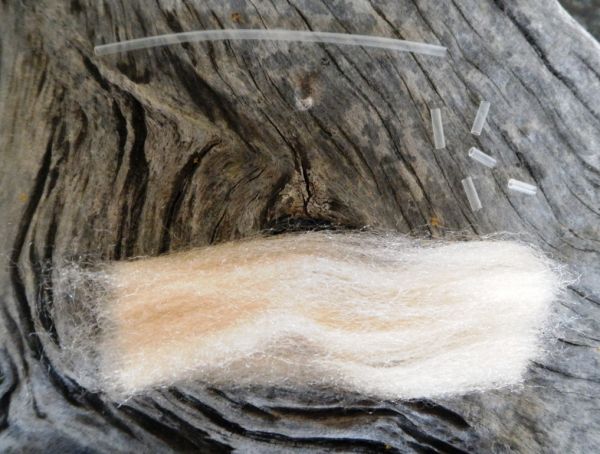 There are several well known methods...some anglers attach a piece of yarn using a small orthodontic rubber band an idea which was probably introduced to New Zealand by American anglers in the 1980's. These dental bands can sometimes be difficult to source so this is my alternative suggestion. There are several well known methods...some anglers attach a piece of yarn using a small orthodontic rubber band an idea which was probably introduced to New Zealand by American anglers in the 1980's. These dental bands can sometimes be difficult to source so this is my alternative suggestion.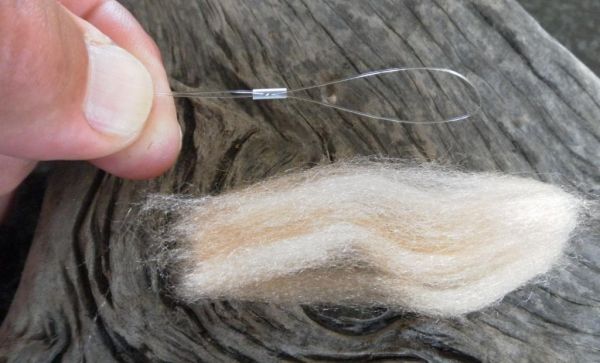
Visit the surf section of your local tackle shop and pick up some rig tubing. Its normally sold in various diameters go for the smallest you can comfortably handle. If they stock it in silicon and latex rubber go for the latex it grips a lot better.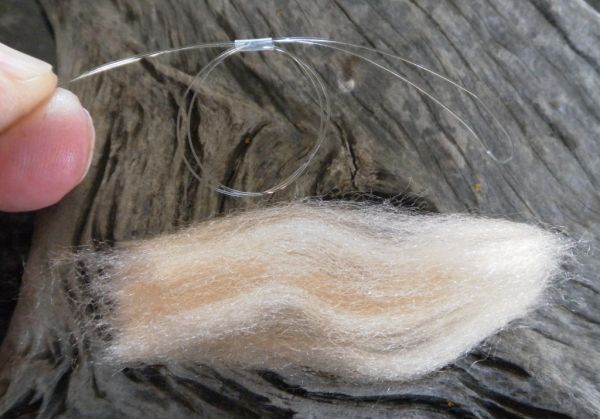
Its a very similar procedure to the one described in the Quick Indicator guide. Cut off a small section of tubing as shown above and forming a loop in the line push it through the rubber tubing. Pull a couple of inches through take it back to the bottom and thread it through a second time.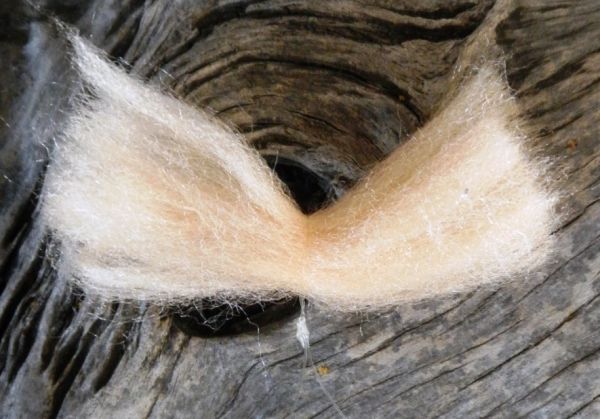
Place a finger in the loop and gripping the line with the other hand pull. This turns the piece of tube inside out forming a figure of eight sliding rubber "knot" at the base of the looped line.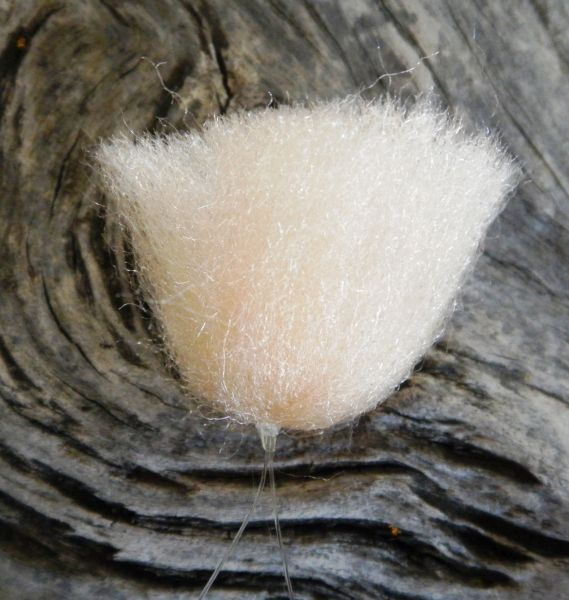
I carry a small zip lock plastic bag containing a length of yarn pre-treated with Selley's Water Shield. Cut off a piece and insert the yarn into the open loop and slide the rubber knot up tight against it. Now hold the line either side of it and pull again to snug everything up even tighter. Comb and fluff up the yarn to trap as much air as possible, then trim and once again you have a sliding indicator. You can also buy or easily make your own yarn indicators. Some are tied on a rubber "O ring" but these tend to slip. The more popular ones are tied onto a snap link and can be attached in a variety of ways to the line or leader.
Which ever method you choose you'll gain better presentation, cover more fish properly and definitely hook up more often varying the leader length to suit changing conditions on the river.
Tight Lines
Mike |
|
|
| Back to Top |
|
|
|
|
|
|
|


