| |
|
|
| |
Nymphing Part Two
Mon 16th April, 2012
|
|
|
|
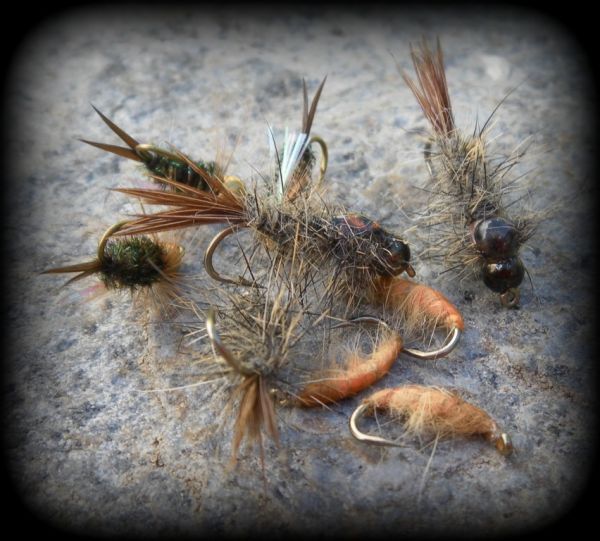
So we've established that trout are " drift feeders " positioning themselves where there are concentrations of the aquatic insects they live on. For most of the time this will be near the bottom of the river bed so all we have to do is chuck out a couple of weighted flies underneath an indicator then haul in the fish . . easy ... well, not quite.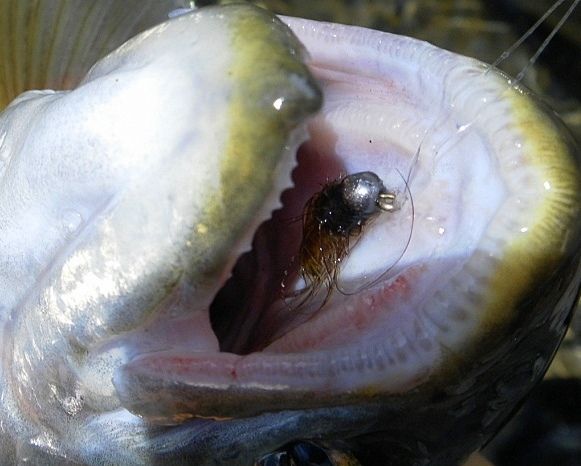 The name of the game is to present your artificial nymphs in such a way that a trout is fooled into thinking they are the real thing which in turn produces the confident takes we are after. This isn't quite as simple as it sounds because there are several things you have to factor in before you have any hope of achieving that " natural looking drift " ... the most important of these is depth. You can tie on the most realistic, fish slaying pattern ever devised but if its not getting to where the fish are feeding you'll have an empty smoker again. The analogy I sometimes use with novice anglers is to ask them to imagine they are sitting in a very comfortable chair at the end of one of those long medieval banquet tables. Running the whole length of the center of this table is a narrow conveyor belt continually being loaded with their favorite food. Occasionally as all this " luvly grub " is brought towards them a couple of the goodies roll off the belt onto the table. If these are within arms reach they"ll probably grab them as well but if food suddenly appeared six feet above their head why would they leave the nice comfy chair and go to the trouble of stretching up, when they only have to stay put to enjoy all the other stuff that's delivered directly to their door. There are numerous things you can do that help get your flies down near the bottom of the river where trout and the nymphs and larvae they prey on spend most of their time but we'll start with the most obvious ... weight. One question that always crops up is how heavy do you have to go to get down to the fish. I'm afraid its one of those The name of the game is to present your artificial nymphs in such a way that a trout is fooled into thinking they are the real thing which in turn produces the confident takes we are after. This isn't quite as simple as it sounds because there are several things you have to factor in before you have any hope of achieving that " natural looking drift " ... the most important of these is depth. You can tie on the most realistic, fish slaying pattern ever devised but if its not getting to where the fish are feeding you'll have an empty smoker again. The analogy I sometimes use with novice anglers is to ask them to imagine they are sitting in a very comfortable chair at the end of one of those long medieval banquet tables. Running the whole length of the center of this table is a narrow conveyor belt continually being loaded with their favorite food. Occasionally as all this " luvly grub " is brought towards them a couple of the goodies roll off the belt onto the table. If these are within arms reach they"ll probably grab them as well but if food suddenly appeared six feet above their head why would they leave the nice comfy chair and go to the trouble of stretching up, when they only have to stay put to enjoy all the other stuff that's delivered directly to their door. There are numerous things you can do that help get your flies down near the bottom of the river where trout and the nymphs and larvae they prey on spend most of their time but we'll start with the most obvious ... weight. One question that always crops up is how heavy do you have to go to get down to the fish. I'm afraid its one of those
" how long is a piece of string " things because it depends on where you are, what your fishing with, your casting ability, water velocity and so it goes on but one thing is certain if you're moving around the river you will be constantly adjusting the amount of weight that you use throughout the day.
THE WEIGHT Of THE FLY
Broadly speaking the heavier the fly the quicker and deeper it will sink but you pay a price because adding weight to the fly itself alters the way it behaves in the water and tends to kill any movement it may have. Some of the large heavy nymphs in common use on the Tongariro are little more than delivery systems to get lighter " naturals " down to where the fish are feeding. Fly-tiers get round this by incorporating materials like rubber-legs, flash or soft feathers to give weighted patterns the appearance of life and movement. Fish find these triggers attractive and you may notice if there are plenty of keen freshies or hungry kelts around its not uncommon to take just as many on the bigger, heavier flies as you will on the smaller nymph or egg imitations used with them. Indeed some of the most popular and successful flies world-wide in recent times all have a common theme ... weight.
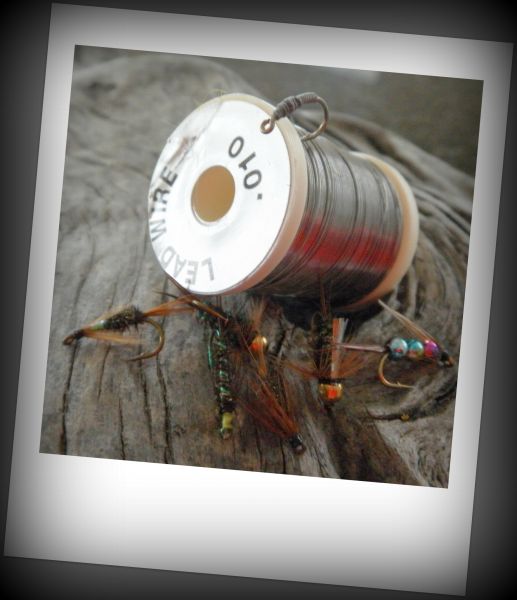 Many patterns that have been around for donkeys ears have been transformed and their fish catching qualities improved with the addition of colored wire, lead or gold or other colored metal beads. New flies have appeared like the Copper John which was considered heavy when it first became popular in the early nineties but nowadays would be thought of as average. Visit any good tackle shop and there will be bead-head or weighted versions of just about every pattern you can think of ... why? Many patterns that have been around for donkeys ears have been transformed and their fish catching qualities improved with the addition of colored wire, lead or gold or other colored metal beads. New flies have appeared like the Copper John which was considered heavy when it first became popular in the early nineties but nowadays would be thought of as average. Visit any good tackle shop and there will be bead-head or weighted versions of just about every pattern you can think of ... why?
... because they work. On the Tongariro the standard rig for " nymphers " is a heavily weighted fly incorporating a big tungsten bead, lead wire or both which is known as the bomb. Tied to the bend of this is around 14 inches of flurocarbon to which the smaller, lighter nymph is attached. Its a concept that many first time visitors to the Tongariro struggle with, most are surprised when they are shown just how heavy a typical Tongariro Bomb can be. If they have fly fished before you can see them thinking how am I going to cast this thing out there and live!
ADDING WEIGHT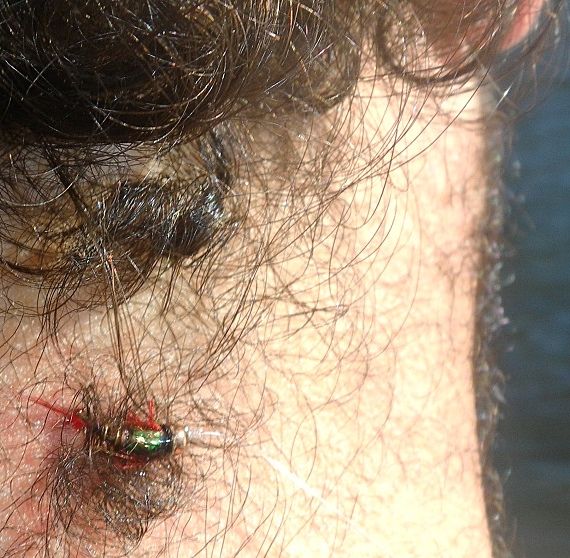
Of course you don't have to use a heavy bomb to get your natural patterns down to the feeding zone. Some anglers prefer to dispense with it altogether, adding weight to the leader above the point fly, usually by pinching on a couple of split shot or by moulding on some tungsten sink putty. The latter is a great alternative because unlike lead its not environmentally toxic. When
I was last in the UK lead weights and split shot had already been banned on most waters because of the poisoning of water-fowl especially swans which are protected. These fatalities were attributed to discarded or lost rigs incorporating lead and I understand many other countries are now following suit. Using sink putty or shot instead of a bomb also works out cheaper in snaggy areas because its one less hook to get caught amongst any debris on the bottom ... or in Ben's case the back of his head ! Most of the time my own preference is to stick with the bomb and hope the hook gets caught in a trouts mouth ... preferably a big one.
FLY PROFILE
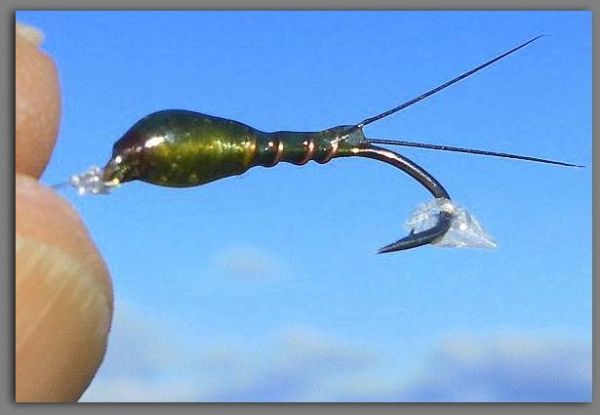 You can also influence the sink rate by using skinny tied flies or patterns coated in epoxy resin. Bombs are especially useful when tied like this because they cut through the water and get your flies down fast. Some of the mayfly nymphs I like to use are just made of thread, a few turns of wire and a couple of bristles from a paint brush. The top of the head and back are darkened with a waterproof marker pen and the whole fly given a coat of You can also influence the sink rate by using skinny tied flies or patterns coated in epoxy resin. Bombs are especially useful when tied like this because they cut through the water and get your flies down fast. Some of the mayfly nymphs I like to use are just made of thread, a few turns of wire and a couple of bristles from a paint brush. The top of the head and back are darkened with a waterproof marker pen and the whole fly given a coat of
5 minute epoxy. They don't fall apart, sink like small stones and best of all the fish luv em !
In the next couple of articles we'll look at the joys and delights of casting those heavy flies, the leader, a little on controlling the drift, plus nymphing with the long dry and dropper ... oh! and may be a quick look at a nymph you might not have tried before.
Tight lines guys
Mike |
|
|
| Back to Top |
|
|
|
|
|
|
|


