| |
|
|
| |
Nymphing Part Three
Sun 29th April, 2012
|
|
|
|
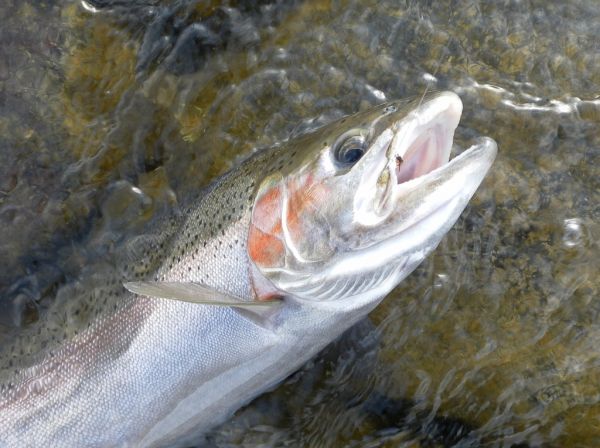
A bit of a change of plan again with this weeks content because my surgeon unexpectedly ok'd some fly fishing. Of course there were a few strings attached and I had to promise to be a good boy and not do anything stupid. He was keen to point out my ticker would still be his property for a little longer and he didn't want his handi-work undone. The timing couldn't have been better with Turangi wearing its Autumn coat of many colors this is always a beautiful few weeks to be out and about on the Tongariro. As an added bonus there was the ongoing maintenance work being carried out by Genesis Energy at the Tokaanu Power Station. This would ensure the river would be at its " natural flow " of around 44 cumecs for a couple more days and the higher levels had already encouraged some fish to move. Combined with the forecast of more heavy showers we had all the makings for some great sport, so with the Braids still looking like an abandoned quarry I headed for Judges.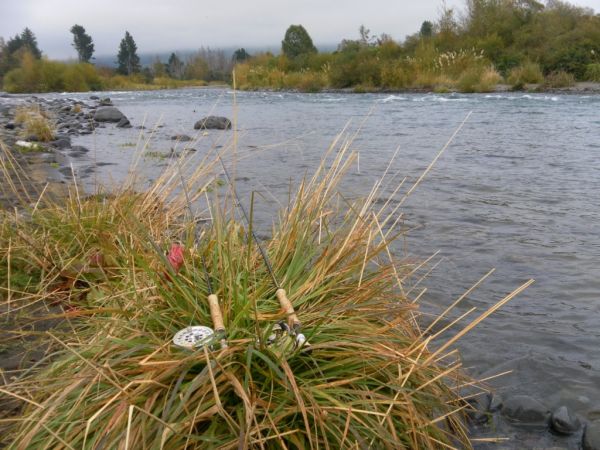 Even though it was already eight o'clock in the morning I only passed one other angler who was trying his luck below the road bridge. This was surprising because conditions looked perfect and I was fully expecting to be sharing the river with others, especially around town. Once there, the Tongariro didn't disappoint but there were a couple of hefty snags right where you didn't want them to be. Inevitably I lost a couple of sets but with a change of tactics, most of the time I was able to avoid them. A bit later I was joined by Bill McKinnon a previous client of mine and when we left at midday we had already landed several nice conditioned fish and not a slab amongst them. Even though it was already eight o'clock in the morning I only passed one other angler who was trying his luck below the road bridge. This was surprising because conditions looked perfect and I was fully expecting to be sharing the river with others, especially around town. Once there, the Tongariro didn't disappoint but there were a couple of hefty snags right where you didn't want them to be. Inevitably I lost a couple of sets but with a change of tactics, most of the time I was able to avoid them. A bit later I was joined by Bill McKinnon a previous client of mine and when we left at midday we had already landed several nice conditioned fish and not a slab amongst them.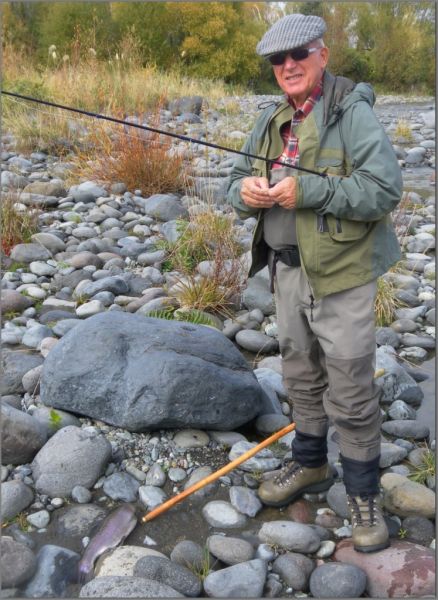
Bill is another new fan of the " long dry and dropper " and it proved its effectiveness again. The conventional rig under the indicator accounted for only one fish, all the others sucked in nymphs under the big dry. With my fishing time limited to only a few hours its not much of a report but a couple of phone calls confirmed there are some good fish throughout the river. Small Pheasant Tails, Green Caddis and Quasimodo patterns are all taking fish and will continue to do so especially once the river returns to its controlled flow and levels drop. With settled weather on the cards again this week I know where I'd like to be but I have to start some proper physio, gradually increasing the exercise regime.
My pick if I were on the river with a mate {and two vehicles} would be to park a car at one bridge then drive to the other, cross-over and fish the T.R.B back upriver. This way you'd cover some great water on the middle and upper Tongariro and not have to worry about the walk back ... now what was I saying about increasing the exercise!!!
While I was on " my holidays " in Wellington Hospital immediately after the surgery I spent a little bit of time in I.C.U. It was there that I first heard the "reassuring" tale of another hospital's Intensive Care Unit where regardless of their medical condition seemingly recovering patients died in the same bed, at 11.00am on Sunday mornings. This was obviously a huge cause for concern to the dedicated nursing staff. And puzzled doctors even thought it might have something to do with the super-natural. Despite months of exhaustive in house investigation no one could solve the mystery as to why the unexplained deaths occurred around 11:00 am on a Sunday, so an International team of experts was assembled to further examine the cause of the incidents.
The following Sunday, a little before 11:00 am all of the doctors and nurses nervously waited outside the ward doors to see for themselves what this terrible phenomenon was all about. A priest was standing by and some staff members were holding wooden crosses, prayer books, and other holy objects to ward off the evil spirits. Then just as the clock struck eleven, in walked Pookie Johnson, the part-time Sunday sweeper and unplugged the life support system so he could use the hospital vacuum cleaner.
Here's one you don't see used that often but its worth keeping a couple in the box. If all the usual suspects have failed and conditions are right this one can get you out of trouble. It's a big nymph so its handy if there's a bit of color in the river when you'd probably go up a hook size or two anyway.
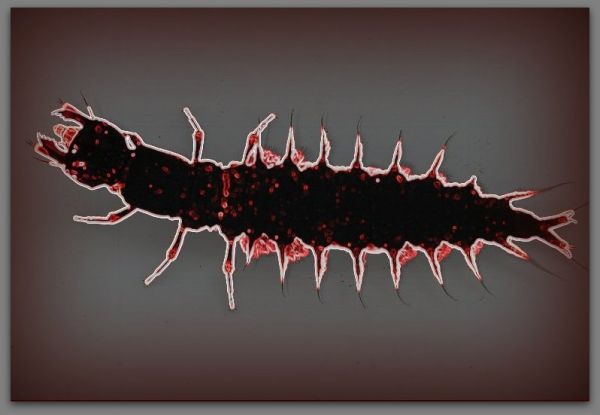
The larval form of the Dobson fly is called a Hellgrammite { toe-biter } to you and me. The origin of its name is a bit sketchy but it may be a combination of " hell " and " grim looking "... no one really knows. Its the largest aquatic nymph found in New Zealand waterways and certainly is a pretty fierce looking insect with those large biting jaws which can give quite a nip.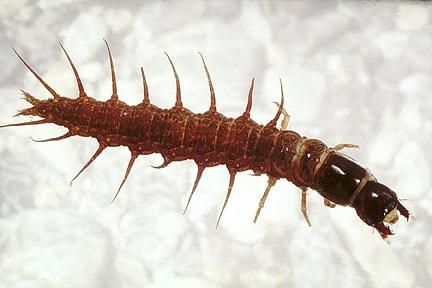 Dobson flies are also found in both North and South America, Africa, Asia as well as Australia. Although they have a life-span of two to five years most of this consists of the larval stage. They spend only a few weeks in the pupal stage and around one to two weeks as an adult fly. As the nymph grows it goes through a number of instars { molts } sometimes as many as a dozen by the time it matures. During this time it is an aggressive hunter and mayfly nymphs are high on its list of favorite grub but they will eat any bottom dwelling aquatic insect. They prefer to live in cold, well oxygenated stony streams and rivers like the Tongariro and are mostly nocturnal. During the day they tend to hide under stones, logs or other debris on the river bed, which is why some anglers are not familiar with them unless they turn up in the stomach contents of a gutted trout. I must admit I find these time consuming and a bit fiddly to tie. To get a realistic looking nymph you have to imitate three pairs of legs and the eight pairs of gill filaments that run the length of the abdomen. Most patterns use biots or rubber legs for this, luckily Umpqua produce an excellent toe-biter nymph and nowadays I'd rather pay the couple of bucks. Dobson flies are also found in both North and South America, Africa, Asia as well as Australia. Although they have a life-span of two to five years most of this consists of the larval stage. They spend only a few weeks in the pupal stage and around one to two weeks as an adult fly. As the nymph grows it goes through a number of instars { molts } sometimes as many as a dozen by the time it matures. During this time it is an aggressive hunter and mayfly nymphs are high on its list of favorite grub but they will eat any bottom dwelling aquatic insect. They prefer to live in cold, well oxygenated stony streams and rivers like the Tongariro and are mostly nocturnal. During the day they tend to hide under stones, logs or other debris on the river bed, which is why some anglers are not familiar with them unless they turn up in the stomach contents of a gutted trout. I must admit I find these time consuming and a bit fiddly to tie. To get a realistic looking nymph you have to imitate three pairs of legs and the eight pairs of gill filaments that run the length of the abdomen. Most patterns use biots or rubber legs for this, luckily Umpqua produce an excellent toe-biter nymph and nowadays I'd rather pay the couple of bucks.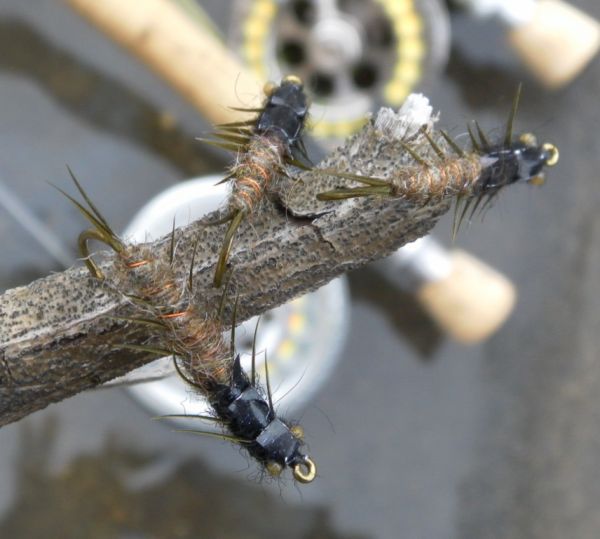
Because they have such a long larval stage they are available all year round but I've had most success fishing them after a fresh just as the water begins to clear. The increased flow washes them out of their hiding places and as they tumble downstream near the bottom trout are only too happy to pick them off. I prefer to fish them singly on a longish leader with a suitable size split shot a foot or so above the fly. In deeper water stick with the indicator, in the shallower riffles I discard it and watch the end of the line to spot any takes. Try to imitate the natural insect as it trundles downstream along the river bed. For instance if your fishing close in, an occasional lift of the rod tip will impart some vertical movement into the nymph which could induce a take. On the Tongariro the Hellgrammite is never going to be your number one, go to fly but if things are a little slow or you have one of those browns that has ignored everything else why not give it a try.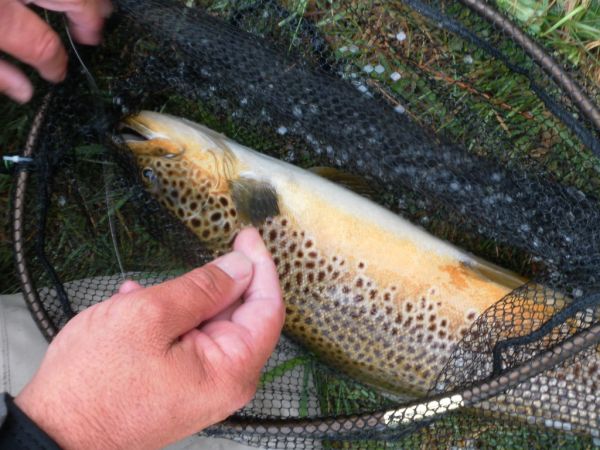
Be lucky
Mike |
|
|
| Back to Top |
|
|
|
|
| |
| COMMENTS |
|
Hi Mike Delighted to see you are back in action!! Wishing you a full and speedy recovery! Brendan and I are off to Cuba for a few weeks to see can we locate a few of Fiedels bonefish.
Regards Ken |
|
|
|
| Tue 1st May, 2012 | |
|
Hi Mike- great to hear you are back up and at 'em. Hope to see you on the river banks again soon.
All the best Andrew Brown (who you kindly helped out with a few tips last winter on the TLB channel) |
|
|
|
| AndyB | Tue 1st May, 2012 | |
|
Hi Mike, Glad to see you are back on the river, even if with limited capacity. Maybe I'll see you next time I'm at TRM which (hopefully) will be September or October. A quick question - When you use a large dry as an indicator (eg cicada etc) how long is the leader from the dry to the nymph, caddis etc? Do you try and have the point fly on or near the bottom? I imagine this would be required when fishing for rainbows but not necessarily for browns?
Stay well, Murray |
|
|
|
| Muzza | Tue 1st May, 2012 | |
|
|
|
| |
|
|
|


