| |
|
|
| |
Nymphing Part Four.
Fri 11th May, 2012
|
|
|
|
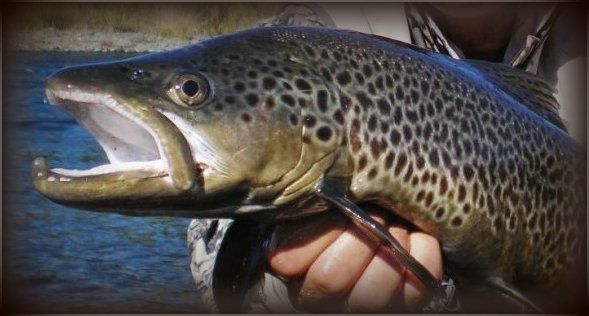
Ozzie angler and TRM regular Murray Cullen emailed me last week with whats fast becoming a FAQ:
" When you use a large dry as an indicator (eg cicada etc) how long is the leader from the dry to the nymph, caddis etc? Do you try and have the point fly on or near the bottom? I imagine this would be required when fishing for rainbows but not necessarily for browns?" Stay well, Murray
It seems that more and more anglers are trying this alternative method of nymphing parts of the Tongariro, with good reason because it can produce excellent results if used in the right places and will often out fish other methods. Its far more versatile than you would imagine and will take fish from all kinds of water but the rule I always stick to is, if its deeper than four feet use something else. 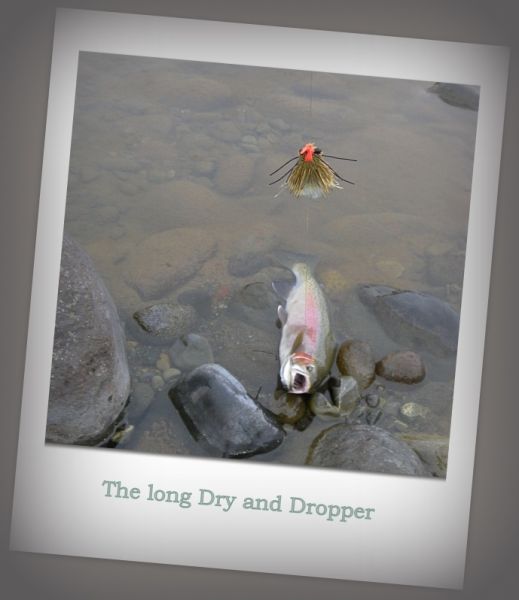
After lots of experimenting over the last few years ... well somebody has to do it ... I now space the flies as follows. From the indicator fly to the middle nymph is approximately three and a half to four feet, then around two and a half feet to the point fly. I've mentioned before the term " dry and dropper " is probably a little mis-leading because in this case the dry is there purely as an indicator. Although the image on the left shows a modified deer hair cicada used to register any interest;
I also carry several different large patterns in various colors for changing light conditions on the river, black is particularly useful when there is a lot of reflected light on the water. This is an ideal way of imitating the increased sub-surface activity that occurs before a hatch when the caddis pupa or mayfly nymphs are preparing to leave the river bed and begin the risky ascent to complete their life cycle as adult insects. As always my own preference is to fish three flies and as long as the gap between the middle to point fly is less than that from the indicator to middle fly you should have no problems with tangles. If you have chosen your water correctly you will be fishing over depth but not necessarily hard down.
The middle nymph is always weighted, I use a bead-head caddis emerger. The much lighter point fly can be another caddis imitation or some form of mayfly or generic nymph like a small Pheasant Tail, Hare's Ear or Cadillac, just look under a few rocks and see whats around. The only other thing I do differently is to use a { floating } braided tapered leader ... another bit of kit I got used too while in the UK. Tackle manufacturer Air-Flo produce a range of leaders from floaters to sinkers which come in varying lengths and sink rates, including braided and I normally go for one 5 ft long.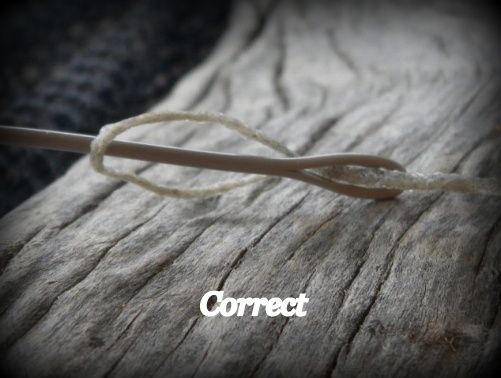 ![]()
I find they help turn over the big dry but some dislike them when conventional dry fly fishing because of their concerns about delivery. They quite rightly point out that because the braid is hollow it has a tendency to hold small amounts of water. This not only makes the leader feel heavy but its then forced out during a cast in the form of tiny droplets which I suppose could spook wary trout.
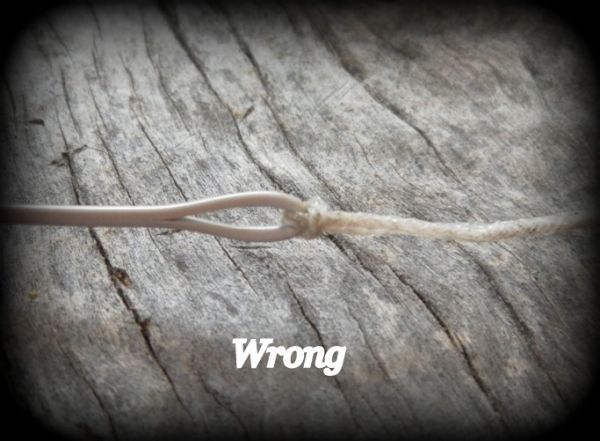
Luckily for us the fish that run the Tongariro are for the most part very obliging and are not usually put off by this kind of thing. At either end of the braided leader there is a loop ... the butt end is first of all attached to the fly line with a loop to loop connection and then I use around 6 ft of six to eight pound Maxima off the tippet end, again connected loop to loop, to this I tie on the indicator dry.
Its important that you connect a loop to loop join the correct way. Keep everything nice and straight as you tighten down because if you get it wrong you'll end up with a hinge effect which prevents the smooth transference of energy during a cast. It will also be difficult to undo especially if you've had a couple of hard fighting Tongariro trout pulling the " knot" even tighter. Nymphing with the long dry and dropper is an absorbing and exciting way to fish and opens up parts of the river that you might otherwise find difficult, nowadays I use it all year round and it rarely lets me down. Have fun with it and don't be afraid to play around and try different things. I used to get some really funny looks walking along the river with one of the rods set up with a big dry, especially when every one else was using bombs and glo-bugs! Which reminds me you don't always have to fish a natural as the point fly {see cryptic clue below} my sneaky tip if the sun is out try the small one with the thin flash tail.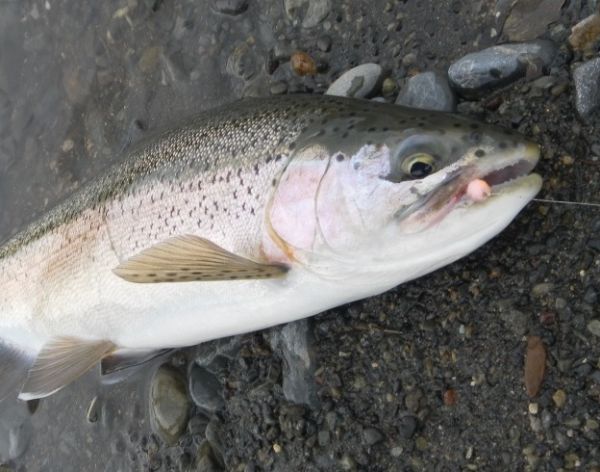
CASTING HEAVY NYMPHS.
Like many others before me one of the first problems I encountered when I started fishing the Tongariro was how to manage the very heavy flies you sometimes have to use when nymphing this river. I found it easier to forget all I had learned about the basics of fly-casting and start over again. Eventually after half a century of fly fishing and a reluctance to get my knackered shoulder sorted out, I seem to have ended up with something that is a combination of water loading and an elliptical cast, a bit like the " Belgian Cast " mentioned below. It doesn't look all that pretty but does the job and so far I haven't had to wear a hard-hat. The advantage for me is it involves very little false casting which puts less strain on the rebuilt "bionic" shoulder which I had fixed up a couple of years ago. Gail and I were talking about this the other day and it seems that with every passing year another part of my anatomy is replaced with an expensive metal bit. This has two very different effects ... the first is I'm putting on weight and the second ... my scrap value is soaring !!!
Below is an explanation of of what happens when you tie weight to the end of a fly-line with some suggestions on how to combat the pit-falls involved in casting heavy bombs. This one was written by former Alaskan guide and angling journalist Philip Monahan ... plenty of other good stuff at www.midcurrent.com
" Heavy flies present casters with several troubling problems. We are all taught that good casting means throwing nice, tight loops and that high line speed makes for longer, more accurate casts. When there’s a lot of weight at the end of the line, however, you need to rethink these rules.
If you throw tight, fast loops with a lot of weight at the end of the line, the results are shocking…literally.
At the end of every forward and back-cast the heavy fly acts like a running dog hitting the end of its leash, bouncing backward. This sends shock waves down the line to the rod and screws everything up. When the fly bounces back at the end of your backcast, for instance, it introduces slack into your leader, which keeps you from achieving smooth acceleration. This often results in tailing loops that cause knots and rob you of accuracy.
This slack in the line also causes you to lose control of the heavy projectile, which endangers your person and your fly rod. Given a little slack, the fly drops toward toward the ground in midcast, which also causes problems—especially if it lines up perfectly with your skull.
The key to casting big flies, then is to slow everything down, widen your loops, and avoid sudden changes in direction. To accomplish all these, you need to learn the Belgian cast (also called the oval cast). Rather than moving the fly back and forth along a two-dimensional plane, the Belgian cast keeps the fly moving at all times through a three-dimensional pattern. This means that there are no shocking stops, extra slack, or dropping fly.
To perform the Belgian cast, you make a sidearm backcast and then a forward cast over the top, with a nice, wide loop. The name oval cast comes from the fact that, if viewed from above, your rod tip describes an oval, rather than a straight line. When you are making the Belgian cast, line speed is not important, but you must keep the line moving at all times to keep the fly from dropping." 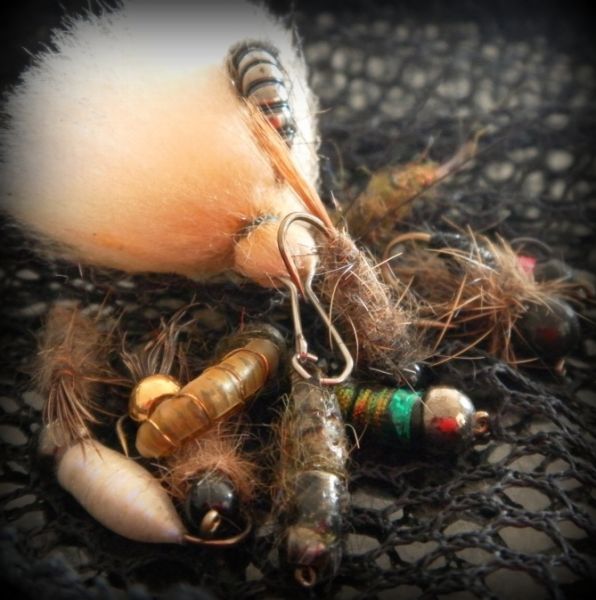
This weeks rain made very little difference to levels on the Tongariro with only a 4 cumec rise but
" my trusted spies " tell me there are fish moving but not in numbers. The reports I'm getting remind me a bit of last year when it was very much a case of right place, right time but its still early days. If all goes well I'm allowed on the river again next week so hopefully it will be a more informative report.
Be Lucky Guys
Mike. |
|
|
| Back to Top |
|
|
|
|
| |
| COMMENTS |
|
Most enjoyable and informative articles! I will re-read them. And hopefully improve my modest catch-rate. I have the smoker, it is the trout that I now need.
Many thanks.
Garth |
|
|
|
| garfy | Sat 12th May, 2012 | |
|
|
|
| |
|
|
|


