| |
|
|
| |
Nymphing.
Mon 11th June, 2012
|
|
|
|
The complete six part series of tips for nymphing the Tongariro all on one page.
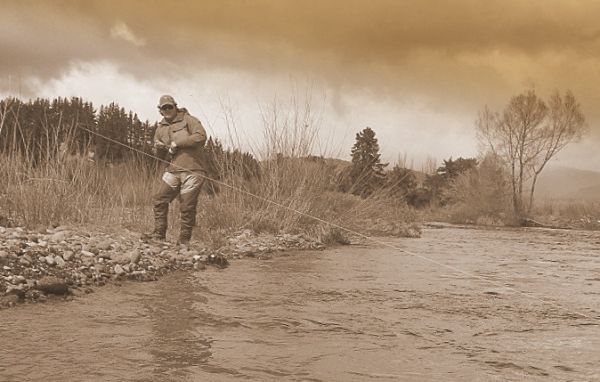 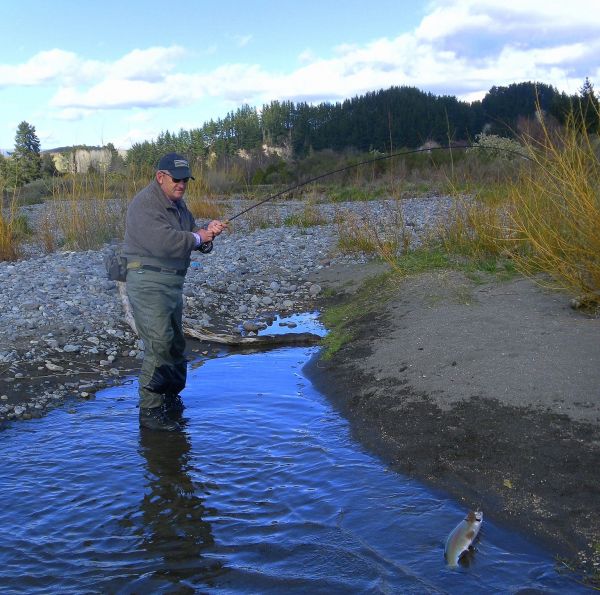
When the Tongariro Power Developement Scheme was completed in the 1970's it wasn't long before upstream nymphing became one of the most popular and productive methods used on the Tongariro.
Recently there has been a resurgence in the popularity of lures and wet-lines but most anglers still prefer the the indicator, bomb and nymph.
There's a good reason for this, most trout tucker is found within a foot of the bottom of the river.
The aquatic insects that trout eat spend most of their lives below the surface amongst the rocks and stones ... and upstream nymphing is one of the more effective ways to imitate this part of their life cycle.
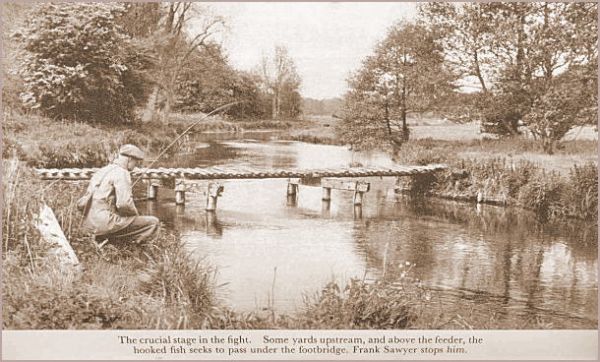
 You can't talk about nymphing without mentioning the legendary Frank Sawyer. You can't talk about nymphing without mentioning the legendary Frank Sawyer.
After years of studying feeding trout and the way they interacted with the insects they were eating he was one of the first to realize that most of this activity took place below the surface.
This was a new approach at a time when advances in fly-fishing were driven by the dry-fly.
Its over fifty years since Sawyer invented his famous range of nymphs. But with flies like the Killer Bug, Grey Goose and Bow Tie Buzzer he was confident he could catch trout anywhere.
His simple but deadly Pheasant Tail nymph became the fore-runner of modern weighted nymphs and it or one of the many hundreds of variants is as much used today as ever it was.
I don't think a day on the river ever goes by without me tying on a P.T. nymph at sometime and it wouldn't surprise me if anglers a hundred years from now will be saying the exact same thing.
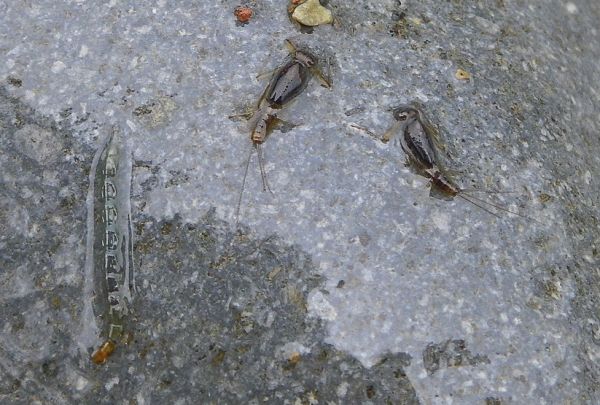
The Pheasant Tail was originally tied to represent a swimming mayfly nymph commonly called an agile darter. These torpedo shaped nymphs are found in trout streams and rivers world-wide and belong to the family of mayfly most anglers call " olives ."
Sawyer tied his famous creation without legs because he'd noticed that while swimming the legs were folded back keeping the nymphs streamlined shape.
But not all of the aquatic invertebrates that trout prey on are such accomplished swimmers.
Most are very much at the mercy of the river flow and if dislodged from the stones and rocks drift helplessly in any current near the bottom. Every so often they'll give a little wriggle which causes them to rise and fall but eventually if they don't get eaten they will slowly sink back to the bottom.
This downstream journey can be imitated to a certain extent by using a variety of different nymphing techniques depending on the type of water you're fishing.
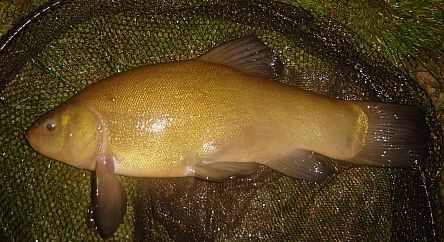 Unlike other freshwater species like bream, carp, or tench, trout are not bottom feeders, for a start their preferred environment is very different. Unlike other freshwater species like bream, carp, or tench, trout are not bottom feeders, for a start their preferred environment is very different.
The former prefer slow moving rivers and still-waters carrying plenty of color with a thick muddy bottom.
Trout and their off-spring thrive in the cold, fast, well oxygenated water of clear stony rivers like the Tongariro.
True they feed mainly below the surface but you don't see trout grubbing around the river bed looking for a meal. To do this they'd have to have their head down and tail up which would waste precious energy.
In faster water trout are masters at conserving energy reserves and learned long ago its far easier to take up a position near the bottom where the velocity of the moving water is less and let the food come to them.
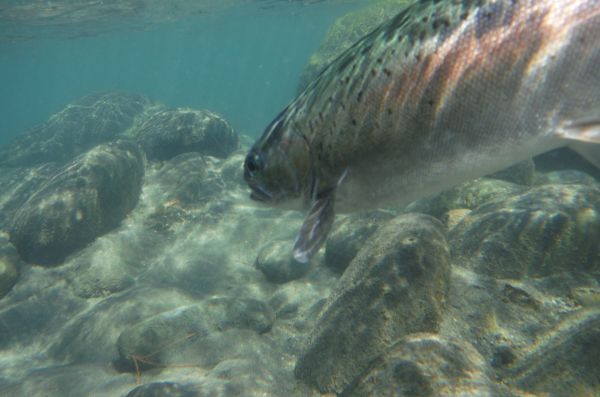
Once a trout has found a good feeding station it won't move far from it while actually feeding. May be a couple of feet backward or forward, a few inches from side to side and less than a foot in an upward direction unless there's a hatch taking place or they can see or sense plenty of other insect activity at the surface.
The position of a trouts eyes mean that when looking forward or upward both eyes are used
{ binocular vision }. Looking to the side and rear only the eye on that particular side comes into play { monocular vision }.
It has two blind spots, one beneath it and the other more well known one directly behind it, which canny fly fishermen take advantage of while stalking fish.
Trout can be picky and suspicious about the depth and speed that your flies are traveling, so one of the skills you have to master when you first start nymphing is how to achieve the so called "natural drift".
Over the next few weeks we'll look at how to do this in a little more detail along with some of the other skills involved in nymphing the Tongariro ... with or without that big fluffy indicator. 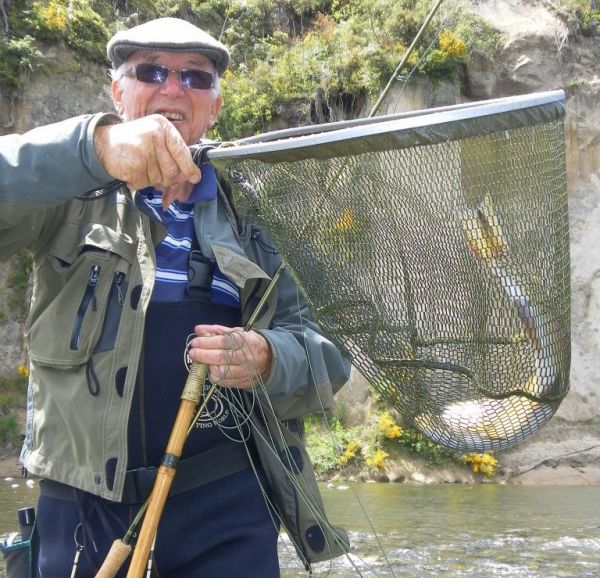
Part Two
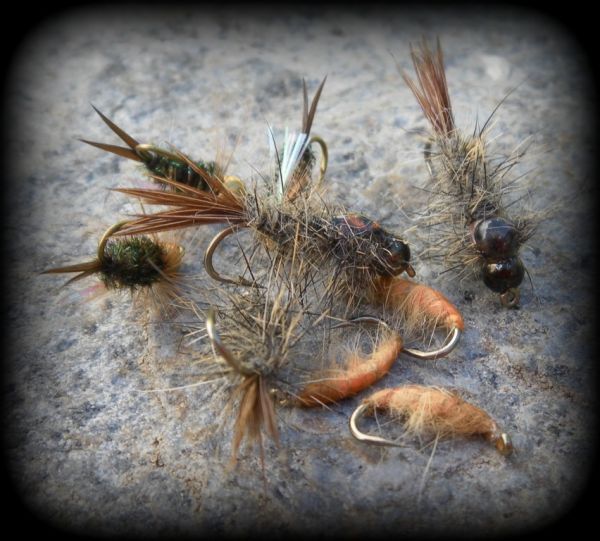
So we've established that trout are " drift feeders " positioning themselves where there are concentrations of the aquatic insects they live on. For most of the time this will be near the bottom of the river bed so all we have to do is chuck out a couple of weighted flies underneath an indicator then haul in the fish . . easy ... well, not quite.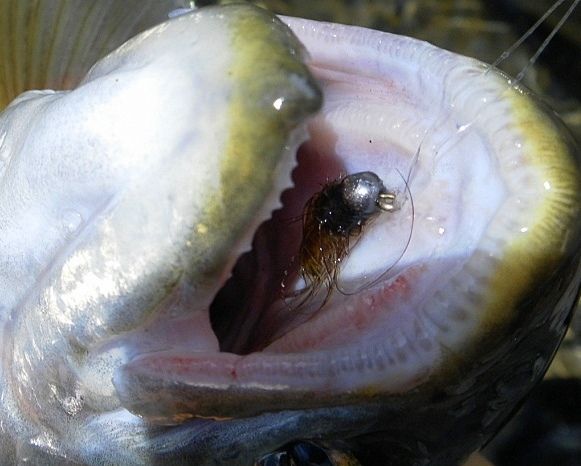 The name of the game is to present your artificial nymphs in such a way that a trout is fooled into thinking they are the real thing which in turn produces the confident takes we are after. This isn't quite as simple as it sounds because there are several things you have to factor in before you have any hope of achieving that " natural looking drift " ... the most important of these is depth. You can tie on the most realistic, fish slaying pattern ever devised but if its not getting to where the fish are feeding you'll have an empty smoker again. The analogy I sometimes use with novice anglers is to ask them to imagine they are sitting in a very comfortable chair at the end of one of those long medieval banquet tables. Running the whole length of the center of this table is a narrow conveyor belt continually being loaded with their favorite food. Occasionally as all this " luvly grub " is brought towards them a couple of the goodies roll off the belt onto the table. If these are within arms reach they"ll probably grab them as well but if food suddenly appeared six feet above their head why would they leave the nice comfy chair and go to the trouble of stretching up, when they only have to stay put to enjoy all the other stuff that's delivered directly to their door. There are numerous things you can do that help get your flies down near the bottom of the river where trout and the nymphs and larvae they prey on spend most of their time but we'll start with the most obvious ... weight. A question that always crops up is how heavy do you have to go to get down to the fish. I'm afraid its one of those " how long is a piece of string " things because it depends on where you are, what your fishing with, your casting ability, water velocity and so it goes on but one thing is certain if you are moving around the river you will be constantly adjusting the amount of weight that you use throughout the day. The name of the game is to present your artificial nymphs in such a way that a trout is fooled into thinking they are the real thing which in turn produces the confident takes we are after. This isn't quite as simple as it sounds because there are several things you have to factor in before you have any hope of achieving that " natural looking drift " ... the most important of these is depth. You can tie on the most realistic, fish slaying pattern ever devised but if its not getting to where the fish are feeding you'll have an empty smoker again. The analogy I sometimes use with novice anglers is to ask them to imagine they are sitting in a very comfortable chair at the end of one of those long medieval banquet tables. Running the whole length of the center of this table is a narrow conveyor belt continually being loaded with their favorite food. Occasionally as all this " luvly grub " is brought towards them a couple of the goodies roll off the belt onto the table. If these are within arms reach they"ll probably grab them as well but if food suddenly appeared six feet above their head why would they leave the nice comfy chair and go to the trouble of stretching up, when they only have to stay put to enjoy all the other stuff that's delivered directly to their door. There are numerous things you can do that help get your flies down near the bottom of the river where trout and the nymphs and larvae they prey on spend most of their time but we'll start with the most obvious ... weight. A question that always crops up is how heavy do you have to go to get down to the fish. I'm afraid its one of those " how long is a piece of string " things because it depends on where you are, what your fishing with, your casting ability, water velocity and so it goes on but one thing is certain if you are moving around the river you will be constantly adjusting the amount of weight that you use throughout the day.
THE WEIGHT Of THE FLY
Broadly speaking the heavier the fly the quicker and deeper it will sink but you pay a price because adding weight to the fly itself alters the way it behaves in the water and tends to kill any movement it may have. Some of the large heavy nymphs in common use on the Tongariro are little more than delivery systems to get lighter " naturals " down to where the fish are feeding. Fly-tiers get round this by incorporating materials like rubber-legs, flash or soft feathers to give weighted patterns the appearance of life and movement. Fish find these triggers attractive and you may notice if there are plenty of keen freshies or hungry kelts around its not uncommon to take just as many on the bigger, heavier flies as you will on the smaller nymph or egg imitations used with them. Indeed some of the most popular and successful flies world-wide in recent times all have a common theme ... weight. Many patterns that have been around for donkeys ears have been transformed and their fish catching qualities improved with the addition of wire, lead or colored metal beads.
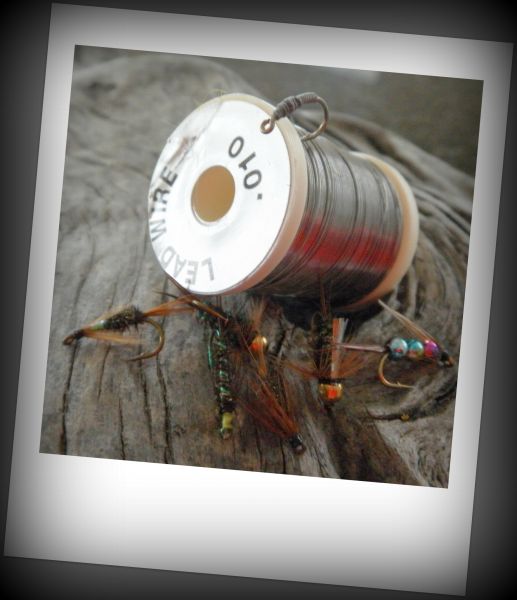 New flies have appeared like the Copper John, considered heavy when it first became popular in the early nineties but nowadays would be thought of as average. Visit any good tackle shop and there will be bead-head or weighted versions of just about every pattern you can think of ... why? ... because they work. On the Tongariro the standard rig for " nymphers " is a heavily weighted fly incorporating a big tungsten bead, lead wire or both which is known as the bomb. Tied to the bend of this is around 14 inches of flurocarbon to which the smaller, lighter nymph is attached. Its a concept that many first time visitors to the Tongariro struggle with, most are surprised when they are shown just how heavy a typical Tongariro Bomb can be. If they have fly fished before you can see them thinking how am I going to cast this thing out there and live! New flies have appeared like the Copper John, considered heavy when it first became popular in the early nineties but nowadays would be thought of as average. Visit any good tackle shop and there will be bead-head or weighted versions of just about every pattern you can think of ... why? ... because they work. On the Tongariro the standard rig for " nymphers " is a heavily weighted fly incorporating a big tungsten bead, lead wire or both which is known as the bomb. Tied to the bend of this is around 14 inches of flurocarbon to which the smaller, lighter nymph is attached. Its a concept that many first time visitors to the Tongariro struggle with, most are surprised when they are shown just how heavy a typical Tongariro Bomb can be. If they have fly fished before you can see them thinking how am I going to cast this thing out there and live!
ADDING WEIGHT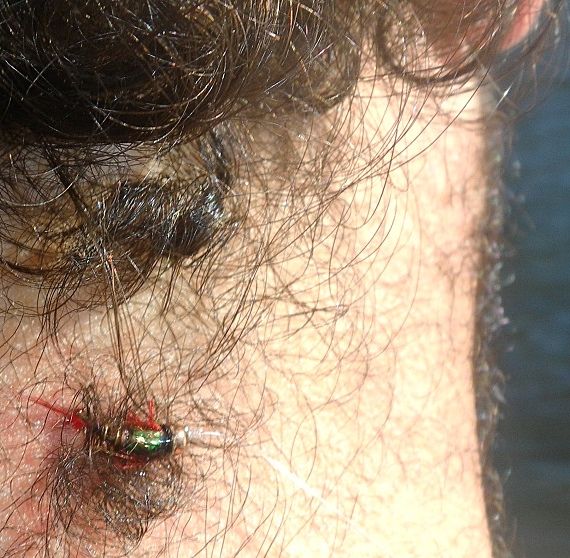
Of course you don't have to use a heavy bomb to get your natural patterns down to the feeding zone.
Some anglers prefer to dispense with it altogether, adding weight to the leader above the point fly, usually by pinching on a couple of split shot. A few use tungsten sink putty which a good non-toxic alternative. But I find it doesn't always stay put.
When I was last in the UK lead weights and split shot had already been banned on most waters because of the poisoning of water-fowl especially swans which are protected. These fatalities were attributed to discarded or lost rigs incorporating lead and I understand many other countries are now following suit.
Using sink putty or shot instead of a bomb also works out cheaper in snaggy areas because its one less hook to get caught amongst any debris on the bottom ... or in Ben's case the back of his head ! Most of the time my own preference is to stick with the bomb and hope the hook gets caught in a trouts mouth ... preferably a big one.
FLY PROFILE
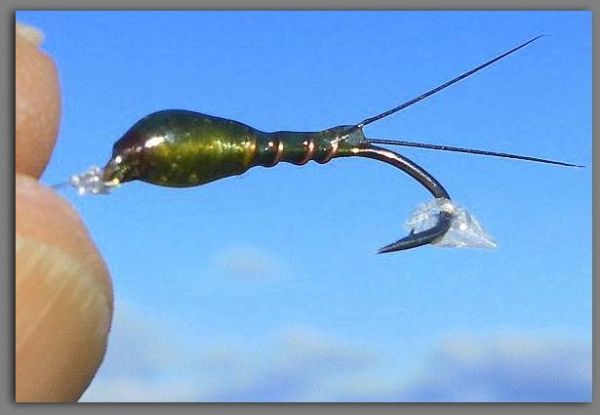 You can also influence the sink rate by using skinny tied flies or patterns coated in epoxy resin. Bombs are especially useful when tied like this because they cut through the water and get your flies down fast. Some of the mayfly nymphs I like to use are just made of thread, a few turns of wire and a couple of bristles from a paint brush. The top of the head and back are darkened with a waterproof marker pen and the whole fly given a coat of 5 minute epoxy. They don't fall apart, sink like small stones and best of all the fish luv em ! You can also influence the sink rate by using skinny tied flies or patterns coated in epoxy resin. Bombs are especially useful when tied like this because they cut through the water and get your flies down fast. Some of the mayfly nymphs I like to use are just made of thread, a few turns of wire and a couple of bristles from a paint brush. The top of the head and back are darkened with a waterproof marker pen and the whole fly given a coat of 5 minute epoxy. They don't fall apart, sink like small stones and best of all the fish luv em !
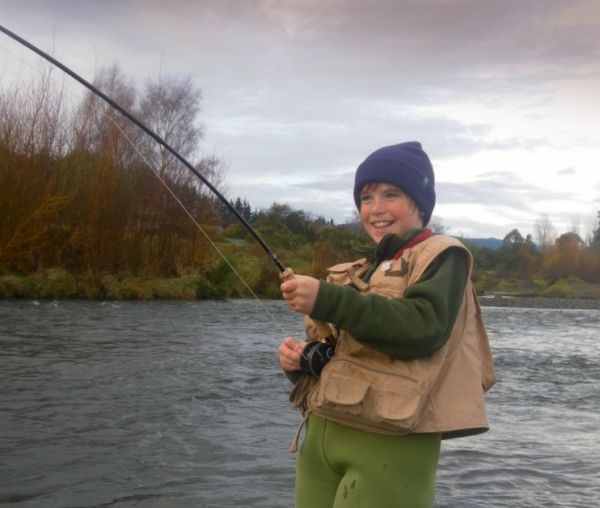
In the next couple of articles we'll look at the joys and delights of casting those heavy flies, the leader, a little on controlling the drift, plus nymphing with the long dry and dropper ... oh! and may be a quick look at a nymph you might not have tried before.
Part Three
A bit of a change of plan again with this weeks content because my surgeon unexpectedly ok'd some fly fishing. Of course there were a few strings attached and I had to promise to be a good boy and not do anything stupid. He was keen to point out my ticker would still be his property for a little longer and he didn't want his handi-work undone. The timing couldn't have been better with Turangi wearing its Autumn coat of many colors this is always a beautiful few weeks to be out and about on the Tongariro. As an added bonus there was the ongoing maintenance work being carried out by Genesis Energy at the Tokaanu Power Station. This would ensure the river would be at its " natural flow " of around 44 cumecs for a couple more days and the higher levels had already encouraged some fish to move. Combined with the forecast of more heavy showers we had all the makings for some great sport, so with the Braids still looking like an abandoned quarry I headed for Judges.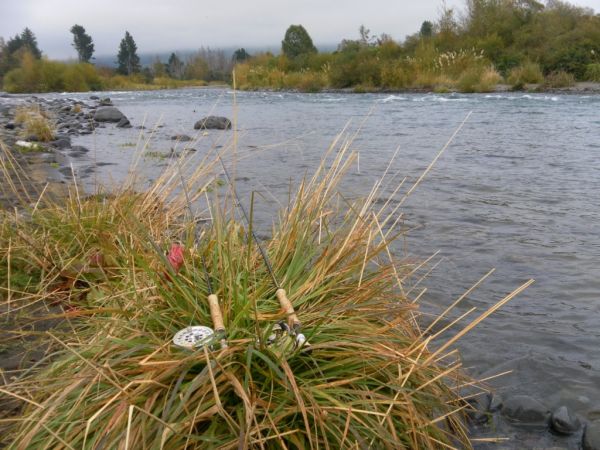 Even though it was already eight o'clock in the morning I only passed one other angler who was trying his luck below the road bridge. This was surprising because conditions looked perfect and I was fully expecting to be sharing the river with others, especially around town. Once there, the Tongariro didn't disappoint but there were a couple of hefty snags right where you didn't want them to be. Inevitably I lost a couple of sets but with a change of tactics, most of the time I was able to avoid them. A bit later I was joined by Bill McKinnon a previous client of mine and when we left at midday we had already landed several nice conditioned fish and not a slab amongst them. Even though it was already eight o'clock in the morning I only passed one other angler who was trying his luck below the road bridge. This was surprising because conditions looked perfect and I was fully expecting to be sharing the river with others, especially around town. Once there, the Tongariro didn't disappoint but there were a couple of hefty snags right where you didn't want them to be. Inevitably I lost a couple of sets but with a change of tactics, most of the time I was able to avoid them. A bit later I was joined by Bill McKinnon a previous client of mine and when we left at midday we had already landed several nice conditioned fish and not a slab amongst them.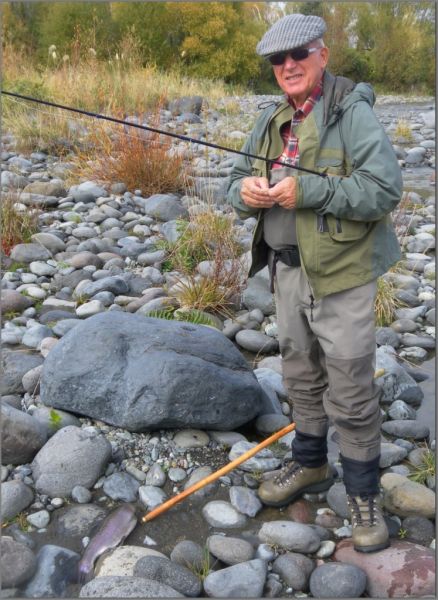
Bill is another new fan of the " long dry and dropper " and it proved its effectiveness again. The conventional rig under the indicator accounted for only one fish, all the others sucked in nymphs under the big dry. With my fishing time limited to only a few hours its not much of a report but a couple of phone calls confirmed there are some good fish throughout the river. Small Pheasant Tails, Green Caddis and Quasimodo patterns are all taking fish and will continue to do so especially once the river returns to its controlled flow and levels drop. With settled weather on the cards again this week I know where I'd like to be but I have to start some proper physio, gradually increasing the exercise regime.
My pick if I were on the river with a mate {and two vehicles} would be to park a car at one bridge then drive to the other, cross-over and fish the T.R.B back upriver. This way you'd cover some great water on the middle and upper Tongariro and not have to worry about the walk back ... now what was I saying about increasing the exercise!!!
While I was on " my holidays " in Wellington Hospital immediately after the surgery I spent a little bit of time in I.C.U. It was there that I first heard the "reassuring" tale of another hospital's Intensive Care Unit where regardless of their medical condition seemingly recovering patients died in the same bed, at 11.00am on Sunday mornings. This was obviously a huge cause for concern to the dedicated nursing staff and puzzled doctors even thought it might have something to do with the super-natural. Despite months of exhaustive in house investigation no one could solve the mystery as to why the unexplained deaths occurred around 11:00 am on a Sunday, so an International team of experts was assembled to further examine the cause of the incidents. The following Sunday, a little before 11:00 am all of the doctors and nurses nervously waited outside the ward doors to see for themselves what this terrible phenomenon was all about. A priest was standing by and some staff members were holding wooden crosses, prayer books, and other holy objects to ward off the evil spirits. Then just as the clock struck eleven, in walked Pookie Johnson , the part-time Sunday sweeper and unplugged the life support system so he could use the hospital vacuum cleaner.
Here's one you don't see used that often but its worth keeping a couple in the box. If all the usual suspects have failed and conditions are right this one can get you out of trouble. It's a big nymph so its handy if there's a bit of color in the river when you'd probably go up a hook size or two anyway.
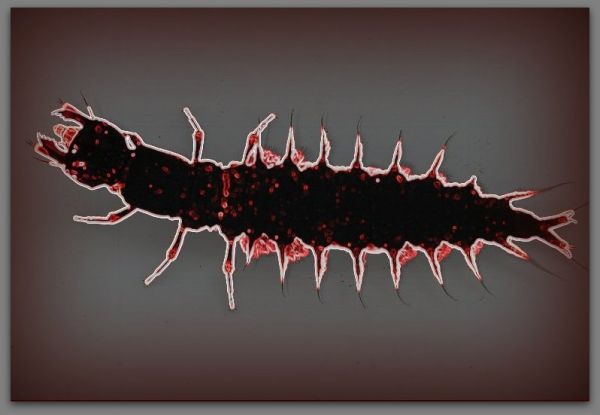
The larval form of the Dobson fly is called a Hellgrammite { toe-biter } to you and me. The origin of its name is a bit sketchy but it may be a combination of " hell " and " grim looking "... no one really knows. Its the largest aquatic nymph found in New Zealand waterways and certainly is a pretty fierce looking insect with those large biting jaws which can give quite a nip.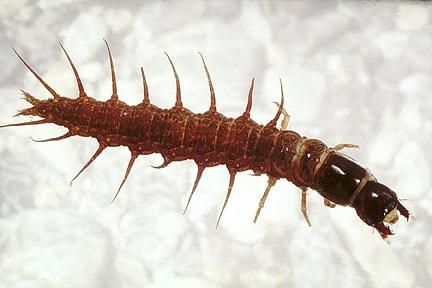 Dobson flies are also found in both North and South America, Africa, Asia as well as Australia. Although they have a life-span of two to five years most of this consists of the larval stage. They spend only a few weeks in the pupal stage and around one to two weeks as an adult fly. As the nymph grows it goes through a number of instars { molts } sometimes as many as a dozen by the time it matures. During this time it is an aggressive hunter and mayfly nymphs are high on its list of favorite grub but they will eat any bottom dwelling aquatic insect. They prefer to live in cold, well oxygenated stony streams and rivers like the Tongariro and are mostly nocturnal. During the day they tend to hide under stones, logs or other debris on the river bed, which is why some anglers are not familiar with them unless they turn up in the stomach contents of a gutted trout. I must admit I find these time consuming and a bit fiddly to tie. To get a realistic looking nymph you have to imitate three pairs of legs and the eight pairs of gill filaments that run the length of the abdomen. Most patterns use biots or rubber legs for this, luckily Umpqua produce an excellent toe-biter nymph and nowadays I'd rather pay the couple of bucks. Dobson flies are also found in both North and South America, Africa, Asia as well as Australia. Although they have a life-span of two to five years most of this consists of the larval stage. They spend only a few weeks in the pupal stage and around one to two weeks as an adult fly. As the nymph grows it goes through a number of instars { molts } sometimes as many as a dozen by the time it matures. During this time it is an aggressive hunter and mayfly nymphs are high on its list of favorite grub but they will eat any bottom dwelling aquatic insect. They prefer to live in cold, well oxygenated stony streams and rivers like the Tongariro and are mostly nocturnal. During the day they tend to hide under stones, logs or other debris on the river bed, which is why some anglers are not familiar with them unless they turn up in the stomach contents of a gutted trout. I must admit I find these time consuming and a bit fiddly to tie. To get a realistic looking nymph you have to imitate three pairs of legs and the eight pairs of gill filaments that run the length of the abdomen. Most patterns use biots or rubber legs for this, luckily Umpqua produce an excellent toe-biter nymph and nowadays I'd rather pay the couple of bucks.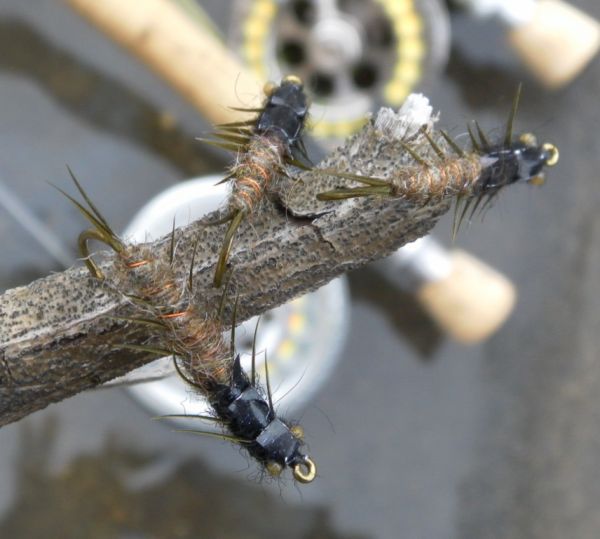
Because they have such a long larval stage they are available all year round but I've had most success fishing them after a fresh just as the water begins to clear. The increased flow washes them out of their hiding places and as they tumble downstream near the bottom trout are only too happy to pick them off. I prefer to fish them singly on a longish leader with a suitable size split shot a foot or so above the fly. In deeper water stick with the indicator, in the shallower riffles I discard it and watch the end of the line to spot any takes. Try to imitate the natural insect as it trundles downstream along the river bed. For instance if your fishing close in, an occasional lift of the rod tip will impart some vertical movement into the nymph which could induce a take. On the Tongariro the Hellgrammite is never going to be your number one, go to fly but if things are a little slow or you have one of those browns that has ignored everything else why not give it a try.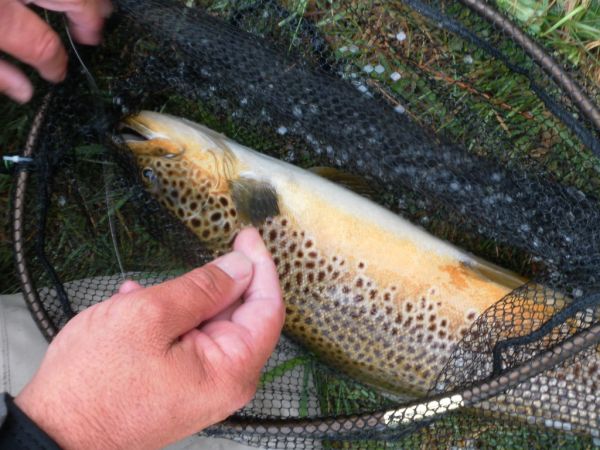 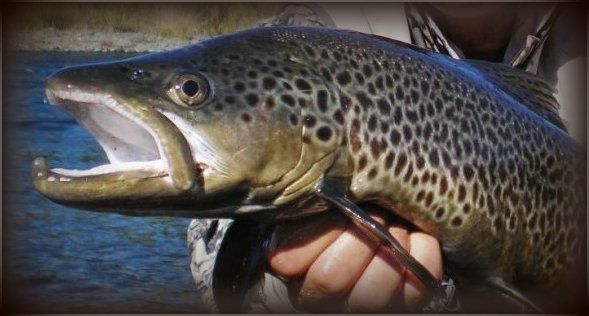
Ozzie angler and TRM regular Murray Cullen emailed me last week with whats fast becoming a FAQ:
" When you use a large dry as an indicator (eg cicada etc) how long is the leader from the dry to the nymph, caddis etc? Do you try and have the point fly on or near the bottom? I imagine this would be required when fishing for rainbows but not necessarily for browns?" Stay well, Murray
It seems that more and more anglers are trying this alternative method of nymphing parts of the Tongariro, with good reason because it can produce excellent results if used in the right places and will often out fish other methods. Its far more versatile than you would imagine and will take fish from all kinds of water but the rule I always stick to is, if its deeper than four feet use something else. After lots of experimenting over the last few years ... well somebody has to do it ... I now space the flies as follows.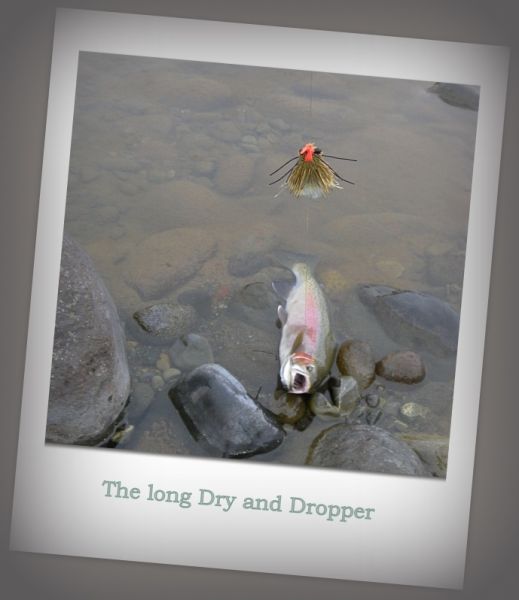
From the indicator fly to the middle nymph is approximately three and a half to four feet, then around two and a half feet to the point fly.
I've mentioned before the term " dry and dropper " is probably a little mis-leading because in this case the dry is there purely as an indicator.
Although the image on the left shows a modified deer hair cicada used to register any interest;I also carry several different large patterns in various colors for changing light conditions on the river, black is particularly useful when there is a lot of reflected light on the water.
This is an ideal way of imitating the increased sub-surface activity that occurs before a hatch when the caddis pupa or mayfly nymphs are preparing to leave the river bed and begin the risky ascent to complete their life cycle as adult insects.
My own preference is to fish three flies and as long as the gap between the middle to point fly is less than that from the indicator to middle fly you should have no problems with tangles.
If you have chosen your water correctly you will be fishing over depth but not necessarily hard down. The middle nymph is always weighted, I use a bead-head caddis emerger. The much lighter point fly can be another caddis imitation or some form of mayfly or generic nymph like a small Pheasant Tail, Hare's Ear or Cadillac, just look under a few rocks and see whats around.
The only other thing I do differently is to use a { floating } braided tapered leader ... another bit of kit I got used too while in the UK. Tackle manufacturer Air-Flo produce a range of leaders from floaters to sinkers which come in varying lengths and sink rates, including braided and I normally go for one 5 ft long.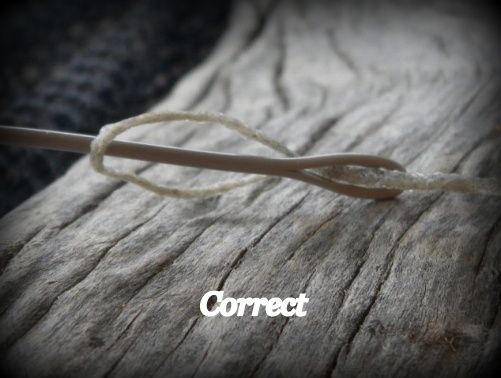 ![]()
I find they help turn over the big dry but some dislike them when conventional dry fly fishing because of their concerns about delivery. They quite rightly point out that because the braid is hollow it has a tendency to hold small amounts of water. This not only makes the leader feel heavy but its then forced out during a cast in the form of tiny droplets which I suppose could spook wary trout.
Luckily for us the fish that run the Tongariro are for the most part very obliging and are not usually put off by this kind of thing.
At either end of the braided leader there is a loop ... the butt end is first of all attached to the fly line with a loop to loop connection and then I use around 6 ft of six to eight pound Maxima off the tippet end, again connected loop to loop, to this I tie on the indicator dry.
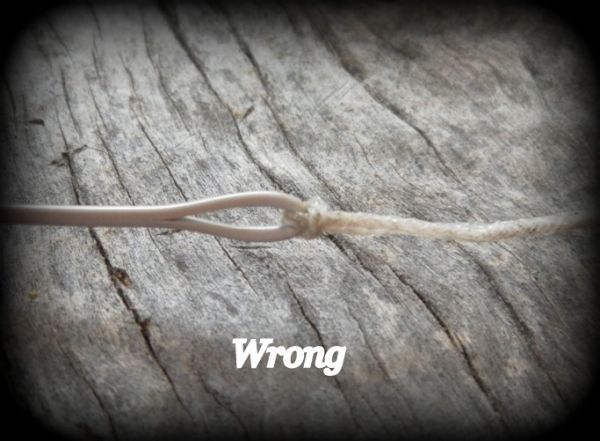
Its important that you connect a loop to loop join the correct way.
Keep everything nice and straight as you tighten down because if you get it wrong you'll end up with a hinge effect which prevents the smooth transference of energy during a cast. It will also be difficult to undo especially if you've had a couple of hard fighting Tongariro trout pulling the " knot" even tighter.
Nymphing with the long dry and dropper is an absorbing and exciting way to fish and opens up parts of the river that you might otherwise find difficult, nowadays I use it all year round and it rarely lets me down.
Have fun with it and don't be afraid to play around and try different things. I used to get some really funny looks walking along the river with one of the rods set up with a big dry, especially when every one else was using bombs and glo-bugs! Which reminds me you don't always have to fish a natural as the point fly {see cryptic clue below} my sneaky tip if the sun is out try the small one with the thin flash tail.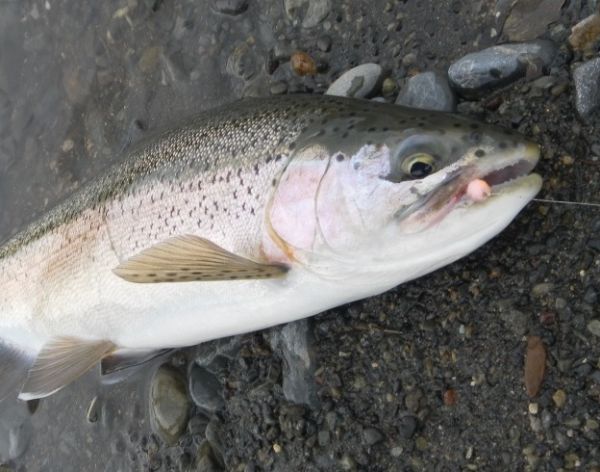
CASTING HEAVY NYMPHS.
Like many others before me one of the first problems I encountered when I started fishing the Tongariro was how to manage the very heavy flies you sometimes have to use when nymphing this river. I found it easier to forget all I had learned about the basics of fly-casting and start over again. Eventually after half a century of fly fishing and a reluctance to get my knackered shoulder sorted out, I seem to have ended up with something that is a combination of water loading and an elliptical cast, a bit like the " Belgian Cast " mentioned below. It doesn't look all that pretty but does the job and so far I haven't had to wear a hard-hat. The advantage for me is it involves very little false casting which puts less strain on the rebuilt "bionic" shoulder which I had fixed up a couple of years ago. Gail and I were talking about this the other day and it seems that with every passing year another part of my anatomy is replaced with an expensive metal bit. This has two very different effects ... the first is I'm putting on weight and the second ... my scrap value is soaring !!!
Below is an explanation of of what happens when you tie weight to the end of a fly-line with some suggestions on how to combat the pit-falls involved in casting heavy bombs. This one was written by former Alaskan guide and angling journalist Philip Monahan ... plenty of other good stuff at www.midcurrent.com
" Heavy flies present casters with several troubling problems. We are all taught that good casting means throwing nice, tight loops and that high line speed makes for longer, more accurate casts. When there’s a lot of weight at the end of the line, however, you need to rethink these rules.
If you throw tight, fast loops with a lot of weight at the end of the line, the results are shocking…literally. At the end of every forward and back-cast the heavy fly acts like a running dog hitting the end of its leash, bouncing backward. This sends shock waves down the line to the rod and screws everything up. When the fly bounces back at the end of your backcast, for instance, it introduces slack into your leader, which keeps you from achieving smooth acceleration. This often results in tailing loops that cause knots and rob you of accuracy.
This slack in the line also causes you to lose control of the heavy projectile, which endangers your person and your fly rod. Given a little slack, the fly drops toward toward the ground in midcast, which also causes problems—especially if it lines up perfectly with your skull.
The key to casting big flies, then is to slow everything down, widen your loops, and avoid sudden changes in direction. To accomplish all these, you need to learn the Belgian cast (also called the oval cast). Rather than moving the fly back and forth along a two-dimensional plane, the Belgian cast keeps the fly moving at all times through a three-dimensional pattern. This means that there are no shocking stops, extra slack, or dropping fly.
To perform the Belgian cast, you make a sidearm backcast and then a forward cast over the top, with a nice, wide loop. The name oval cast comes from the fact that, if viewed from above, your rod tip describes an oval, rather than a straight line. When you are making the Belgian cast, line speed is not important, but you must keep the line moving at all times to keep the fly from dropping." 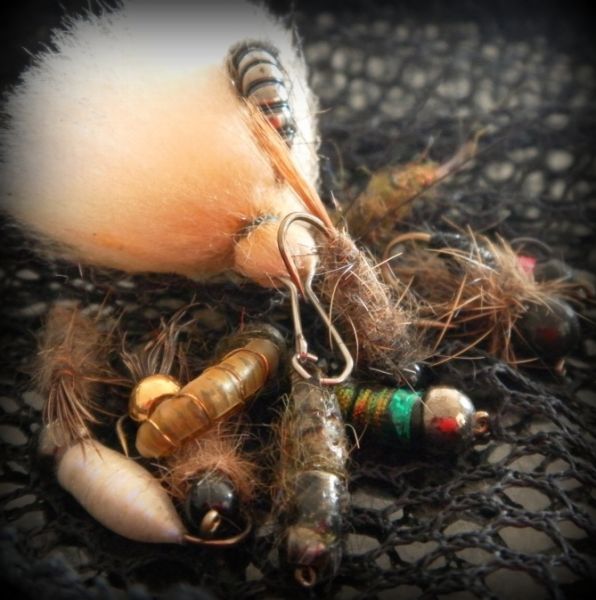
This weeks rain made very little difference to levels on the Tongariro with only a 4 cumec rise but
" my trusted spies " tell me there are fish moving but not in numbers. The reports I'm getting remind me a bit of last year when it was very much a case of right place, right time but its still early days. If all goes well I'm allowed on the river again next week so hopefully it will be a more informative report.
Part Five
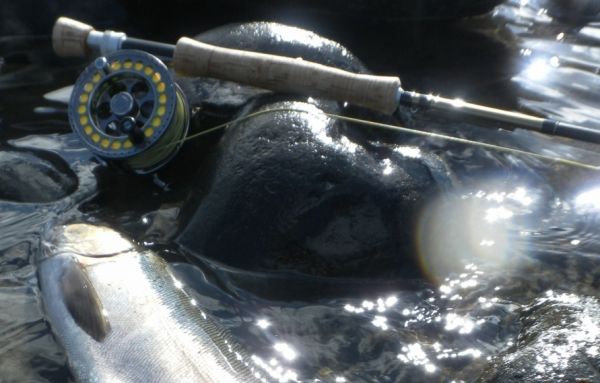
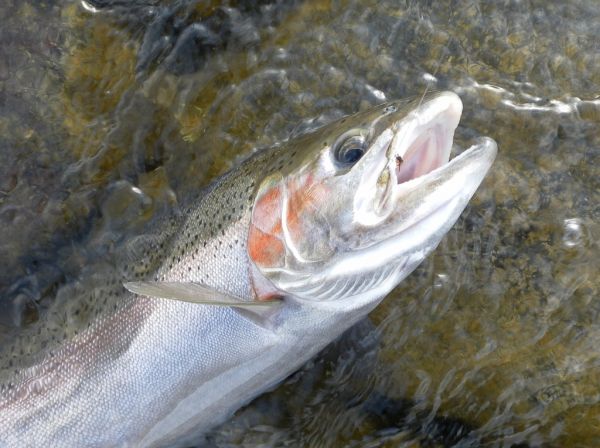
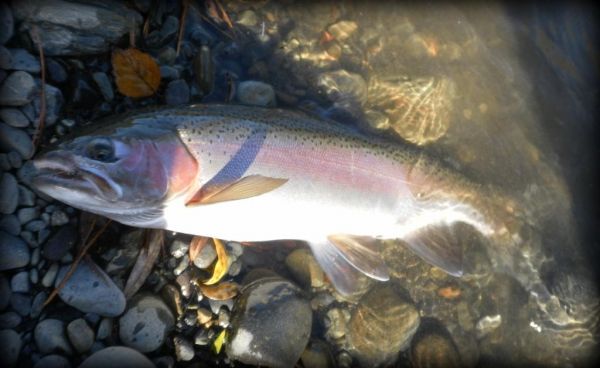
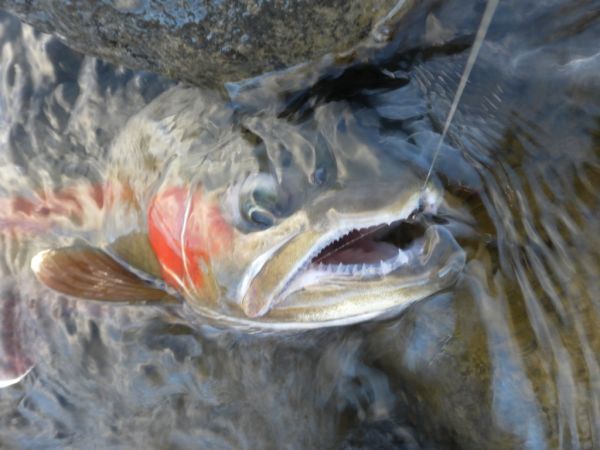
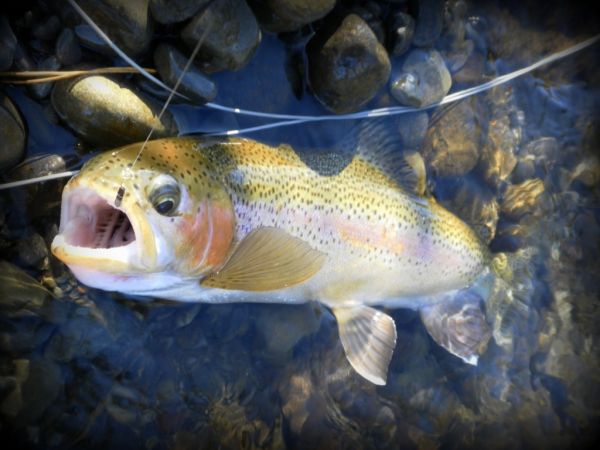
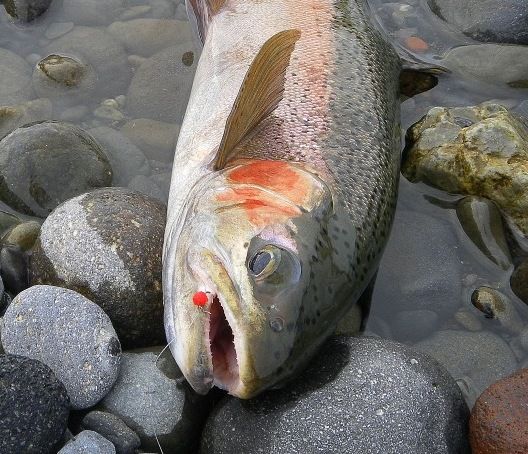
At last I've managed to get in some serious fishing and with morning frosts and cold southerly breezes I couldn't have timed it better. The fish seem evenly spread throughout with relatively few anglers chasing them and the falling temperatures bring with them an expectation that the current small runs will continue, gradually building until they peak later on in the year. I'm always a little wary writing a report after spending only three days on the river because if you catch the Tongariro in a good mood its easy to get over excited ... but its been an awful lot of fun. I've landed and been beaten up by some hard fighting rainbows that already look to be a notch or two up on recent years.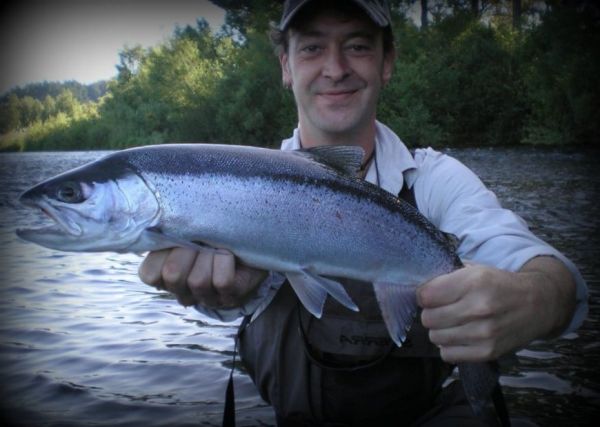 There's still a little way to go before we get back to a river full of fish like this one caught a few years ago but personally I think things are looking really good and we're on an upward trend. I've spoken to visiting anglers from all over the place and although their success rate varied the consensus seemed to be that they were having a good time and enjoying the late autumn sunshine. There's still a little way to go before we get back to a river full of fish like this one caught a few years ago but personally I think things are looking really good and we're on an upward trend. I've spoken to visiting anglers from all over the place and although their success rate varied the consensus seemed to be that they were having a good time and enjoying the late autumn sunshine.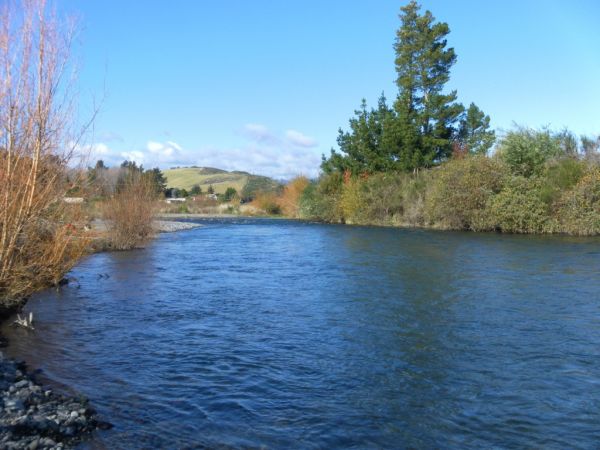 I was on the river just before dawn each morning because I wanted to secure a particular spot in whats left of the Braids. Its never been everyone's cup of tea but the old saying " if you want scenic go upriver, if you want fish then go to the Braids " is pretty accurate. Its a shame that anglers had to lose so much good, easily accessible water but the fifty thousand or so fish that run the river annually still have to pass through this stretch. There's very little holding water left so they don't hang around for long. But if you think back that had been the case for the last couple of years well before they turned it into a bomb-site. You're limited to only a few spots that are worth fishing so set the alarm and get your flies through first then move on. Data gathered by monitoring migrating trout indicate that most of their upstream journey takes place each day between midday and midnight. They sit tight between 12.00 pm and 4.00 am then at first light there is a short-lived period of activity as fish move through again. This usually only lasts an hour or two but is worth targeting with more movement occurring in the late afternoon between four and eight pm. Notice that I mentioned flies earlier not globugs, anglers associate late autumn and winter with bombs and bugs but with the low clear conditions it was caddis or small nymphs fished on a lighter set-up that scored best. I only took two fish on globugs in three days because this trip ... the trout ... or more likely the angler ... developed a preference for orange flies and I did well here with both a czech nymph and one of my epoxy efforts tied in this color. I was on the river just before dawn each morning because I wanted to secure a particular spot in whats left of the Braids. Its never been everyone's cup of tea but the old saying " if you want scenic go upriver, if you want fish then go to the Braids " is pretty accurate. Its a shame that anglers had to lose so much good, easily accessible water but the fifty thousand or so fish that run the river annually still have to pass through this stretch. There's very little holding water left so they don't hang around for long. But if you think back that had been the case for the last couple of years well before they turned it into a bomb-site. You're limited to only a few spots that are worth fishing so set the alarm and get your flies through first then move on. Data gathered by monitoring migrating trout indicate that most of their upstream journey takes place each day between midday and midnight. They sit tight between 12.00 pm and 4.00 am then at first light there is a short-lived period of activity as fish move through again. This usually only lasts an hour or two but is worth targeting with more movement occurring in the late afternoon between four and eight pm. Notice that I mentioned flies earlier not globugs, anglers associate late autumn and winter with bombs and bugs but with the low clear conditions it was caddis or small nymphs fished on a lighter set-up that scored best. I only took two fish on globugs in three days because this trip ... the trout ... or more likely the angler ... developed a preference for orange flies and I did well here with both a czech nymph and one of my epoxy efforts tied in this color. 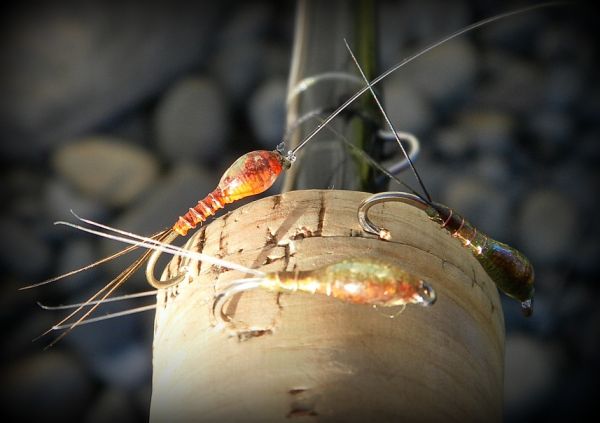
Before I forget if anyone has lost a fly rod and reel lately there's one sticking out of the water on the true left bank of what used to be the Honeypot. If you fancy trying to retrieve it take a rope with you because its about twelve feet from the bank stuck in deep water amongst submerged tree roots.
I only fished Judges once because I wanted to try a couple of spots upriver that I hadn't been too for a while but it was worth the visit. As expected there were already anglers there when I arrived but as I walked past them they invited me to fish above them in the broken water at the head of the pool.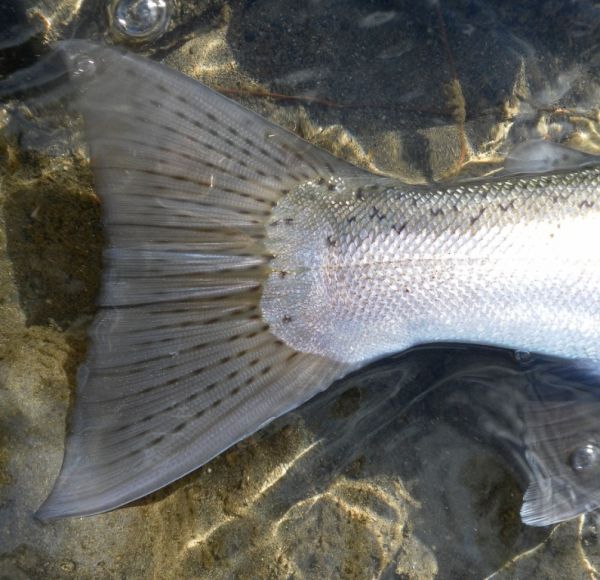 This was very much appreciated because its a favorite spot of mine and I'm usually pretty lucky here. A cast or two later the indicator fly dipped once then shot under and I found myself playing a silver hen with a propeller of a tail that really tested the lighter gear in the fast water. After taking a couple more the others came up to ask what I was using and we ended up having a good ole chin-wag. Tony was from Perth in the middle of his first trip for over six years and couldn't believe how much the river and the fishing had changed. I think his first words were " this is not the pool it was " and This was very much appreciated because its a favorite spot of mine and I'm usually pretty lucky here. A cast or two later the indicator fly dipped once then shot under and I found myself playing a silver hen with a propeller of a tail that really tested the lighter gear in the fast water. After taking a couple more the others came up to ask what I was using and we ended up having a good ole chin-wag. Tony was from Perth in the middle of his first trip for over six years and couldn't believe how much the river and the fishing had changed. I think his first words were " this is not the pool it was " and
he was right things have altered. Of course he meant it doesn't produce like it used to and again he was right. Sometimes it pays to re-think your approach and adapt to the changes. I know that I fish the Tongariro in an entirely different way than I did a few years ago.
Its never the same one year to the next which is why I've always found this river so interesting.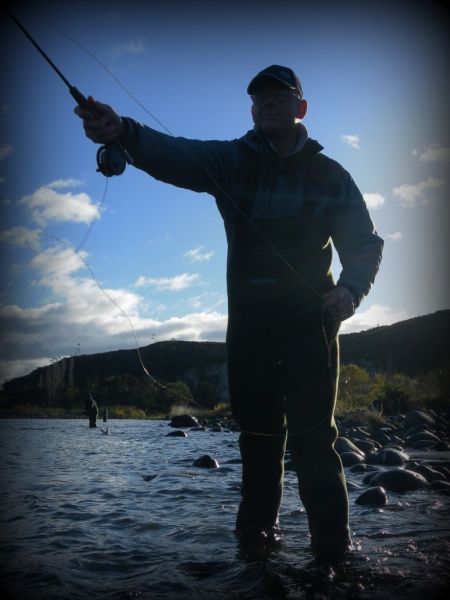
Andy was from that other island to the South of us on a weeks poaching trip and had never fished the Tongariro. He was surprised that the fish were taking small naturals because he had been advised to stay away from nymphs and only use globugs. Before moving on I couldn't resist setting him up differently, hopefully he caught some fish so that when he gets home he can tell the other poachers down there how good the Tongariro is. On my last morning
I hooked up to some fit deep bodied jacks and typical of male rainbows they attempted to bully you from the moment you struck. All of them came from one stretch with deceptively fast flowing water between me and the fish. It was lucky I was using the 8 wt and indicator rig in here because a couple of times I had to chase fish downstream in order to land them. Talking to others my impression is there are fish right through from the bottom of Grace Rd to the Upper reaches. I spoke to one angler who had caught his share of rainbows and a 9 lb brown wet-lining the Hydro and I bet that won't be the only one this week. Not that many anglers around and with a cold settled spell until Sunday, then showers for the early part of next week it should be good.
Regular visitors to this site may have noticed that some of the weather data on the info page is no longer functioning properly. This information is kindly supplied by River Birches Fishing Lodge and this site is one of several that are also allowed to use their live River Cam feed. I've had a number of emails from anglers inquiring about the problem but I'm not sure exactly what has happened, judging by the amount of hits I get on the info page I'm not the only one who finds this information useful so why not flick an email to enquiries@riverbirches.co.nz and let them know how much you miss it.
Now for the penultimate part of the Nymphing series ... I was going to say "last but one" but penultimate sounds better. Originally I intended this quick guide for beginners to be spread over a couple of weeks, I obviously talk too much because its dragged on and on ... this time ... mending.
CONTROLLING THE DRIFT.
Whichever method you choose when upstream nymphing if it involves the use of a floating line then you will have to learn how to control and make adjustments to the fly line as it travels downstream. We call this technique " mending " and our goal is to get the nymphs to drift past feeding trout in a manner which to them looks natural and doesn't arouse suspicion. You can learn to become the most proficient caster on the planet and rig yourself out with the best equipment money can buy but if you can't " fish " those flies you'll be wasting your time and money. Although I'm a firm believer that we sometimes credit fish with far more intelligence than they actually have ... they are not stupid and instinctively know when something is not quite right. For instance the nymphs and larvae they live on don't usually shoot past them at a hundred miles an hour nor do they suddenly stop dead and hover in the current but if you don't mend properly these are just a couple of examples of un-natural behaviour which could make a trout hesitate and refuse your flies. Even with good line control, during a normal drift your flies only behave like the natural insects for a relatively short time and as soon as you cast out that clock is ticking. I'm not quite sure how they did it but someone worked out that during the average 30ft drift, by the time they sink, they will look just like the natural insects for about three feet, something like them for about fifteen feet and bugger all like them for twelve feet ! 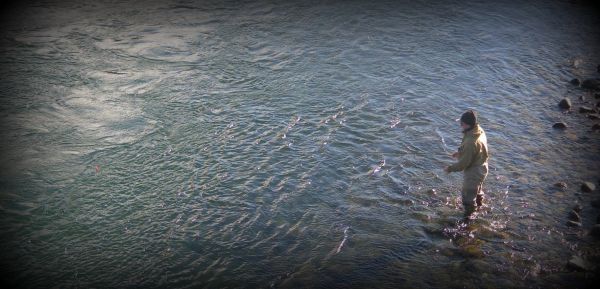 So you can see the importance of effective mending for realistic presentation. When upstream nymphing with an indicator we are trying to convince the trout that the nymphs are drifting downriver unattached to a line. This would be fairly easy if the river flowed at a uniform speed across the surface and down through the water column ... but it doesn't. Friction causes the water at the bottom and sides to travel more slowly than the water at the surface or middle of the river. If we did nothing after casting, the fly line would quickly be forced into a downstream bow, dragging the indicator and leader with it, stopping the nymphs from ever reaching the river-bed. Mending is the technique we use of intentionally repositioning the line and sometimes the indicator to lessen the effect the current has on the fly line and help prevent the nymphs from dragging. So you can see the importance of effective mending for realistic presentation. When upstream nymphing with an indicator we are trying to convince the trout that the nymphs are drifting downriver unattached to a line. This would be fairly easy if the river flowed at a uniform speed across the surface and down through the water column ... but it doesn't. Friction causes the water at the bottom and sides to travel more slowly than the water at the surface or middle of the river. If we did nothing after casting, the fly line would quickly be forced into a downstream bow, dragging the indicator and leader with it, stopping the nymphs from ever reaching the river-bed. Mending is the technique we use of intentionally repositioning the line and sometimes the indicator to lessen the effect the current has on the fly line and help prevent the nymphs from dragging.
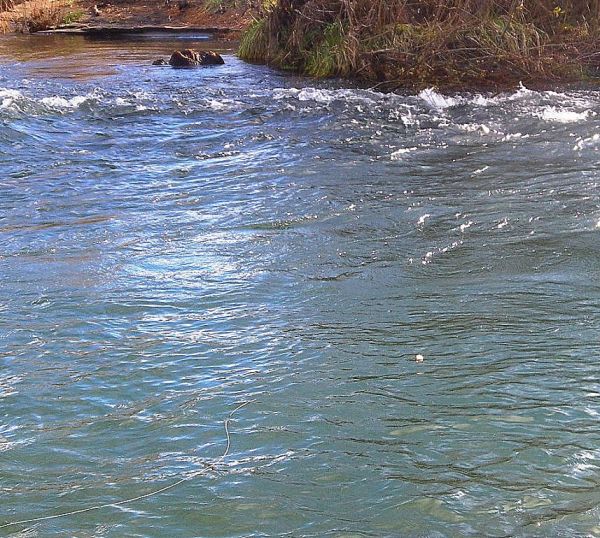 The first mend is probably the most important, setting everything up for the rest of the drift and is best carried out as soon as the line hits the water. The mend itself begins by raising the rod tip to lift the fly line off the water and then rolling the wrist in a semi-circular motion in the direction you want to place the mend, this flips the line and forms a large upstream curve. The first mend is probably the most important, setting everything up for the rest of the drift and is best carried out as soon as the line hits the water. The mend itself begins by raising the rod tip to lift the fly line off the water and then rolling the wrist in a semi-circular motion in the direction you want to place the mend, this flips the line and forms a large upstream curve.
On this first mend I prefer to move the indicator upstream as well. By repositioning it upstream of where the flies landed you will immediately introduce slack into the drift allowing the nymphs more time to get down because you have temporarily eliminated drag on the leader.
This is the only time I'll deliberately move the indicator { unless I'm fishing close in } because if you try it again at distance you'll pull it and the flies towards you, lifting them off the bottom and away from the feed lane. The key to a good drift is to keep that slack in the system as long as possible by throwing a series of smaller mends either up or downstream as everything travels down river. Eventually the indicator and line will catch up and overtake the nymphs no matter what you do. But you can squeeze another few meters by throwing a few downstream mends before everything really tightens up and you have to start again. Mending is a complex but vital part of fly fishing and probably more difficult to master properly than casting. This has been a very basic introduction for beginners, covering just one aspect of line control, in this case when nymphing with an indicator.
Its a huge subject because every new fishing situation or method requires a different mending solution. The best way of learning is to find a quiet spot on the river away from other anglers and practice ... who knows what could happen as those nymphs travel back downriver towards you.
Part Six
Nothing causes more confusion for new fly fisher's than the design and function of the leader/tippet and many mistake tippet and leader as meaning the same thing. Good fly fishing leaders are always tapered but there are exceptions as we'll see later.
Most people choose from three basic types ... Braided tapered ... knot-less one piece tapered or compound tapered which are made by knotting together successively thinner level lengths of mono. By mixing and matching various lines compound leaders can be designed to behave differently for specific fly fishing situations and are a science in themselves. There's even a web-site with a free download called "LeaderCalc" www.globalflyfisher.com which promises us " the most comprehensive tool for calculating classical and contemporary leaders-and designing your own formulas for knotted leaders " so no more excuses for our flies "alighting" like a pile of spaghetti in the middle of the river. A well designed fly fishing leader has to perform several important functions.
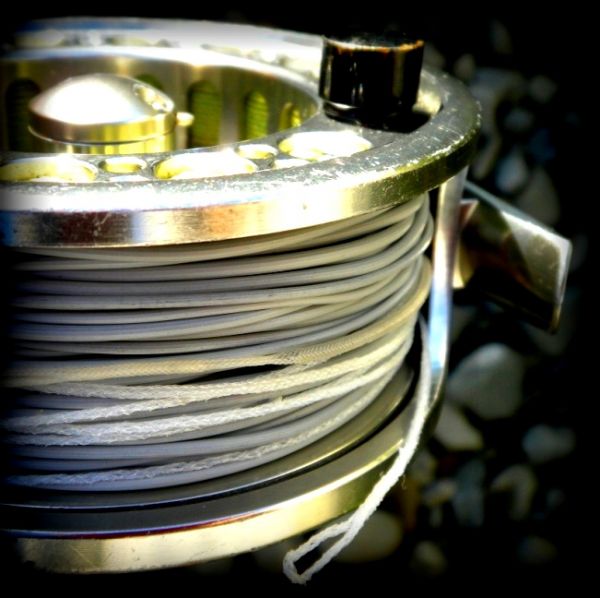 As we cast it should help tranfer energy from the fly-line to " turn over " the artificials so that they land quietly onto the surface. It provides a less visible link between the thick easily seen fly-line and the fly and puts distance between the two so that fish are less likely to spook. Finally the leader should enable the fly to drift unhindered without dragging as it travels downstream. Whether you hand tie your own or choose one of the many types of commercially available products a properly constructed tapered leader is basically made up of three sections, each one with a very different role. The "Butt" is the thickest part and is connected to the end of the fly-line to ensure a smooth transfer of the energy built up during the cast. The " Mid " or "Transitional " section helps continue that process to achieve the desired presentation of the fly. Then lastly the " Tippet " which is the thinnest part and where we attach the flies or adjust the length of the leader. As we cast it should help tranfer energy from the fly-line to " turn over " the artificials so that they land quietly onto the surface. It provides a less visible link between the thick easily seen fly-line and the fly and puts distance between the two so that fish are less likely to spook. Finally the leader should enable the fly to drift unhindered without dragging as it travels downstream. Whether you hand tie your own or choose one of the many types of commercially available products a properly constructed tapered leader is basically made up of three sections, each one with a very different role. The "Butt" is the thickest part and is connected to the end of the fly-line to ensure a smooth transfer of the energy built up during the cast. The " Mid " or "Transitional " section helps continue that process to achieve the desired presentation of the fly. Then lastly the " Tippet " which is the thinnest part and where we attach the flies or adjust the length of the leader.
Most of what we've discussed so far and a lot of what follows mainly applies to the construction of leaders for situations where a more delicate presentation is required. But three common leader types needed for the Tongariro would include the following :
For sinking lines and large streamer type flies a leader that straightens quickly and puts you immediately in touch with the fly is best. Faced with this situation most would go for a short tough leader made from a single length of fairly stiff line.
Small dries that need to be presented in a more natural manner and dead-drifted without drag across changing surface currents will be easier to control with a long thin leader constructed out of softer, much more flexible materials.
For general purpose nymphing the leader needs to be durable and long enough to allow the nymphs to reach feeding trout quickly. It would also help if it was designed so that less of the thicker butt section lies below the surface during the drift, where the effect of the current dragging on the heavier line would hinder its descent. You don't really need a traditional tapered leader for heavier nymphs because any hope of delicate presentation goes straight out of the window as soon as you add weight to the equation. 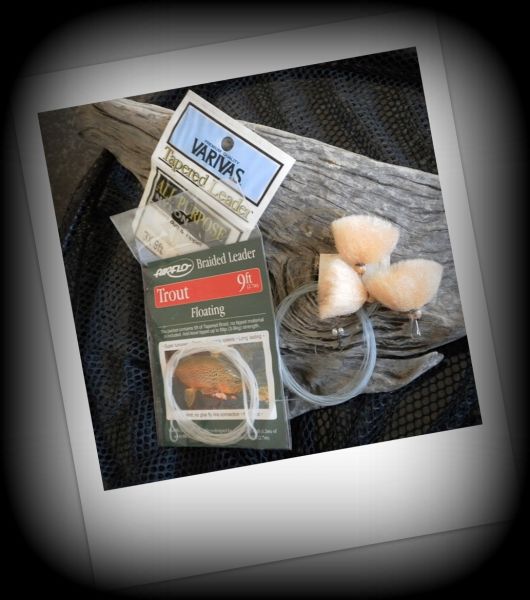
Another aspect of leader design that beginners are unsure of is how long to make each of the three main sections that together make up a tapered leader ie; Butt, Mid-section and Tippet. There are all kinds of weird and wonderful formula's out there but if you want to keep things simple just remember the good ole
50% ... 25% ... 25% method which is one that has served anglers well for years.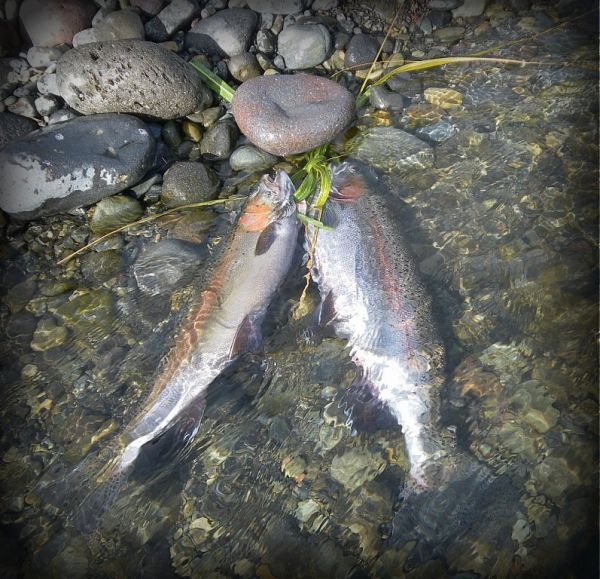
The leaders I prefer on the Tongariro are pretty straight forward affairs, do what they need to and sometimes even help catch a few fish. For dry fly fishing I use a 5 ft AirFlo leader made from tapered braid to which approx 6 ft of suitable mono is attached with a simple loop to loop connection.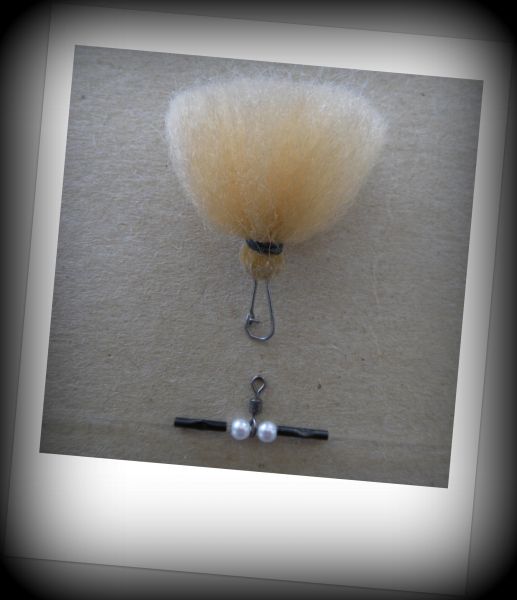
The diameter of the mono will be dependent on the size of the fly and whether or not I'm using a dry and dropper nymphing rig. When nymphing with the indicator I use 5 ft of fifteen to eighteen pound Maxima for the butt section which is again connected to the fly line loop to loop, it also carries my sliding indicator setup. This is made using a couple of rig crimps, two small beads and a swivel and once crimped correctly easily slides up or down for instant depth adjustment. To the other end is attached another tiny swivel which gives me a convenient connection point for the remaining 8 ft of the leader/tippet. I used to make this bit using equal lengths of 10 lb and 8 lb Maxima Ultragreen but nowadays use only the latter to which I attach the bomb. I carry several butt sections made up with the " indicator carrier " already in place so in the unlikely event I have to replace this part of the leader its a quick and easy change over.
So far we've managed to keep things fairly simple but leader/tippets aren't only measured in terms of length ... now the dreaded X factor!
The in depth explanation below was written a couple of years ago by someone with the username " morilla " and is one of the better ones I've found so far :
UNDERSTANDING THE X FACTOR IN LEADERS AND TIPPETS.
" Most fishermen are accustomed to identifying ‘fishing line’ by its “pound test” rating; i.e., the breaking strength. In flyfishing, leader and tippet material are primarily designated by their diameter. While this can be used to infer an approximate breaking strength range, in reality, the diameter does not, of necessity, translate into a specific “pound test” designation.
Without going into the historical context, let’s just say that tradition is a very potent force in the sport which is flyfishing. On occasion, efforts have been made to mitigate some of the impacts of this force when it comes to modern technologies and consistency in the marketplace. For instance, manufacturers are currently – or, I should say, “once again” – attempting to move away from the “ought” (e.g., 12/0, 10/0, 8/0, 6/0, 3/0) designation for fly tying threads. Simply put, one manufacturer’s 6/0 tying thread is not representative of another’s in terms of strength, diameter, or how it lays on a hook.
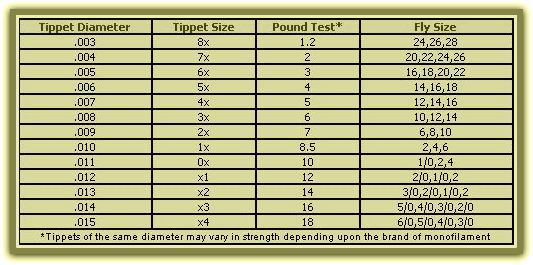
The same type of potential ‘inconsistency’ is actually part of where the “X” designation stems from in leaders and tippets used in flyfishing. When referring to the diameter of these materials, the actual measurements are in thousandths of an inch. In that context, it is simply much easier to reference a leader/tippet as, say, “5X” than “6 thousandths (.006) of an inch in diameter.”
In mathematical terms, the “X” label is not a ‘factor,’ it is a ‘constant’ derived from a specific reference or base. Without getting lost in the historicity surrounding how this constant was created (think silk gut used prior to monofilament), let’s simply stipulate that in this equation…
“X” = 11
The base, or reference point, is that "0X" leader/tippet material is 0.011 inches in diameter. Any leader or tippet smaller in diameter is designated by a number which is then subtracted from the base number of 11 to indicate the material’s diameter. Sound complicated? It’s not… Really.
Take the 5X material I cited a moment ago. I said it was easier than saying it was “6 thousandths (.006) of an inch in diameter.” If you don’t already see how it works, try this…
Take the constant of 11 and subtract 5… i.e., 11 – 5 = 6.
Now, remember this is a designation in thousandths of an inch; thus, the “6” actually means 0.006 inches in diameter.
If you’re still having trouble, try it using the decimal places…
0.011 – 0.005 = 0.006
Put into words, “5X” means that the material is five thousandths of an inch smaller in diameter than the reference point of “0X.”
The smallest, practical size of leader/tippet material generally available is “8X;” which has a diameter of 0.003 inches. (11 – 8 = 3 … OR… 0.011 – 0.008 = 0.003) There are smaller diameters out there; but, they aren’t very practical from the standpoint of turning over a fly of any size on a cast and in terms of…
Strength
As stated, leader/tippet material used for flyfishing typically has a higher strength-to-diameter ratio than standard fishing line. This is important when working with material smaller than “OX.” Why?
One of the key factors in getting fish to take flies is in the presentation of that fly as something that looks like a natural food source. If the line attached to the fly is too large or too stiff, the fly looks anything but natural; e.g., it doesn’t drift appropriately in the current. This is one of the reasons flyfishers tend to use the smallest diameter leaders and tippets they can given a variety of factors such as type/size of fly, species/size of fish, wind, etc. As a result, manufacturers of leaders/tippets intended primarily for fly angling are constantly striving to make smaller diameter materials stronger.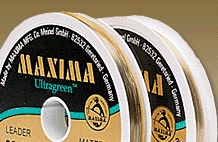
As an example, let’s take the ever popular Maxima Ultragreen monofilament. In that brand, you can obtain a 110 yard spool rated at 4 lb. test strength, depending on your source, for around $7 - $10.
The diameter of this 4 lb. test is 0.007 inches, which would designate it “4X” (11 – 4 = 7 or 0.011 - 0.004 = 0.007) in flyfishing terminology. Without picking on a specific manufacturer, a 30 yd. or 30 meter spool of “4X” flyfishing monofilament tippet will run around $4 - $8. However, the test strength will run between 6 and 6 ½ pounds; i.e., half again or more stronger than the Ultragreen for the same diameter.
Put another way, if you were willing to fish with 4 lb. test tippet material, you could drop at least one “X” size smaller (5X) in diameter; a potentially crucial factor when dealing with spooky fish. Remember, you are trying to emulate the trout's natural diet with your flies. You want the flies to both look and act naturally as they drift with the current. See it from the trout's perspective. How many mayflies or caddis do you see with a "rope" sticking out of their heads? How "naturally" does a fly float when attached to a stiff piece of monofilament?
If you were willing to pony up for fluorocarbon material made specifically with an eye toward flyfishing, the difference becomes even starker. Both Umpqua’s SuperFluoro tippet and Rio’s Fluoroflex Plus tippet, in “4X,” have listed test strengths of 7 lbs. Think about that for a moment.
To get the same, relative test strength from Maxima Ultragreen, you have to upsize to 0.009 (6 lb.) or 0.010 (8 lb.) or a 2X and 1X diameter respectively. That’s a BIG difference when it comes to fly angling.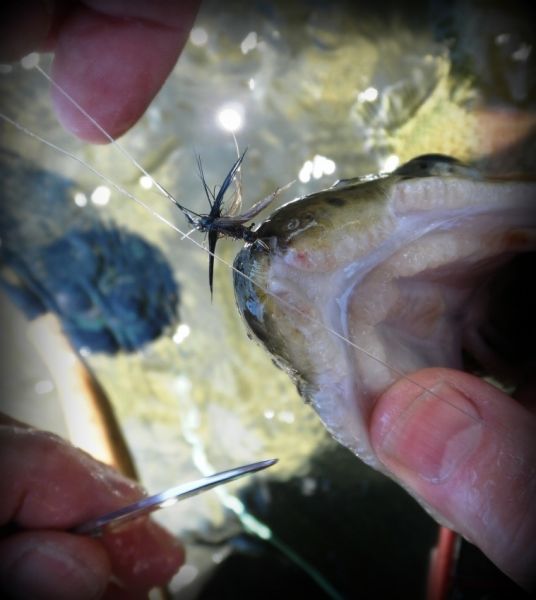
Going the Other Way
Interestingly, the “X” designations don’t go very far in the ‘other’ direction; i.e., larger than “0X” (0.011 inch diameter). From a certain perspective, the reason is simple. Once you get above a certain diameter, the test strength becomes the critical factor while the concept of a ‘natural’ presentation tends to become less critical. Generally speaking, you are venturing into big fish and big fly territory.
Insofar as this discussion is concerned vis a vis the “X” factor, the important thing to bear in mind is that leaders and tippets larger than “0X” (0.011” diameter) are designated with the “0” and an additive. In other words, rather than subtracting, as with smaller diameters, you add the number to the “OX” base.
For example…
The next size leader/tippet larger than “0X” is “01X.” So, you start with the base number, "11" (0.011). Then you add "1" (0.001)...
11 + 1 = 12 … OR … 0.011 + 0.001 = 0.012
“02X” should be… 11 + 2 = 13 (0.013”) and so forth.
The problem is that, once again, we start to venture into a bit of a ‘gray area’ when it comes to manufacturers and ‘standardization.’ While those sizes smaller than “0X” are all supposed to be ‘uniform’ in diameter, there are minor differences; e.g., while 4X is standardized at 0.007” in diameter, that’s an average. Actual sizing can vary. I once did a test run of several manufacturers a couple years ago and found that 4X tippet material ranged from 0.00674” – 0.0074” in diameter; with one company, which shall go unnamed, making me wonder how they were getting away with their “X” designations. In fact, the variances weren’t just between manufacturers, but occurred between series from the same manufacturer.
When looking to leader/tippet material larger than the base measure (“0X”), such variance becomes even more pronounced. Why? Remember, once you decide to “go big or go home,” you’re pretty much throwing “subtle” out the window. Thus, the emphasis becomes focused more on strength than on maintaining a high strength-to-diameter ratio. This is part of the reason why you will generally see, with a few exceptions, the “X” designation stop once you hit about “03X.”
Some Final Thoughts
A spool of tippet material will be uniform throughout the entire length. A tapered leader will derive its “X” designation based on the diameter of its "tip" at the smaller end. This means that you must select your tippet material based on the "X" size of the leader you'll use; e.g., the largest tippet material you can use with, say, a 4X leader is 4X tippet. You can, in theory, however, effectively use three "X" sizes of tippet for a given "X" leader size… IF what you're solely matching diameter and not test strength. As a practical matter, you don’t want your tippet to be stronger than your leader.
For example, you wouldn't want to use 4X fluorocarbon tippet (7 lbs.) on the end of a 4X monofilament leader (6 lbs.).
When attempting to decide which size tippet material you wish to use for a given fly size, remember the number “3.” Let’s say you are tying on a size 12 fly. Divide 12 by 3. This gives you “4.” Care to guess which “X” size this indicates?
Generally, you can get away with 1X smaller or larger using this method. In other words, for the size 12 fly, you can use 3X, 4X, or 5X tippet. Bear in mind, however, that this is just a general rule of thumb. There are plenty of times when I’ve fished size 12’s on 6X and even 7X or size 18’s on 4X tippet. This method just gets you into the ballpark in terms of what most hook eyes will comfortably accommodate.
Truth be told, even most flyfishers don’t think in these terms. They tend to think in terms of the ‘size’ (“X”) that works on the particular water they’re intending to fish or would be consistent with the methodology they intend to employ. Be that as it may, I hope I’ve provided a little better understanding of this ‘system.’ In the end, understanding is better than guessing ".
Right! stop scratching your heads and put your calculators away. Unfortunately I've been tied up again with hospital appointments, more tests and I'm convinced my left arm is supplying the Emergency Department at Wellington Hospital with blood but next week is looking good so with a bit of luck I'll be out and about and will let you know if anything exciting happens. In the meantime remember;
" The fly angler who says they have never fallen in while wading is either a pathogenic liar ... or has never been fly-fishing. "
Jimmy Moore
Tight Lines Guys
Mike |
|
|
| Back to Top |
|
|
|
|
|
|
|


