| |
|
|
| |
Early birds do best ... Humpy Dry Fly.
Wed 25th July, 2012
|
|
|
|
 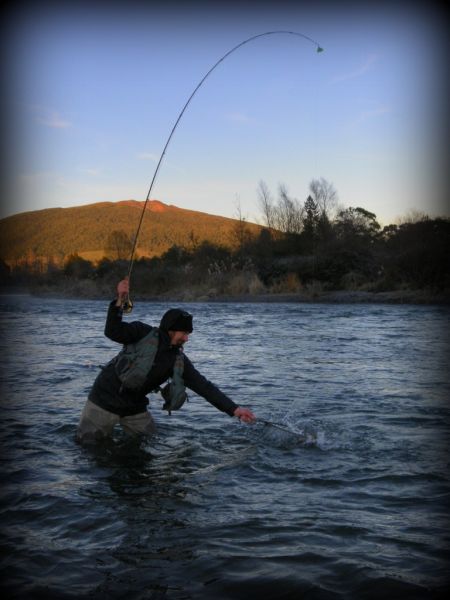
With more anglers around and all of them hoping the recent flood had encouraged some better runs I set the alarm early and it was only just getting light as I made my way upriver to one of the town pools. The silty deposits along the rivers edge were frozen solid and with a thin blanket of mist hanging motionless over the river, even my eyes felt cold as I waded across to pick up the track on the opposite side. A few minutes later I arrived to find that early wasn't early enough and another angler had beaten me to it. I slotted in below him and on the third drift connected with a fish only to feel it let go just as I began playing it. I'd only been fishing around 10 minutes and already the rod rings were jammed with ice plugs so it was off with the gloves to give the rod a quick dip to clear the guides. Upriver I could see my companion silhouetted against the dawn sky having a right ole tussle with what looked like a reasonable fish. Like most trout it had a dislike of landing nets and it definitely didn't want to go anywhere near this one. It took several attempts before he finally managed to coax it in. Liam Cody had traveled up from Palmerston North to try his luck for a day or two, so was already off to a great start using the indicator and globugs.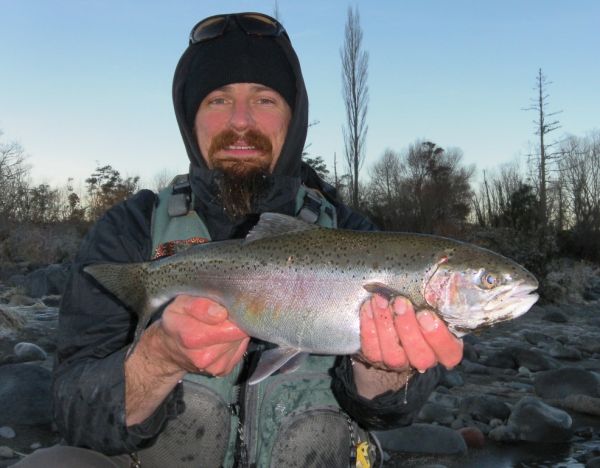 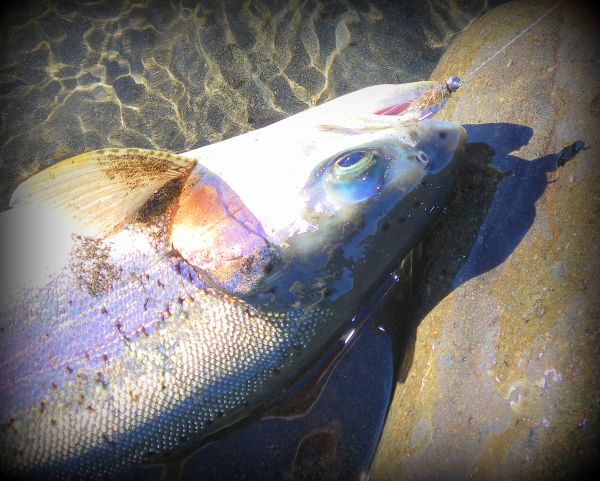
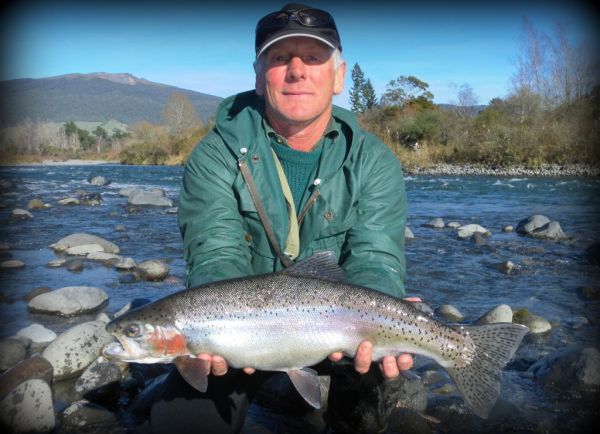
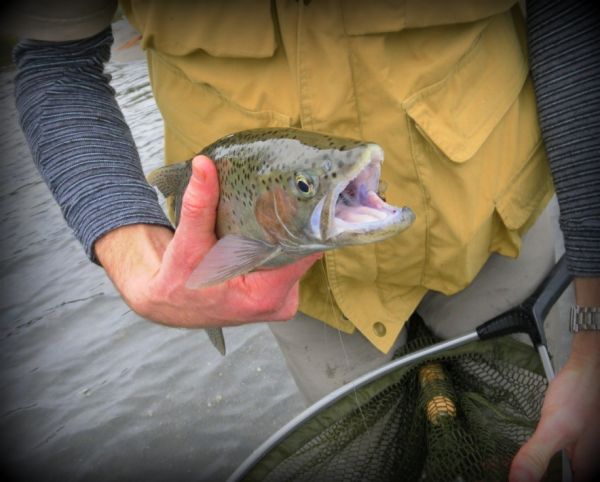
After taking a few pics I carried on fishing and it wasn't long before the indicator went under and I eventually landed a silver rainbow that had grabbed the bomb. This often happens after a fresh just as tthe river begins to clear but is still carrying some color. During a good flood the rocks get turned over and the aquatic insects that live under and amongst them are swept down stream. The Tongariro is home to huge numbers of caddis larvae and mayfly nymphs as well as other bugs commonly found in New Zealand rivers. You can imagine as levels drop and the flow begins to slow it must resemble a nymph soup below the surface as these food items slowly begin to fall back to the river bed. Feeding trout are spoilt for choice so while the color continues to drop out it pays to use larger nymphs, bigger globugs or switch to a sinking-line and lure, anything that makes it easier for a fish to spot your fly first. These are the tactics that Taranaki angler Chris Thame used after he also joined our little group. By switching between nymphing and wet lining he caught and unfortunately lost some nice fish. The rainbow at the top of the page was a cracker and gave Chris a great scrap.
While I was there, between us there were around a dozen fish caught. Most of them were in pretty good condition but the action can sometimes tail off quickly here and by 10.00 am was virtually over. Its one of those places that needs to be rested for a while and doesn't fish well if it continuously gets a lot of attention from anglers. It had been fished hard the day before so it was time to move on.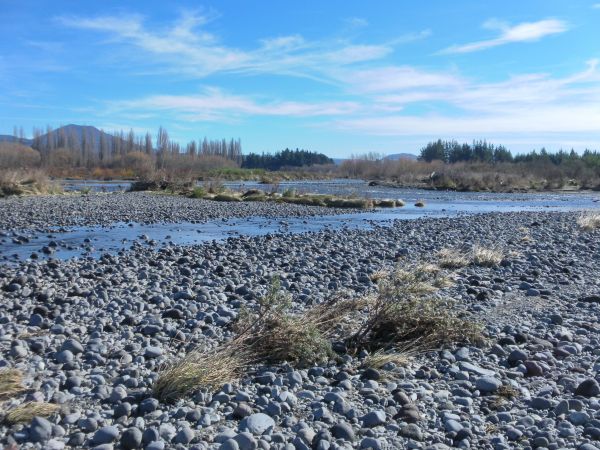 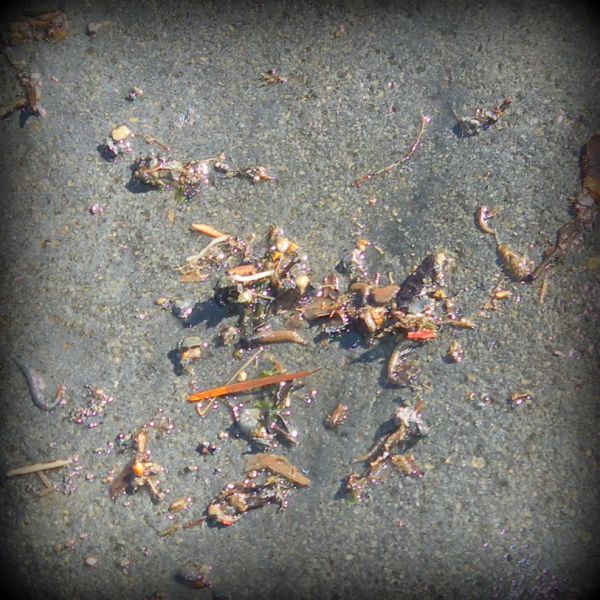
I left around mid-morning to check out the Braids, not with the intention of fishing there but I was curious to see the aftermath of the flood.
To be honest there wasn't as much change as
I had hoped for. The right hand bypass which includes Spot X is still more or less bone dry.
A little further down part of what used to be the Stones is flowing but with water that's coming from the general direction of the much missed Honeypot. The Plank Pool also has some water moving through but nothing like it used to. Most of the river now travels through the Swirl Pool or Vera's and then continues down the left channel. What did surprise me was how quickly the insect life is beginning to re-colonize the river bed. I turned over a couple of rocks in a part of the Braids that had been dry ever since demolition began. Now within days of the latest flood and with just a few inches of water flowing over them there were already caddis and mayfly nymphs clinging to the underside.
Had a few emails recently just like this one from Paul in Tasmania " Hey Mike how about seven great dry flies for the Tongariro "... good idea Paul. So over the coming weeks with expert advice from the staff in the tackle stores of Turangi we'll feature one " hot pick " dry each week, plus a few others.
To kick off here's one that sounds good enough to eat from Riverway General Store on Taupahi Road " Marcel's Chocolate Humpy ". This is another fly invented in America during the 1940's and has been described as " arguably the greatest surface fly ever devised ". Even though it first appeared over 60 years ago the subject of who first came up with the pattern and how it got its name still provokes passionate debate and seems to depend on where you live or fish in the U.S.A.
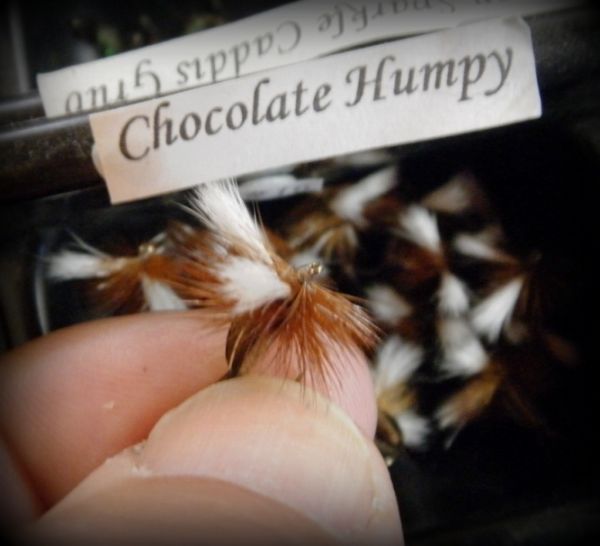 Its now generally accepted that a California based fly tyer called Jack Horner well known for his innovative use of deer hair tied the orginal. At that time it also had a very original name Its now generally accepted that a California based fly tyer called Jack Horner well known for his innovative use of deer hair tied the orginal. At that time it also had a very original name
" Horner's Deer Hair Fly ". To cut a very long story short as it gained popularity on rivers across the Western United States it also became known by other names. For instance in Montana it was commonly called the " Goofus Bug " but it was when it reached Wyoming it was nicknamed the " Humpy " because of its distinctive shape and it stuck. Like all other
" Humpies " this version is a high floating dry fly that's perfect for big rivers like the Tongariro. The white calf tail wings help visibility and in the bigger sizes its a good choice as an indicator fly with a nymph suspended below it, providing you don't go too heavy with the dropper nymph.
In common with other successful patterns trout mistake its buggy appearance for a number of different insects and depending on the size and color used it will pass for mayfly, beetles, caddis in fact all the usual suspects ... so a useful all rounder. If you decide to fill your fly box don't turn up after the end of July because you'll notice something different about the shop ... it will be empty ! Thats because they are moving and will be over the other side of town at 21 Ohuanga Road.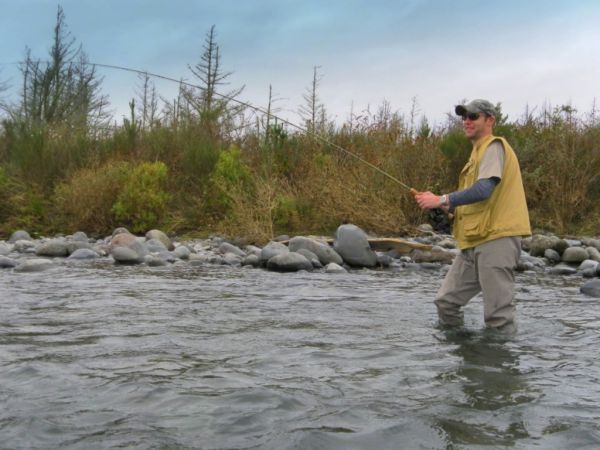 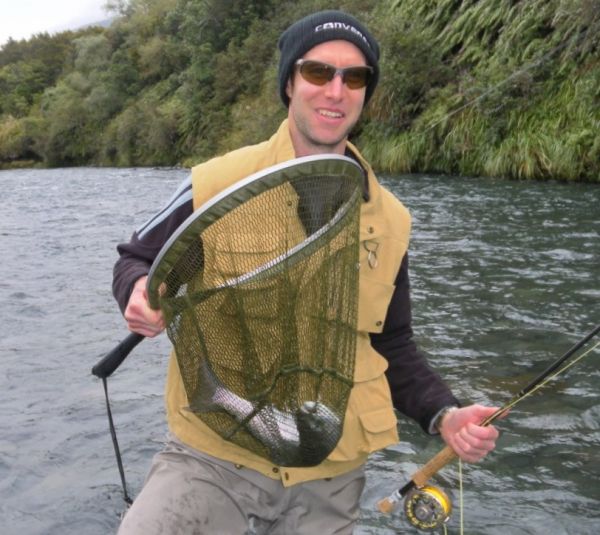
The next day I fished with Nathan Rooney who had strict instructions from his adoring wife to forget about work for 24 hours and get out and enjoy himself ... this proved difficult because he was with me. Not wanting to get beaten to a favorite possie a second time we got up really early and when we arrived there wasn't a soul in sight, unfortunately for the first hour there wasn't a fish in sight either although Nathan did miss a couple of good chances before we gave up on the place. He redeemed himself in the tail of Kamahi and by the time we got up above Boulder Reach was into his hat-trick but the fish were nowhere near the stamp of the previous couple of days. Even so his day- out fishing the Tongariro has rekindled the passion for his old hobby and seeing as we're almost next door neighbors has vowed to return ... thanks mate.
Unsettled weather on the way according to the long range outlook, which should help keep things ticking over. The runs will slowly build and so will the the numbers of anglers chasing them. With the loss of so much good water from the Lower Bridge down there will inevitably be an increase in angling pressure on some of the town pools and I've noticed that anglers are using the middle and upper river again. There have been some good fish around but from now on you can also expect recovering fish to show up more often from runs much earlier in the year ... see you out there.
This weeks fishy quote : " Fly fishing is a lot like golf ... you don't have to eat the ball to have a good time. ~ Anon
Tight lines guys
Mike |
|
|
| Back to Top |
|
|
|
|
|
|
|


