| |
|
|
| |
The Adams and Griffiths Gnat.
Tue 7th August, 2012
|
|
|
|
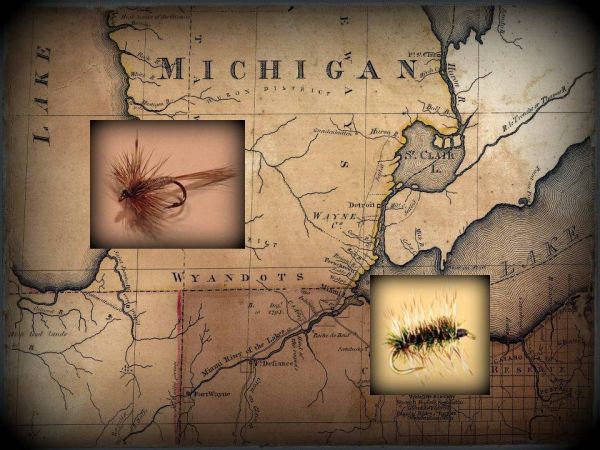
This week a couple of classic dry flies that both have connections with one of America's top ten trout fishing destinations ... the state of Michigan. With over eleven thousand inland lakes someone once commented that " Michigan had so much water ... there was nowhere left to stand ". Even its name which is derived from the Chippewa Indian word " meicigama " translates as " great or big water ".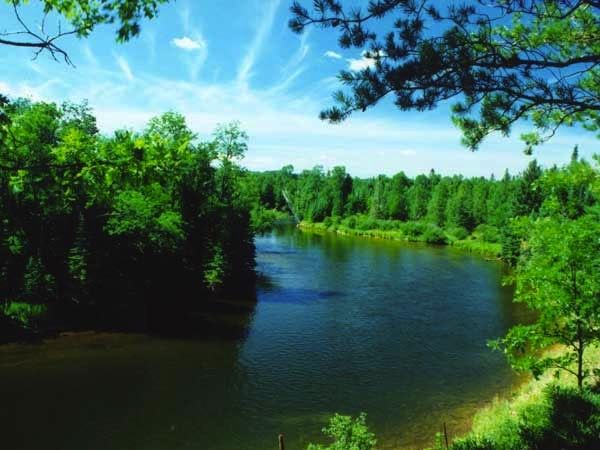
This region of central North America borders four of the five Great Lakes that form a natural devide between the U.S.A and Canada and is a magnet for sport fishermen and commercial fishers alike. According to recent U.S government statistics over 11 million American and Canadian anglers fish for trout every year in Michigan's' rivers, lakes and streams. Most have fairly good access and like New Zealand are open to the public. Its little wonder that this angling mecca spawned one of the best known dry flies in the world. And the creator of the other pattern included this week, is one of the founder members of Trout Unlimited, which held its first meetings on the banks of Michigan's famous AuSable River.
The story of the Adams dry fly began over eighty years ago and fly fishing historians tell us it first gained fame on another of the states iconic rivers ... the Boardman. But several accounts also explain that the inspiration for the pattern had a much more humble beginning. In the summer of 1922 Charles. F. Adams an attorney from Ohio was fishing Mayfield Pond which is basically a reservoir about a mile from the Boardman River. While fishing the pond an insect caught his eye which he wasn't familiar with. When he eventually got back to his hotel he mentioned it to an acquaintance Leonard Halladay, a local fly tier, in the hope that he could make him some up. In a letter written years later Halladay recounts the following :
" The first Adams I made was handed to Mr. Adams, who was fishing a small pond in front of my house, to try on the Boardman that evening. When he came back next morning, he wanted to know what I called it. He said it was a “knock-out” and I said we would call it the Adams, since he had made the first good catch on it ".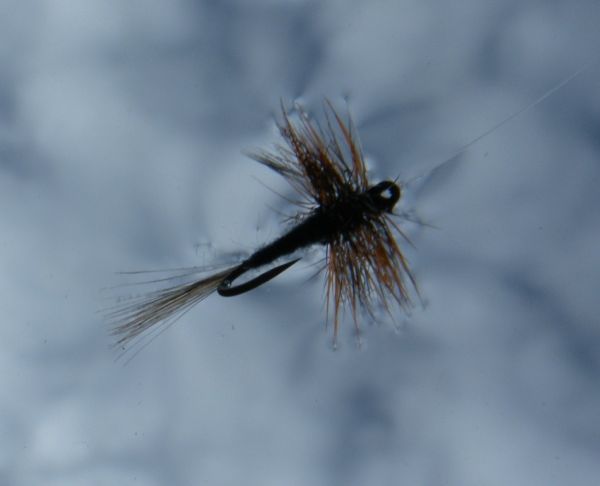 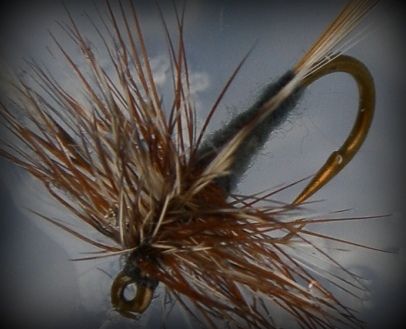
According to angling writers who have studied early examples in museums the contemporary versions don't look much like the originals tied by Leonard Halladay. Describing his fly as having a thicker body, heavily dressed hackle with overly large wings and tail. However most agree that much of the Adams success is due to the clever variation in color achieved by mixing grizzle and brown hackle feathers over a grey body. Like other enduring " classics " this produces a fly with the uncanny ability to become something that's nothing in particular. Which is why the Adams in its many different guises remains the best known, most used dry fly in the world and a " must have " inclusion in any fly selection.
For all us fly fisho's who still can't resist the temptation to carry a dozen boxes packed to bursting point with flies of every shape, size, color and weight ... which by the way haven't seen daylight for five years, here's a fishy quote that sums up the addiction :
" I look into my fly box, and think about all the elements I should consider in choosing the perfect fly, water temperature, what stage of development the bugs are in, what the fish are eating right now. Then I remember what a guide told me: ' Ninety percent of what a trout eats is brown and fuzzy and about five-eighths of an inch long '. "
~ by Allison Moir, " Love the Man, Love the Fly Rod ", A Different Angle : Fly Fishing Stories by Women ~
The other fly featured this week is the Griffiths Gnat, one of the best small dry fly patterns ever invented. Its creator was American fly fishing " great " George. A. Griffiths who was one of the founding members of the conservation group Trout Unlimited. The organization held its first meeting in July 1959 at Griffiths' cabin called the " Barb-less Hook " built on the banks of Michigan's famous AuSable River. This initial gathering of just sixteen sportsmen lead to the formation of America's foremost river and fisheries conservation organization. From those modest beginnings T.U now has an estimated 140,000 members dedicated to the protection and ongoing restoration of trout and salmon fisheries across the United States.
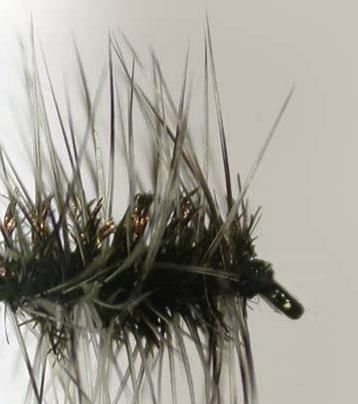 Griffiths' simple, pattern uses only two materials, peacock herl and grizzly hackle and if you've still got young eyes this combination on small hooks does a great job of representing an emerging or adult midge. Midges are found in rivers and lakes across New Zealand and because they are attracted to artificial light can be a real pest in homes that are near water. Griffiths' simple, pattern uses only two materials, peacock herl and grizzly hackle and if you've still got young eyes this combination on small hooks does a great job of representing an emerging or adult midge. Midges are found in rivers and lakes across New Zealand and because they are attracted to artificial light can be a real pest in homes that are near water.
In milder weather they'll breed year round but are more prolific in summer. Fly fishermen know the larval stage as " blood-worms " which are usually found in the mud at the bottom of slow moving back eddies or side channels away from the main flow. Early and late are the best times to look out for midges and I can think of one spot not far from the Road Bridge where you'll often see trout feeding on them in summer. To help present these small flies properly, this is the time to lengthen the leader and use lighter breaking strain line. 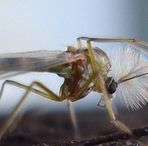
I have to admit I struggle with these small patterns. My eye-sight nowadays is very similar to a bat
... a cricket bat ! You can help this by using Hi Vis patterns that are tied with a small post of fluo yarn that make it a bit easier to keep tabs on these tiny flies. But I prefer two fly setups using a couple of different size flies with the larger one acting as an indicator. For instance a size 12 - 14 with a small emerging midge pattern tied on a light dropper off the bend or substitute the emerger with a midge larvae pattern which are known as buzzers. Start with the dropper around 16 inches long and experiment with the length if you have to. The Griffiths' Gnat with its natural shimmer of peacock herl and leggy profile created by the palmered hackle can also be used to imitate midge clusters, smaller mayflies, terrestrials like ants or other small insects that trout happen to be feeding on. 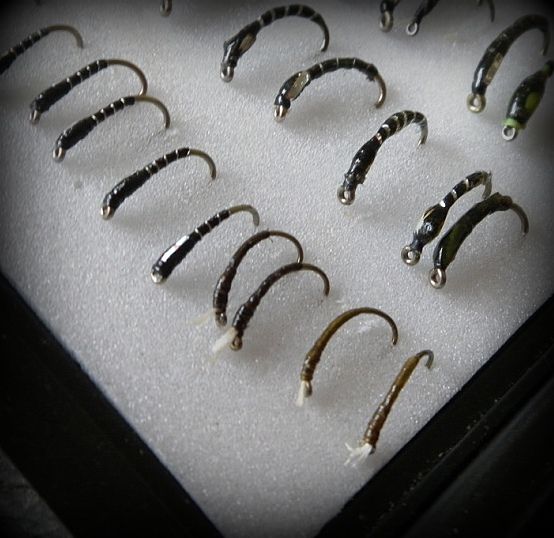
Even though its now over forty years since George Griffiths was first credited with inventing the fly not many would dispute the fact that its still the best midge pattern out there and hasn't been bettered. Its not one your going to use every time you fish the Tongariro but it does have a place.
I can't get out again until mid-week but I'm looking forward to it and expecting real mixed bags from now on. The similarities with the weekly reports from this time last year continues. In fact I could probably have cut and pasted the text with current images and not been that far off ... even the weather outlook is similar. Next time its the turn of the team at Sporting Life to give us a Tongariro dry ... any guesses ?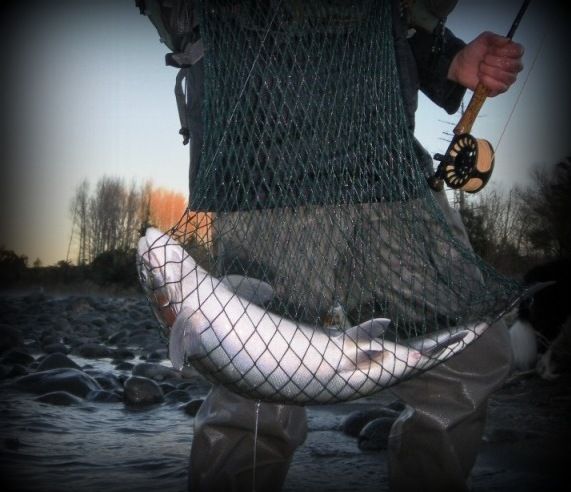
Tight lines guys
Mike |
|
|
| Back to Top |
|
|
|
|
|
|
|