| |
|
|
| |
The Elk Hair Caddis.
Tue 4th September, 2012
|
|
|
|
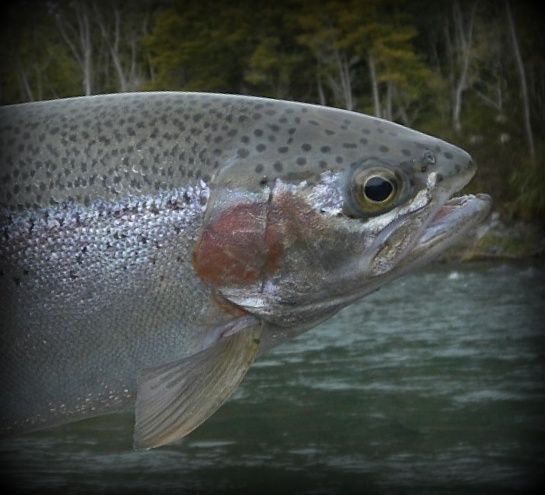
This week we're on the other side of the mall at Greig Sports and its the turn of Tim Healey to recommend a dry fly for the Tongariro. Tim's choice another sedge pattern ... the Elk Hair Caddis.
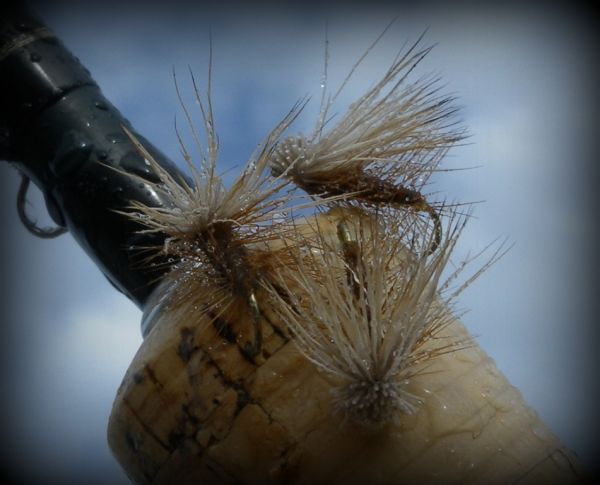
This legendary dry fly had an equally legendary inventor Al Troth who sadly died recently age 82 in Montana where he guided for many years. He came up with the fly in 1957 and originally intended it to be an emerger pattern. But because elk hair is hollow and floats so well it made its mark as a dry fly. At the very least many regard it as the best adult caddis imitation ever thought up and even if caddis aren't hatching its a great searching pattern. Use it in medium flow water under overhanging foliage, or through livelier runs and riffles. During a hatch its a great choice along the bubble line in the slower water or pool below a fast run, where adult caddis often end up after being carried down river. Tim suggests tan or black and his tip is to fish a wee wet on a dropper below it ... want to know more? ... why not call in for a chat.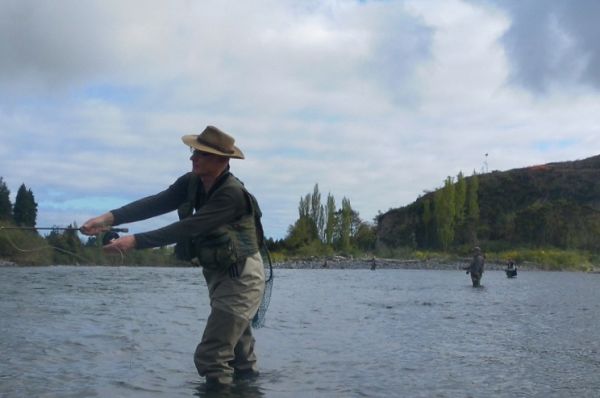
As the annual spawning runs continue to build so will the numbers of anglers eager to get in on the action and for the next couple of months we'll occasionally encounter another annual Tongariro phenomenon ... " concrete feet syndrome." Its one of the most common mistakes made by anglers new to fly fishing or by more experienced fly fishers new to nymphing the river ... I know because when I first began fishing the Tongariro I had a mild case of it myself. In my own defence I had just arrived " straight off the boat " from the U.K where as your aware some of my fly fishing was on stocked stillwaters. Many of them had a rural location and were set in quite scenic countryside but were basically flooded holes surrounded with casting platforms. Some of the smaller venues could only accommodate a dozen or so anglers and on weekends or public holidays it was always wise to ring the fishery in advance to book a place. Then on the day you'd turn up hand over your ten pounds, grab a vacant peg and off you'd go ... see what I mean when I keep on about how lucky we are. Anyway by the time I arrived in New Zealand and was let loose on the wide open spaces of the Tongariro river I was used to standing in one spot and casting away until a passing rainbow trout felt sorry for me and picked up my nymph. Fishing is a funny ole game, the longer you fish the more you realize that the average life-time is nowhere near long enough to learn all there is to know about it. 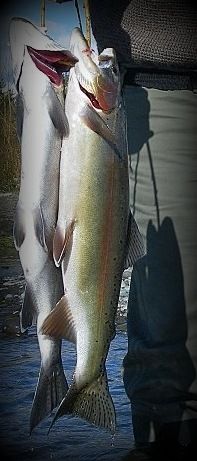
But what all those years chasing fish does teach you is to recognize that if your not catching when everyone else is ... then may be its your fault and your doing some thing wrong. Looking back its a wonder I caught anything at all because everything was wrong, so I decided to forget U.K methods for a little while and with a completely open mind start over again.
By watching and talking to anglers at every opportunity I began to get more of an idea of what I should have been doing all along. Ever since I became hooked on fishing I've befriended and fished with some fantastic anglers ... the Tongariro was no exception. At that time more and more fishos' were beginning to realize the potential of the Braids and it was a great place to " cut your teeth ". Every type of water you were likely to encounter on the rest of the river was to be found on a smaller scale in this stretch and with the bach literally across the road it was perfect. Week in week out you'd see the same faces but there were one or two " guns " that really stood out. One in particular I nicknamed " the Magician " because I'm sure he could have pulled fish out of a top hat. At that time there were a lot more little runs and riffley stuff between the popular spots. These shallower areas were often ignored by other anglers but I noticed this was where he'd concentrate most of his efforts.
By moving through them fairly quickly but thoroughly he rarely failed. Thanks to him I still fish this way myself, of course I fish the pools as well but I don't worry too much if someone's beaten me to it. You haven't got to stand in one spot up to your arm-pits in water to catch fish on the Tongariro, in fact you'll catch less. Just watch the " ten per centers " nymphing, they'll move through a stretch by continually exploring the water ahead of them ... followed by a few steps upstream and so on. 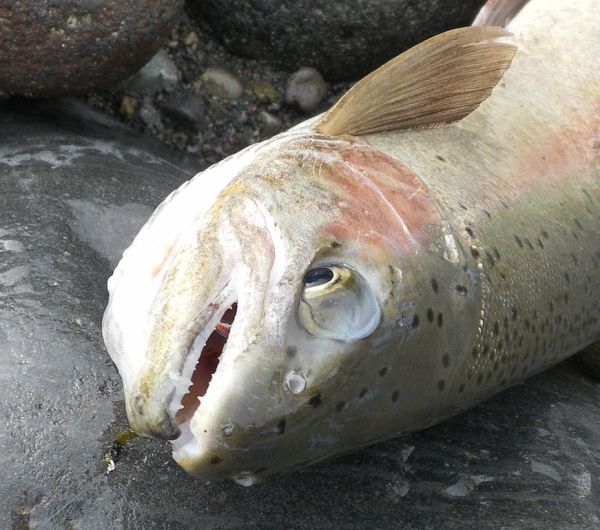 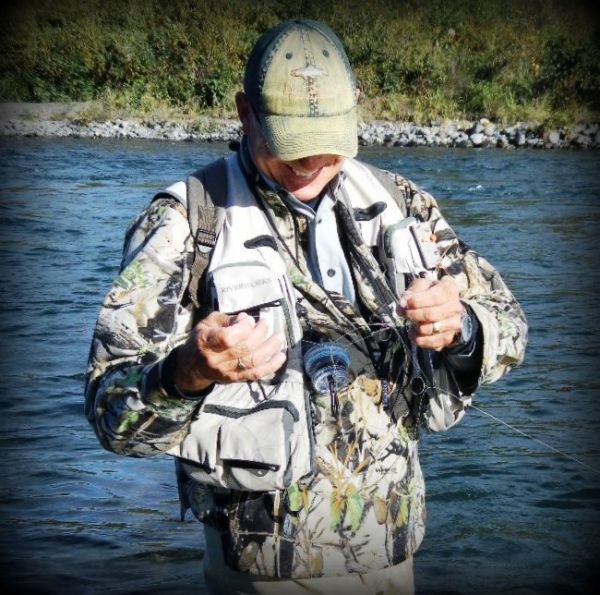
Personally if I think its worth it and angling pressure allows it I'll make a couple of passes along the same stretch, this time with a change of fly, method or by casting to likely spots a little further out. Don't ask me how you know if its worth it, may be because you've fished some of these possies so often you pick up on subtle cues around you that may have resulted in success there in the past. There are no hard and fast rules about how long to stay in one place but unless I get that gut feeling I tend to put up half a dozen drifts and move if nothing happens. This can take the form of a few steps upstream, a move to another run or pool or back to the wagon to relocate either up or downriver.
The more water you can cover during your time on the Tongariro the greater your chances of eventually drifting those flies near a few fish. They say we learn by our mistakes so I'll share a few more of my early ones with you next time ... believe me there were plenty to choose from !! Plus we pay Brian and Steve at Creel Tackle a visit for the last couple of dry flies in the series.
I like this one, you can't lose :
" The two best times to fish is when its rainin' and when it ain't. " ~ Patrick.F. McManus.
A mixture of sunshine and heavy showers forecast for the rest of the week which will help maintain the rivers slightly higher level and keep those runs coming. As we move into Spring the insect activity will increase and there are already more mayfly coming off. The fish haven't noticed them yet but the birds certainly have. At this time of year you won't know what you've got on the end of your line from one hook up to the next ... dark jacks ... hens packed with eggs ... spent fish ... their all in the river at present. And there are still some good browns around, this was the first of two caught within half an hour of each other ... so a great time to be out and about on the river.
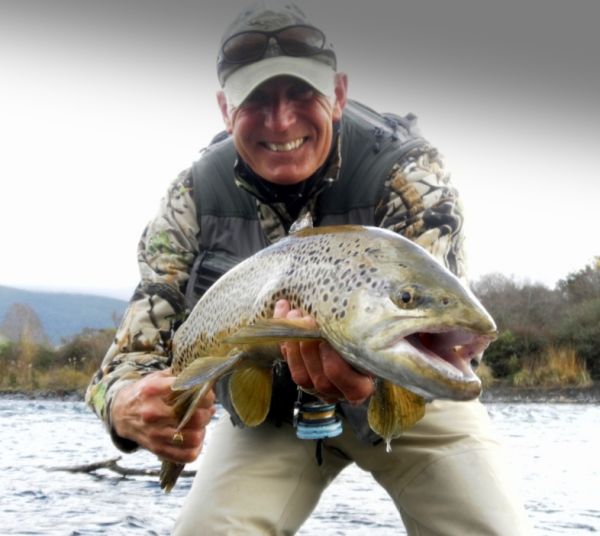
Tight Lines Guys
Mike |
|
|
| Back to Top |
|
|
|
|
|
|
|


