| |
|
|
| |
Size does matter.
Mon 1st October, 2012
|
|
|
|
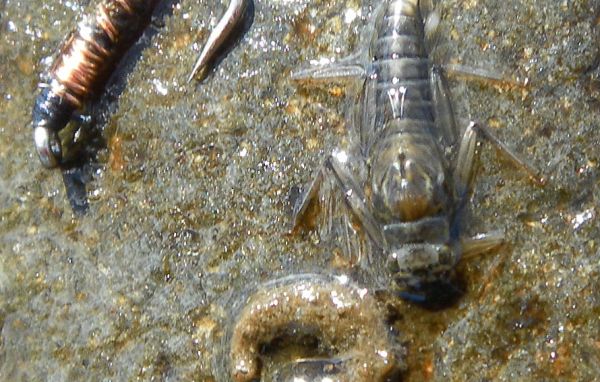
This week we'll return to the subject I started a couple of weeks ago before I got side-tracked by those lovely fat silver rainbows that ran the river ... learning from our mistakes. I've noticed that whether your a beginner or a first time visitor to the Tongariro when we start fishing this river most of us tend to make the same bad calls. Looking back I was in the same boat as everyone else and didn't have a clue ! Last time we looked at " concrete feet syndrome " which is a fairly common one and will not only cost you fish but the good will of other anglers. Unless of course your a devotee of the Bridge Pool which as well as being one of the most consistent stretches during the spawning runs also has its own, very special set of rules. This week another classic cock up ... fly size. 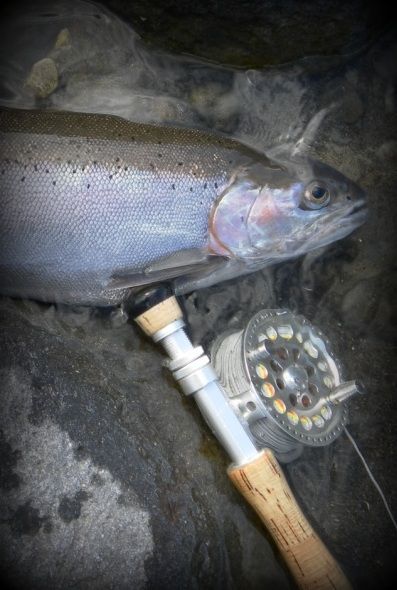
After they deported me from the South Wales valleys and I eventually caught my very first glimpse of the Tongariro, my immediate impression was ... big river,
full of big fish, big is best, so big flies ... BIG MISTAKE ! At the time, it seemed logical to me that in a large river like this the trout would not only be able to spot a big fly more easily but would find a big meal more attractive.
I can't remember the exact setup that I was using but it would probably have consisted of a couple of size 10 unweighted gold head Hare and Copper or Pheasant Tail nymphs. Not too much wrong with the pattern choice but at that time I also hadn't realized the importance of using weight for success on this river.
My unleaded offerings were tied using pretty light gold beads and unless I was drifting them through shallow water its a fair bet they were nowhere near the bottom. Even if they had got down to some feeding trout a lot of the time those big nymphs would have aroused a little bit of suspicion, unless the Tongariro had suddenly been invaded by mayfly the size of sparrows ! Ok that's a bit of an exaggeration but you can see what I'm getting at. I'm not inferring either, that trout won't ever take big nymphs, on occasions of course they will. During the spawning runs for instance, you may find that you catch more fish than usual on the bomb.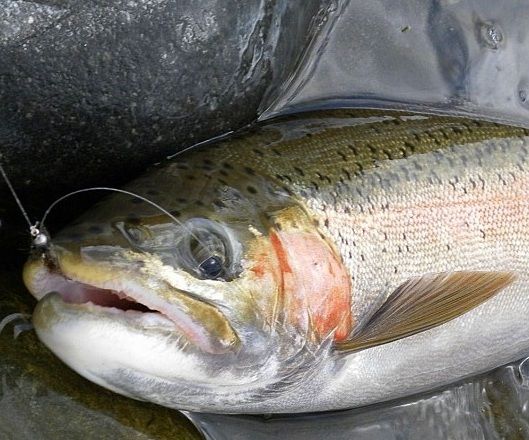
This is because there are thousands of trout making the annual dash from the lake and for many it will be their first time back in the river since they were juveniles. These fish are still a bit " green " and wouldn't know a caddis from a coconut, so if it looks remotely like food its quickly snaffled before their mates get a chance. The consensus is that unlike salmon, steel heads continue to feed until they get near the redds. Once there, far stronger urges take over and any thought of food is temporarily put on the back burner. But as usual the poor ole males get pretty stoked up during all this and will have a go at anything that comes near their bit of river. This is born out by data gathered from research surveys that show that most jacks are caught defending spawning sites, where as the hens tend to get caught while on the move before they get anywhere near the redds. When spawning is over the very tired, sorry looking specimens that are left know that to survive they must eat and quickly regain their lost condition. Once again food becomes their number one priority and in the early stages of their return journey will hit just about everything you put near or over them. Not all of these kelts head straight back to Lake Taupo, some remain in the system for months and continue to feed on the huge numbers of caddis, mayfly and other insects that thrive in and along the river. These recovering rainbow slabs are the mainstay of our late spring and summer sport on the Tongariro. A percentage probably never return and become resident trout sharing the Tongariro in the warmer months with their much bigger, wilier cousins. But as the weeks go by their almost reckless feeding behavior slowly begins to change. 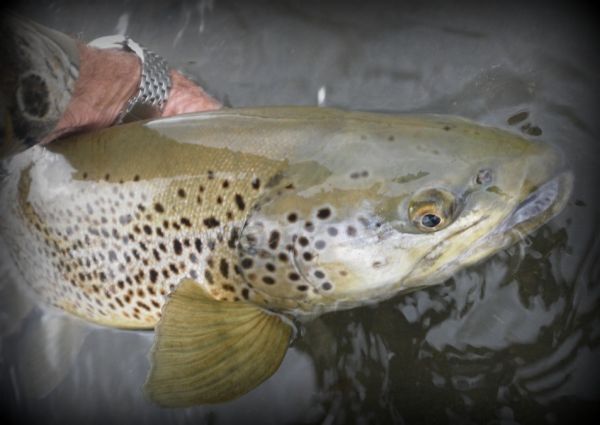
These are now a very different kettle of fish to the unsuspecting trout that first left the lake. By now both species know what the river has to offer and how it should behave as it drifts downstream towards them. We're a little way off summer yet but as the temperatures begin to increase so will the insect activity right through the water column. With less rainfall the river will gradually drop back to its summer level bringing with it the low clear conditions that make things more challenging. This is the time for the angler to also change tactics, lighter rods, thinner tippets, may be digging out the dry fly box or trying different nymphing setups. But its a funny thing ... if needs must, most of us ... at least those who can still see, wouldn't think twice about using a tiny dry fly. But how many would be as keen to fish a similar size nymph along the bottom. The most popular rig when anglers are fishing
" small naturals " will probably consist of a bomb with some sort of size 14 nymph tied to the dropper.
Have another look at the lead photograph. I spent ten minutes or so looking under the rocks in the riffles above a pool and on the day this was by far one of the larger mayfly nymphs I came across. 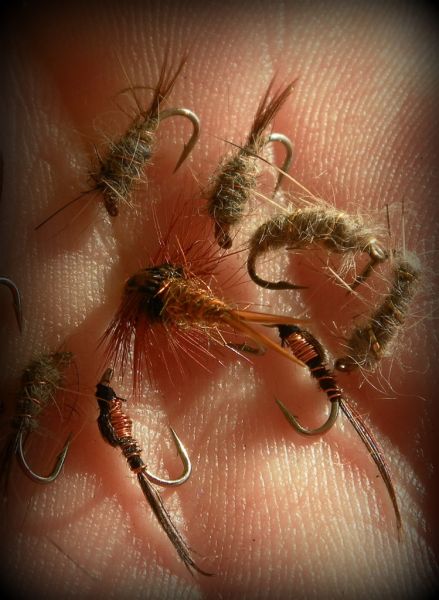 Right! I hear you say but its bigger than the P.T nymph next to it. Yes it is, except that's a size 18 and the bulk of the nymphs and larvae Right! I hear you say but its bigger than the P.T nymph next to it. Yes it is, except that's a size 18 and the bulk of the nymphs and larvae
I found were smaller than that. We know that trout are opportunist feeders, for them it really all comes down to numbers. If there is an abundance of a particular insect { or a particular stage in that insects life cycle } they are only too happy to eat it. If enough of these new prey items float by for long enough, trout will often ignore everything else and focus only on this new food source. The obvious example is the cicada. Every year we get an emergence of this big insect all along the river. For several weeks the " singing " males can be heard high in the trees as they try to attract a mate. This activity peaks in February and can be the catalyst for some fantastic top water action but the cicada fishing isn't good every year. Trout can't climb trees so again it comes down to numbers and the hatches have to be large enough to ensure that a steady supply of cicadas end up in the river. I fish a cicada as an indicator all year round but its only during those few weeks that I expect to get takes on the big dry because the trout have to be conditioned to taking them. The same thing happens in any waterway when there is a sustained and plentiful food source. And like other places for trout in the Tongariro this often means caddis or mayfly, especially the larvae or nymphs.
The majority of these are very small indeed so we're back to the numbers game. The fish will encounter an almost inexhaustible supply of these very small insects on a daily basis and have no qualms about feeding on them. So the next time that guy downriver is getting a few and you ain't,
why not think 16's and 18's... and remember ... sometimes size does matter but big isn't always best.
This weeks fishy quote sums it all up :
" The best fisherman I know try not to make the same mistakes over and over again; instead they strive to make new and interesting mistakes and to remember what they learned from them. "
John Gierach ~ " Fly Fishing the High Country "
Tight Lines Guys
Mike |
|
|
| Back to Top |
|
|
|
|
|
|
|


