| |
|
|
| |
Magic May ... but its November?
Thu 8th November, 2012
|
|
|
|
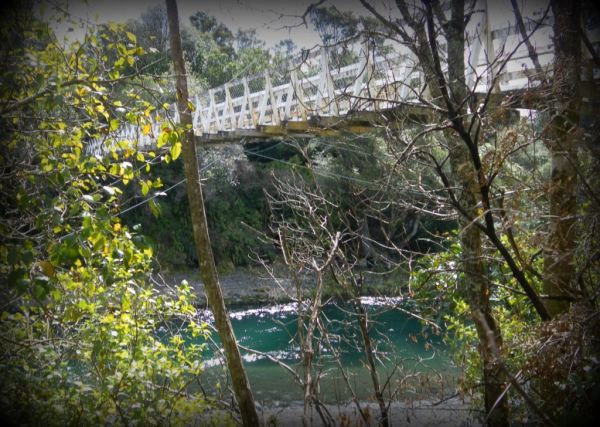
I don't think many would argue that so far this year there has been a marked improvement in both the quality and quantity of fish caught in the Tongariro. Last Sunday I stood on the swing bridge above Red Hut with some holiday-makers and watched a steady trickle of migrating fish slowly file past in the pool below. The last few years had seen a gradual decline in the numbers of fish using the upper stretches. But this time around during the annual runs they seem to have been more evenly distributed throughout the river. It's a bit too early to tell and I'm no scientist but could the destruction of previously good spawning area's from the lower Bridge Pool down be affecting their behavior already? The loss of places like the Braids is definitely having an effect on anglers habits.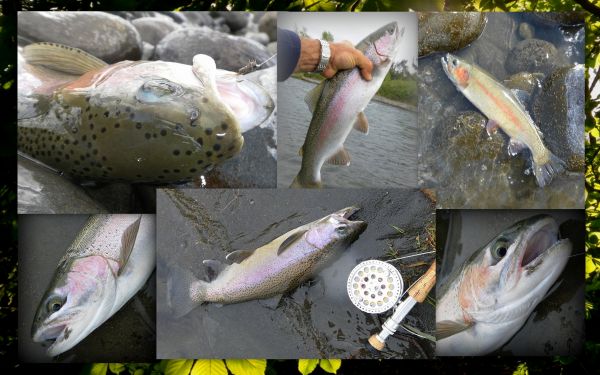 Whether we like it or not its forcing us to look elsewhere. Perhaps its a similar story for the fish. Stretches of a river don't become popular by accident. Easy access plays a part but anglers tend to use them because they consistently produce good results. It'll take a few years to get an accurate overview but fairly recent ariel surveys showed that there were far more anglers regularly fishing from the town pools down than above. However if the numbers of trout using the middle and upper river continues to build then so will the numbers of fishermen chasing them. I've often commented this year on the absence of any angling pressure while fishing between the Stag and Blue Pool. These middle/upper river pools used to be very popular until the fish using them declined a few years ago. But I have a feeling this may alter in future because this year has seen them start to fish well again and there's always been something special about having a successful day on this lovely part of the Tongariro. Whether we like it or not its forcing us to look elsewhere. Perhaps its a similar story for the fish. Stretches of a river don't become popular by accident. Easy access plays a part but anglers tend to use them because they consistently produce good results. It'll take a few years to get an accurate overview but fairly recent ariel surveys showed that there were far more anglers regularly fishing from the town pools down than above. However if the numbers of trout using the middle and upper river continues to build then so will the numbers of fishermen chasing them. I've often commented this year on the absence of any angling pressure while fishing between the Stag and Blue Pool. These middle/upper river pools used to be very popular until the fish using them declined a few years ago. But I have a feeling this may alter in future because this year has seen them start to fish well again and there's always been something special about having a successful day on this lovely part of the Tongariro. 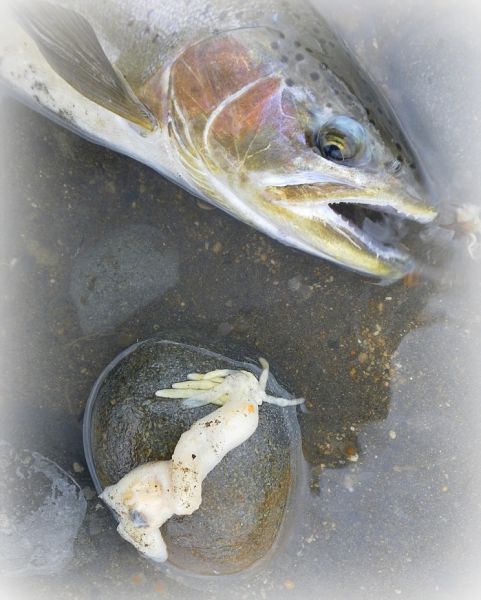 This sounds like the start of a really bad joke but a funny thing happened earlier in the week. I'd returned to the bach to change my waders after they'd sprung a leak while fishing a very cold Stag Pool. Gail was over in Turoa doing her " Eddie the Eagle " impersonation before the ski fields closed for the summer. So with a couple of hours to kill before the eagle landed This sounds like the start of a really bad joke but a funny thing happened earlier in the week. I'd returned to the bach to change my waders after they'd sprung a leak while fishing a very cold Stag Pool. Gail was over in Turoa doing her " Eddie the Eagle " impersonation before the ski fields closed for the summer. So with a couple of hours to kill before the eagle landed
I walked across the road to the Braids. There are still one or two interesting little spots over there and as I unhooked this greedy jack it coughed up its breakfast ... may fly nymphs ... caddis ... fish eggs and half a calamari squid !! I can only assume it was tossed into the water by " accident ", unless some enterprising angler has discovered a new trout " fly " ... so much for small naturals. Squid aside, there have been some pretty good hatches of caddis and mayfly along the river depending when you fished.
I happened to be in Judges during a particularly good mid-morning hatch and the fish spotted them almost as quickly as the swallows and fan-tails. As more and more duns started floating downstream a few trout began rising.
At the time I was fishing a couple of mayfly emerger patterns through the top of the pool and one fish frightened the life out of me when it went for the indicator dry. As so often happens when you get an unexpected take on a dry fly I did a first class job of completely missing the fish. But a couple of casts later the dry disappeared and
I wasn't surprised to find myself playing a very acrobatic kelt that had taken the suspended nymph.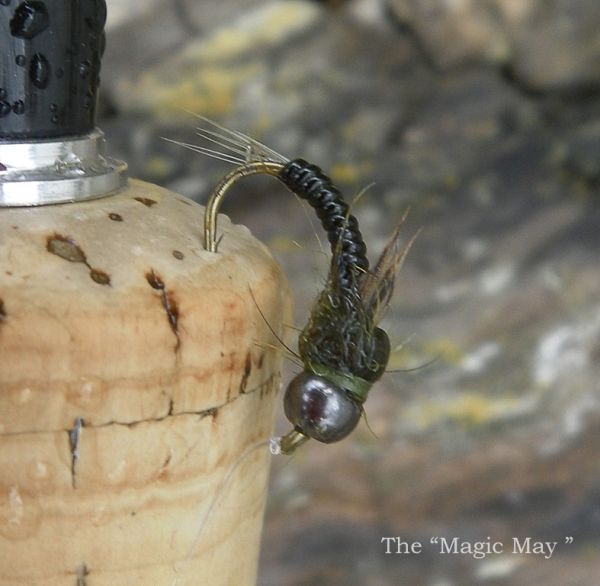 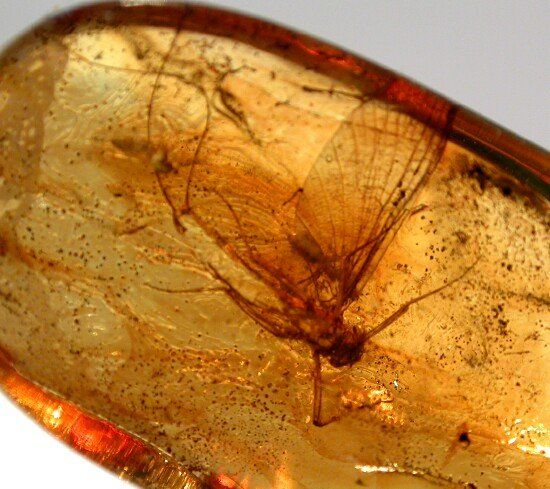
Mayfly have been around for millions of years and their ancestors pre-date the dinosaurs. The oldest full body fossil was found in 2008, when fossil hunters discovered the 300 million year old insects impression, while exploring woods at the back of a suburban shopping complex in Massachusetts. The leader of the geology study group who made the find, said at the time " That it was like winning the lottery because the bodies of flying insects are usually not preserved due to their softer, fragile nature. Scientists more often find only the remains of wings, which are not digested easily by predators." The mayfly pictured right entombed in Baltic amber is a "youngster" by comparison at a mere 40 million years old. This example was found in the Kaliningrad district of Russia. Mayfly have some unique characteristics which set them apart from other insects. For instance both males and females have paired genitalia. Yep! the male has two penises ...yeah ... twenty years ago I'd have thought the same thing too. Nowadays I have enough trouble coping with the problems one gives me never mind two !! To help the male tolerate this terrible handicap the female has two gonopores which I believe is a posh name for a hole or opening. No wonder they have such a short adult life-span they must be worn out. Of more interest to the fly fisherman is the sub adult stage of their life cycle which anglers call " duns " May fly are the only insects to go through another instar after they have acquired usable wings. These sexually immature adults are often compared to tiny sail-boats as they're carried downstream and a good hatch can trigger some great surface action. 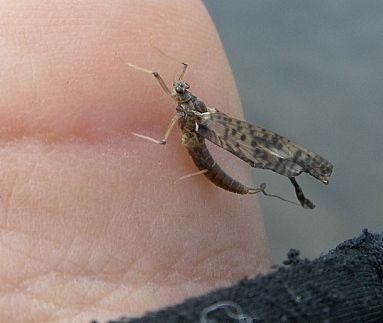
I scooped this one off the water during a hatch above Judges and its likely it had only just shed its nymphal shuck because its wings and tail still look a bit like a deflated balloon. The duns are slightly smaller but thicker set than than the final adult fly. The wings are opaque and the whole insect lacks the bright, sleek look of the mayfly spinner. Anglers are sometimes unsure whether trout are feeding on the emerger or the dun. The secret is to observe how they're actually taking the insect. If the head of the fish shows its a fair bet they're feeding on mayfly duns. Where as a dorsal fin, then tail rise that creates a bulge or splash would suggest they're feeding on emergers. They're at their most vulnerable on their journey to the surface and are an easy meal for waiting trout. The fly pictured above is called " Sean's Magic May "
{ Olive } and is one to try beneath a dry to simulate the ascending nymph.
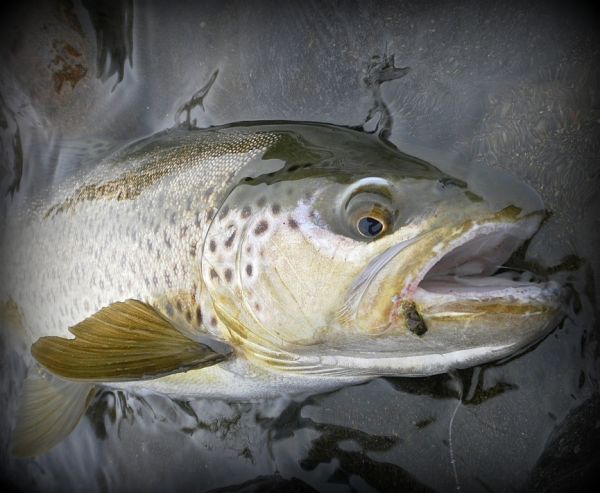 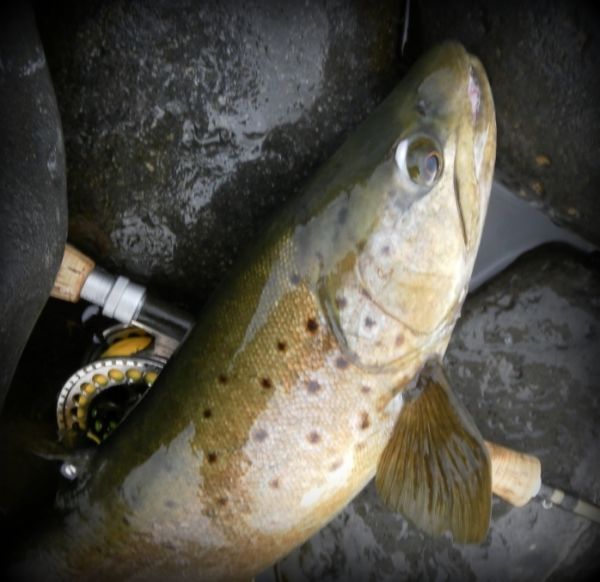
Typical weather for the time of year with all four seasons putting in an appearance. At the moment it looks as if we may have some rain next week which should encourage more fish to run. I've had a couple more browns since the last report, not huge fish but I love catching them anyway. They seem to have a year long presence in the river now and appear most weeks in someones fishing report. They're just another good reason too come and enjoy the Tongariro ... not that you need one. It's happy holiday time for Gail and I so I'm not sure if I'll have time to post another report before we go. In the meantime ponder this weeks wise words :
" They say you forget your troubles on a trout stream, but that's not quite it. What happens is that you begin to see where your troubles fit into the grand scheme of things, and suddenly they're just not such a big deal anymore."
~ John Gierach
Leave some for me.
Tight lines guys
Mike |
|
|
| Back to Top |
|
|
|
|
|
|
|


