| |
|
|
| |
A quick guide for Caddis.
Sat 12th February, 2011
|
|
|
|
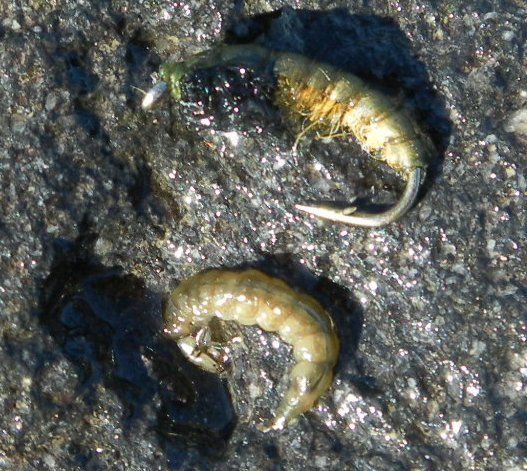 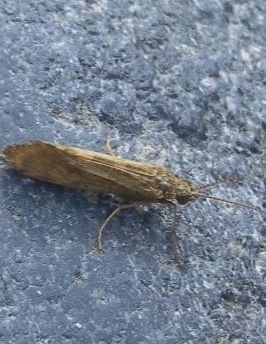
The caddis or sedge as its also called looks a bit like a moth and trout feed on them throughout their life cycle. Along with mayfly they're one of their favorite prey items when they enter the river.
After the fish have finished spawning, instinct tells them they must eat to help regain lost condition and on their return journey these surviving kelts which we call "slabs" rely heavily on aquatic insects like caddis until they reach the smelt of Lake Taupo.
Sedge are classified in the order Trichoptera which means “hairy wings”. The larvae can be intolerant of some forms of pollution but the Tongariro like many other New Zealand rivers supports a thriving population of caddis.
There's even a marine variety found in rock pools along the shoreline which begin life as an egg deposited by the adult female on the bodies of some species of starfish.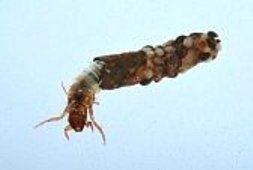
After they hatch from the egg they are known as larvae and are bottom dwellers…common colors are olive and green through to creams and browns.
They are usually divided into three main types case builders, free swimming and net builders.
Case builders surround themselves in a sort of tube and spend most of their time inside it.
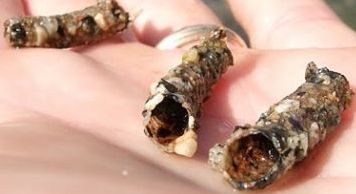
The case itself is made up of tiny bits of twigs, sand or gravel which they attach using a silk like substance which comes from a gland near their mouths.
They crawl along the river bed in their portable homes…a bit like hermit crabs with their legs and head protruding from one end.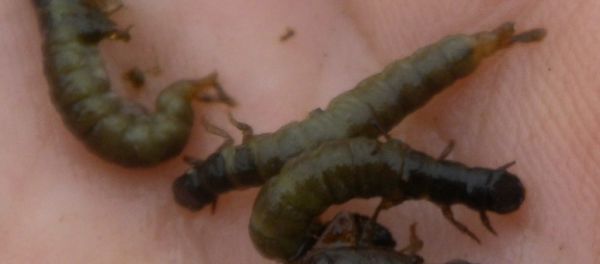
Free swimming caddis only build shelters when they are ready to pupate.
Net builders construct a retreat or net using the sticky silk like secretion and this also helps traps food items washed downstream.
As a young lad in Wales we used to collect cased caddis, extract the larva and use a couple of them impaled live on our hooks and the trout rarely refused them.
 Unfortunately for the caddis their protective shelters are not “fish-proof” and you will often find the case and enclosed larvae in the stomach contents of trout, especially horn caddis. Unfortunately for the caddis their protective shelters are not “fish-proof” and you will often find the case and enclosed larvae in the stomach contents of trout, especially horn caddis.
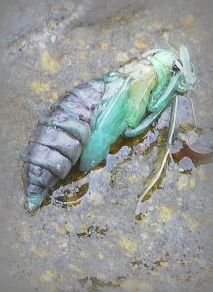
Later in their life cycle they are known as pupa ... we fisho’s call them emergers and lastly once they have reached the surface ... the adult when they are ready to fly from the water to mate.
These four stages from egg to larvae to pupa and lastly the adult are known as complete metamorphosis and unlike mayfly when they fly from the surface of the river caddis are mature adult insects.
From an angling point of view fishing with imitations of all of the final three stages will catch trout.
Jason Court below had never tried the dry and dropper technique before but was soon converted when he landed a personal best brown. Its one of my favorite methods on the Tongariro. Especially when they're feeding on the ascending emerger during the warm summer months.
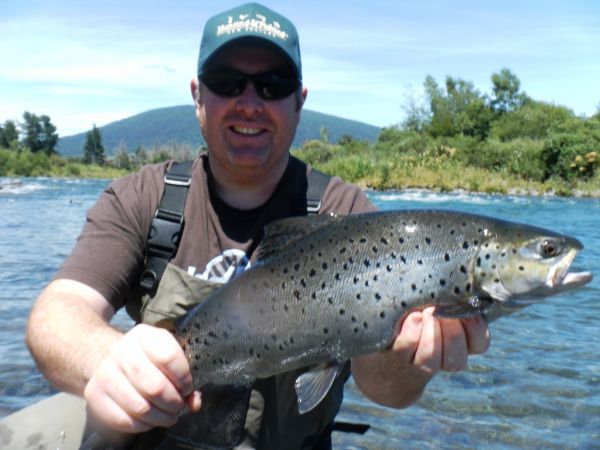
Well done Jas |
|
|
|
|
|
|
| COMMENTS |
|
Looks a great sight.
Roger Booth
Thanks for the kind words Roger
Regards
Mike |
|
|
|
| Farbee | Sun 23rd March, 2014 | |
|
|
|
|
| Back to Top |
|
|
|
| |
|
|
|


